Introduction
Horsepower is often misunderstood when choosing mowing equipment. Many think more power means better results, but that’s not true. A 3 Point Tractor Verge Flail Mower needs balanced horsepower, torque, and PTO speed for efficient cutting. In this guide, you’ll learn how much horsepower you truly need for smooth, powerful mowing.
Why Horsepower Matters for a 3 Point Tractor Verge Flail Mower
The Role of Horsepower in Mowing Performance
Horsepower drives the flail rotor — the core of your mower’s cutting power. The tractor’s PTO (Power Take-Off) transfers energy to the mower’s gearbox, spinning the flail rotor and its blades. If the tractor doesn’t have enough horsepower, the rotor slows down, causing poor mulching and uneven results.
Insufficient power can also strain belts, bearings, and hydraulic systems. When the engine lags, you’ll notice slow cutting and heavy vibration. The key is maintaining consistent RPM under load to avoid overheating and equipment fatigue.
Matching PTO Power to Mower Load
Engine horsepower and PTO horsepower are not the same. PTO horsepower — usually 85% of the engine’s rating — determines how much usable power reaches the mower. For example, a 40 HP engine might deliver only 34 HP to the PTO. Always check the PTO rating before pairing it with a mower.
Compact tractors often have 18–35 PTO HP, while mid-range models deliver 40–75 HP. That difference decides whether your mower can handle tall grass, thick brush, or just light maintenance.
Benefits of the Right Power Match
Choosing the correct horsepower ensures the mower runs at its designed speed, resulting in cleaner cuts and smoother performance. It also improves fuel efficiency, prevents belt wear, and keeps cutting consistent even in rough terrain.
Example: A 25 HP tractor operating a 60-inch flail mower may stall in thick grass, while a 45 HP tractor will maintain steady speed and better finish quality.
The Quick Answer: Recommended Horsepower by Mower Size
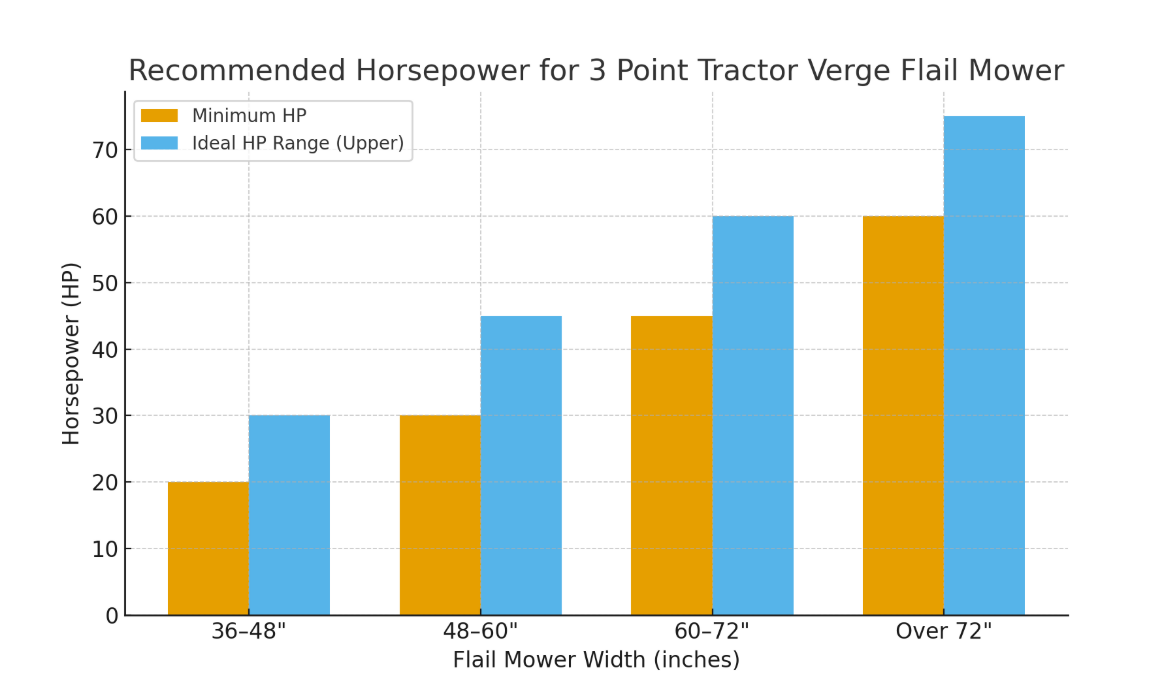
The width of your flail mower directly affects how much horsepower you need. Wider decks require more torque to keep the rotor speed steady, especially in dense vegetation.
Flail Mower Width vs Horsepower Chart
Flail Mower Width | Minimum Tractor HP | Ideal HP Range |
36" – 48" | 20 HP | 20–30 HP |
48" – 60" | 30 HP | 30–45 HP |
60" – 72" | 45 HP | 45–60 HP |
Over 72" | 60 HP | 60+ HP |
This table shows that most 3 Point Tractor Verge Flail Mower models fall between 20–60 HP depending on size and field conditions.
Understanding Power-to-Width Ratio
The power-to-width ratio ensures the tractor can maintain full PTO speed even when cutting heavy grass. A higher ratio means better resilience against drag from dense material. Lighter flail designs with fewer blades require less power, while heavy-duty hammer flails demand more torque.
PTO RPM and Blade Efficiency
Most flail mowers are designed for 540 RPM PTO operation. If RPM drops too low, blade tip speed decreases, resulting in rough cuts and clogged decks. Keeping the PTO at a stable 540 RPM maximizes cutting energy and fuel economy.
Real-World Example: Compact vs Utility Tractor
A 25 HP compact tractor might handle a 48-inch mower well, but it will struggle in thick brush or on slopes. A 55 HP utility tractor can power a 72-inch model effortlessly, reducing time per acre and keeping blade speed consistent.
Can a Small Tractor Run a Flail Mower?
Typical Power Ranges for Compact Tractors
Small tractors with 20–30 HP can successfully run narrow flail mowers (36–48 inches wide). They’re perfect for maintaining lawns, orchards, and small fields but may struggle with tall or woody brush.
Lightweight Mower Models for Small Tractors
Compact flail mowers use lighter rotors and fewer rows of flails to reduce load. These designs keep torque demands low while maintaining a good cutting finish. Look for models labeled “compact” or “light-duty.”
Best Use Cases for Low-HP Setups
● Orchard and vineyard floor maintenance
● Trimming residential verges and pathways
● Cutting light grass or small weeds
Key Factors That Affect Power Requirements
Terrain and Vegetation Density
Uneven terrain increases rolling resistance and hydraulic load. Thick, wet, or woody vegetation also demands extra power. Plan 10–20% more horsepower for hilly areas or dense brush.
Mower Weight and Blade Configuration
Heavy-duty mowers with hammer flails need stronger torque than Y-blade designs. A rotor with multiple rows of flails increases cutting density but requires greater PTO power to maintain speed.
PTO Efficiency and Hydraulic Load
Hydraulic resistance, friction, and dirty gearboxes all sap PTO performance. Keep your driveline well-lubricated and check hydraulic oil levels regularly to maintain consistent RPM.
How to Match Tractor and Mower for Optimal Efficiency
Checking Your Tractor’s PTO Output
Look for the PTO horsepower rating on your tractor’s specification plate or in the owner’s manual. Always use this number, not the engine horsepower, when choosing mower size.
Verifying Compatibility with the 3-Point Hitch
Ensure your tractor’s 3-point hitch (Category 1 or 2) can lift and balance the mower. Improper hitch setup can make the machine unstable on slopes or during transport.
Fine-Tuning Gear Ratios and Ground Speed
Use lower gears for dense vegetation and maintain a steady 540 RPM. Faster ground speed isn’t always better — slower passes yield smoother, even cuts.
Common Problems from Using the Wrong Horsepower
Symptoms of an Underpowered Tractor
● Uneven cutting or clumping
● Engine overheating
● PTO stalling or belt slippage
Overpowering Risks
● Excess vibration damaging bearings
● Rotor imbalance at high speed
● Increased fuel use with minimal gain
Expert Tips and Industry Recommendations
Manufacturer Guidelines
Always follow manufacturer HP recommendations listed on spec sheets. Reputable suppliers like GRANDEMAC test each 3 Point Tractor Verge Flail Mower to ensure compatibility with tractor power ratings.
Maintenance for Power Efficiency
Regularly grease driveline joints, check belt tension, and clean debris from the rotor. Balanced, sharp flails minimize drag and maximize power transfer.
Choosing the Best HP Range for Longevity
Operate within your tractor’s optimal HP band — running too close to minimum power shortens the mower’s life.
Cost and Efficiency: Is More Power Always Better?
Power vs Fuel Economy
A 60 HP tractor consumes up to 25% more fuel per acre than a 45 HP model. The goal is balance — enough power to avoid overload, but not so much that fuel efficiency drops.
When to Upgrade Your Tractor or Mower
Upgrade when your tractor consistently struggles to maintain PTO RPM or when your mowing area expands significantly. A mid-range 50–60 HP unit can manage most commercial-grade flail mowers efficiently.
Conclusion
The right horsepower unlocks your mower’s full potential. A 3 Point Tractor Verge Flail Mower works best with consistent PTO power in the ideal HP range. Matching horsepower to mower width gives cleaner cuts, lower fuel use, and longer machine life. GRANDEMAC provides durable, high-performance mowers built for precision, balance, and professional results in every operation.
FAQ
Q: How much horsepower do I need to run a 3 Point Tractor Verge Flail Mower?
A: Most 3 Point Tractor Verge Flail Mower models need 20–60 HP depending on mower width and terrain conditions.
Q: Can a small tractor power a flail mower?
A: Yes, a compact tractor with 20–30 HP can handle a 36–48 inch flail mower for light grass and orchard work.
Q: What happens if my tractor is underpowered?
A: An underpowered setup leads to uneven cuts, slow rotor speed, and increased wear on belts and bearings.
Q: Is more horsepower always better for a verge flail mower?
A: Not always—matching horsepower to mower size ensures smoother performance and fuel efficiency.
Q: Why choose a 3 Point Tractor Verge Flail Mower over a rotary mower?
A: A 3 Point Tractor Verge Flail Mower offers safer, cleaner cuts on slopes and handles thicker brush more effectively.


