When you’re running an orchard or vineyard, your tractor isn’t just “a machine”—it’s the piece of equipment that decides how efficiently you spray, mow, cultivate, haul, prune, and manage the farm day after day. And compared with open-field work, orchard operations are less forgiving: rows are narrower, canopies are lower, the ground can be uneven or sloped, and traction changes quickly with moisture, grass cover, and seasonal debris. That’s exactly why we see more growers shifting from basic 2WD setups to a 4WD farm orchard tractor—because the right 4WD configuration doesn’t only add pulling power; it adds stability, steering control, and confidence in the places where orchard work is hardest.
From our manufacturing perspective, the “right” tractor is rarely the biggest or most expensive one. It’s the one that matches your row spacing, terrain, implements, and daily workflow—without wasting fuel, damaging roots, or forcing repeated passes. In this guide, we’ll share how we help farmers choose a 4WD farm orchard tractor step by step, what specs truly matter, and how to avoid the most common buying mistakes.
1 Start With Your Orchard Reality: Rows, Canopy, Terrain, and Soil
Before you compare horsepower or brands, define four “non-negotiables” from your orchard conditions:
Row width and turning space
A tractor that is too wide will rub trunks, damage drip lines, and reduce safety in turns. A tractor that is too long may struggle at row ends.
What we recommend checking:
Minimum row width in your orchard blocks
Headland turning space (especially in older orchards)
Whether you must turn with an implement attached (sprayer or trailer)
Canopy height and low branches
Orchard tractors often need a lower profile to pass under branches and trellis structures.
Key requirement: a compact design and protected components (lights, exhaust routing, filters).
Terrain: flat vs slope
This is where 4WD becomes valuable. On slopes or wet ground, 4WD improves:
Soil and ground cover
Grass lanes, loose soil, wet clay, or sandy orchard floors all affect tire choice, traction, and rutting risk.
2 Decide Your Main Jobs (Because Implements Define the Tractor)
A 4WD farm orchard tractor should be chosen around the tasks you do most often, not the tasks you do once a year.
Typical orchard tasks include:
Spraying (air-blast sprayers, tank sprayers)
Mowing and mulching
Cultivation / rotary tilling between rows
Fertilizer spreading
Light loading and hauling (trailers, bins)
Pruning debris management
Your implements decide:
3 Choose the Right Power Range (Don’t Buy HP You Can’t Use)
Many buyers focus on horsepower first—but in orchards, usable power is limited by space, traction, and implement size. Bigger isn’t always better.
Practical guideline (general use)
Small orchards / narrow rows: prioritize compact size and maneuverability
Medium orchards / mixed tasks: balance PTO power with stability
Heavy hauling / hillside work: torque, gearing, braking, and traction matter more than peak HP
What we typically advise: pick a tractor that runs your heaviest implement comfortably at working RPM, without operating at maximum load all day. This reduces fuel stress and extends service life.
4 4WD System and Differential Lock: What to Look For
“4WD” is not a single feature—it’s a performance system. For orchard work, we suggest focusing on:
4WD engagement method
Differential lock (rear and/or front, depending on model)
5 Transmission Choice: The Hidden Factor in Orchard Efficiency
Orchard work often involves low-speed operations with frequent stops and direction changes. Choosing the right transmission can reduce fatigue and improve consistency.
Common options and best-fit
Mechanical gears: reliable and cost-effective; good for consistent tasks
Shuttle shift (forward/reverse): ideal for frequent direction changes in tight spaces
Creeper speeds: useful for spraying and precision operations
If you spray frequently, stable low-speed control is just as important as engine power.
6 Clearance, Width, and Tire Setup: Protect Trees and Protect the Tractor
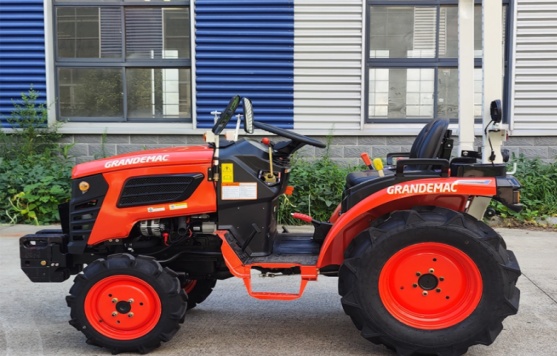
This is where many orchard tractor purchases go wrong. A good 4WD farm orchard tractor should fit like a tool, not a compromise.
Key geometry points
Overall width: must pass your tightest rows safely
Ground clearance: important for uneven lanes and orchard debris
Turning radius: reduces trunk scuffing and saves time at row ends
Tire selection
Tires affect traction, soil compaction, and plant root health.
Wider tires can reduce compaction but may be too wide for narrow rows
Aggressive tread improves traction but can disturb soft soil
Correct inflation matters for both safety and soil impact
7 Hydraulics and PTO: Match Your Sprayer and Attachments
If your orchard relies heavily on sprayers and hydraulic implements, don’t treat hydraulics as “extra.”
PTO considerations
Hydraulic considerations
Sufficient flow for lifting, steering, and auxiliary functions
Proper outlets for implements (rear remotes)
8 Operator Safety and Comfort: It’s Not Optional in Orchard Conditions
Orchard conditions expose operators to:
Features that matter in reality:
Strong braking and stability on slopes
Clear visibility around trunks and row ends
Comfortable controls for long spray days
Easy access maintenance points (filters, oil checks)
If your operator is fatigued, your work quality drops—and orchard operations require consistency.
9 Serviceability and Parts Support: Choose a Tractor You Can Maintain
A tractor is only “powerful” when it runs reliably in peak season.
We recommend evaluating:
How easy routine service is (filters, belts, coolant access)
Common wear parts availability
Clear maintenance intervals and service instructions
Protection design for orchard debris and branch contact
In orchards, small problems can become big quickly because working windows are tight.
Quick Decision Table: How to Match a 4WD Farm Orchard Tractor to Your Needs
Farm Condition / Task | What to Prioritize | Why It Matters |
Narrow rows, tight headlands | Compact width + tight turning radius | Prevents trunk damage and saves time |
Hillside orchards | 4WD traction + braking stability | Improves safety and control |
Heavy spraying schedule | Stable low-speed transmission + PTO performance | Consistent spray quality and less fatigue |
Soft soil or wet grass lanes | Tire selection + diff lock | Reduces slipping and rutting |
Multiple implements | Hydraulics + lift capacity | Ensures compatibility and efficiency |
Long daily working hours | Ergonomics + visibility | Reduces operator strain and mistakes |
Common Buying Mistakes We See (And How to Avoid Them)
Mistake 1: Buying based on horsepower only
A tractor that doesn’t fit your rows will create daily operational losses.
Better approach: fit, turning radius, and implement match first—then HP.
Mistake 2: Ignoring transmission suitability
Mistake 3: Underestimating weight and stability on slopes
Mistake 4: Overlooking hydraulic needs
Closing Thoughts (From Our Team)
A 4WD farm orchard tractor is one of the most valuable upgrades a grower can make—not because it is “stronger,” but because it makes orchard work more controlled, consistent, and safe in the places where orchard conditions challenge every machine: tight rows, uneven lanes, wet grass, and slopes. The right choice comes down to fit and function: compact dimensions that protect your trees, 4WD and differential support that keep traction stable, transmission control that matches your spraying and mowing speeds, and PTO/hydraulic capability that truly supports your implements. When you select based on your real orchard workflow—rather than headline specs—you get a tractor that improves productivity every season, not just on paper.
If you’d like help matching a tractor configuration to your row spacing, terrain, and implement list, we welcome you to learn more through Jiangsu Grande Machinery Manufacturing Co., Ltd. Our team can share practical recommendations based on your farm conditions and export experience, so you can choose a 4WD orchard tractor that fits your work without unnecessary complexity.
FAQ
1) What makes a 4WD farm orchard tractor different from a field tractor?
A 4WD farm orchard tractor is typically more compact and maneuverable, designed for tight rows and frequent turning, while still offering strong traction for slopes and wet orchard lanes.
2) How do I choose the right width for a 4WD orchard tractor?
Measure your narrowest rows and turning areas first. Choose a tractor width that passes safely with clearance for trunks, irrigation lines, and implements.
3) Is 4WD necessary for orchard spraying?
If your orchard has slopes, wet grass lanes, or soft soil, 4WD greatly improves traction and steering control—especially when pulling a loaded sprayer.
4) What features matter most for hillside orchards?
Prioritize stable braking, 4WD traction, appropriate tire setup, and a low center of gravity. These factors improve safety and reduce slipping risks on slopes.


