A reliable 4WD Farm Orchard Tractor is more than just equipment in the field—it is the backbone of daily orchard operations. From spraying and mowing to hauling and soil preparation, orchard tractors work in narrow rows, uneven terrain, wet soil, and dusty environments. These demanding conditions mean that long-term performance depends not only on engineering quality but also on consistent and proper maintenance. At Jiangsu Grande Machinery Manufacturing Co., Ltd., we design and manufacture tractors for durability and efficiency, but even the most robust machine performs best when supported by structured maintenance routines. In this guide, we share practical, field-tested maintenance strategies to help extend the lifespan of your tractor, reduce downtime, and maintain peak productivity season after season.
Why Maintenance Matters for Orchard Conditions
Orchard environments differ significantly from open-field farming. Narrow row spacing requires tight turning and precise steering. Tree canopies increase dust, debris, and leaf accumulation around engines and cooling systems. Irrigation systems often create wet soil that challenges traction systems. These working conditions place continuous stress on drivetrain components, hydraulic systems, and engine cooling assemblies.
A structured maintenance plan prevents minor issues from turning into costly repairs. More importantly, it ensures consistent power output, stable four-wheel traction, and fuel efficiency. For orchard owners who depend on daily operations during peak seasons, preventive care directly protects productivity.
Daily Inspection Checklist for a 4WD Farm Orchard Tractor
Daily checks require only 10–15 minutes but significantly reduce breakdown risks.
1. Engine Oil Level and Condition
Check oil levels before starting the engine. Low oil reduces lubrication and increases internal friction. Also inspect oil color—dark or contaminated oil signals the need for replacement.
2. Coolant Level
Orchard work generates dust that can block airflow through radiators. Ensure coolant levels are within the recommended range to prevent overheating.
3. Tire Pressure and Condition
Proper tire inflation ensures balanced traction across all four wheels. Uneven tire pressure affects drivetrain efficiency and fuel consumption.
4. Visual Inspection of Hydraulic Lines
Look for leaks, cracks, or worn hoses. Hydraulic failure during spraying or lifting operations can disrupt workflow.
5. Clean Debris from Radiator and Air Intake
Leaves and dust accumulation reduce airflow and engine cooling performance.
Table 1: Daily Maintenance Quick Reference
Component | What to Check | Why It Matters | Action |
Engine Oil | Level & color | Prevents engine wear | Top up or replace |
Coolant | Fluid level | Prevents overheating | Refill if needed |
Tires | Pressure & cracks | Maintains traction | Adjust pressure |
Hydraulic Lines | Leaks or damage | Prevents failure | Repair immediately |
Radiator & Air Filter | Dust & debris | Ensures airflow | Clean regularly |
Weekly Maintenance for Performance Stability
Weekly maintenance goes deeper than visual checks.
Air Filter Cleaning or Replacement
Orchard dust quickly clogs air filters. Reduced airflow affects combustion efficiency and increases fuel consumption. Cleaning or replacing filters maintains optimal air-fuel mixture balance.
Battery Inspection
Check battery terminals for corrosion and secure connections. Orchard humidity and chemical exposure from spraying can accelerate terminal wear.
Check 4WD System Engagement
Test front axle engagement and disengagement to ensure smooth shifting. Delayed response can signal drivetrain wear.
Inspect PTO Shaft
For orchard operations involving sprayers, mowers, or shredders, ensure PTO shafts rotate smoothly without vibration.
Monthly Mechanical System Inspection
Monthly checks help identify wear patterns before major failures occur.
Transmission and Differential Oil
The 4WD Farm Orchard Tractor relies on a balanced drivetrain. Transmission oil should be clean and at proper levels to protect gears and bearings.
Brake System Evaluation
Orchard tractors often operate on slopes. Check brake responsiveness and inspect pads or discs for wear.
Steering Components
Frequent turning between narrow orchard rows places stress on steering joints and linkages. Inspect for looseness or unusual noise.
Lubrication Points
Grease all recommended fittings including ball joints, pivot points, and suspension components.
Table 2: Monthly Maintenance Focus Areas
System | Inspection Focus | Warning Signs |
Transmission | Oil clarity & level | Grinding noise |
Brakes | Pad wear | Reduced stopping power |
Steering | Joint tightness | Steering vibration |
Drivetrain | Front axle function | Delayed 4WD engagement |
Seasonal Maintenance Strategy
Before peak harvest or planting seasons, conduct comprehensive servicing.
Fuel System Cleaning
Orchard tractors often run for extended hours. Replace fuel filters and check injectors to ensure consistent combustion.
Hydraulic System Check
Inspect pump pressure and cylinder seals. A weak hydraulic response reduces attachment efficiency.
Cooling System Flush
Over time, sediment builds inside cooling channels. Flushing ensures stable engine temperature control.
Electrical System Diagnostics
Modern orchard tractors include lighting, control panels, and electronic sensors. Confirm that all wiring remains secure and free from corrosion.
Protecting the 4WD System for Long-Term Reliability
The defining advantage of a 4WD Farm Orchard Tractor is its traction stability. Protecting the four-wheel drive system ensures safe operation on slopes and wet soil.
Avoid engaging 4WD on hard, dry pavement to reduce drivetrain stress.
Maintain equal tire sizes and wear levels across front and rear wheels.
Replace worn universal joints promptly.
Inspect front differential seals for leakage.
Balanced torque distribution across all wheels improves fuel efficiency and reduces mechanical strain.
Hydraulic System Care for Orchard Attachments
Sprayers, pruners, and mulchers rely on hydraulic efficiency. Hydraulic oil contamination can lead to slow response or overheating.
Replace hydraulic oil according to operating hours.
Keep oil reservoirs clean.
Monitor pressure fluctuations.
Inspect couplings for leaks.
Well-maintained hydraulics maintain precise control during orchard spraying and lifting operations.
Engine Cooling and Overheating Prevention
Overheating is one of the most common issues in orchard tractors due to restricted airflow.
Preventive actions include:
Cleaning radiator fins weekly.
Inspecting fan belts for proper tension.
Ensuring coolant mixture ratio is correct.
Replacing worn thermostats.
Maintaining optimal operating temperature protects engine longevity and maintains fuel efficiency.
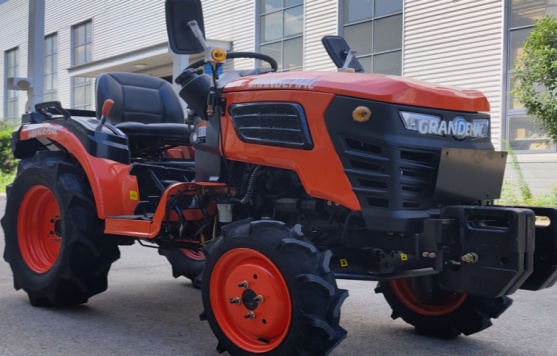
Tire and Suspension Maintenance
Traction stability depends heavily on tire condition, especially for a 4WD Farm Orchard Tractor that frequently operates on uneven terrain, soft soil, slopes, and narrow orchard rows. Tires are not only responsible for movement but also for maintaining balanced torque distribution across all four wheels. Neglecting tire and suspension care can reduce traction efficiency, increase fuel consumption, and accelerate drivetrain wear.
Rotate tires periodically if wear is uneven.
Front and rear tires may experience different stress levels depending on terrain and load distribution. Uneven tread wear can cause imbalance in the 4WD system. Regular rotation helps extend tire lifespan and maintains consistent traction performance.
Maintain recommended tire pressure.
Underinflated tires increase rolling resistance and fuel consumption, while overinflated tires reduce contact with the ground and compromise grip. Check pressure regularly, especially before peak-season operations.
Inspect sidewalls for cracks caused by orchard debris.
Branches, stones, and sharp field objects can damage sidewalls. Even small cracks can worsen under heavy load. Early detection prevents sudden tire failure.
Check suspension bushings for wear.
Suspension components absorb vibration and stabilize movement between rows. Worn bushings or loose linkages affect steering accuracy and overall comfort.
Proper tire management reduces fuel consumption, protects the drivetrain, and enhances operational stability throughout the orchard.
Storage Practices During Off-Season
Proper storage extends equipment life and ensures that your tractor is ready for immediate use when the next season begins.
Store under cover to prevent corrosion.
Sheltered storage protects metal components from rain, moisture, and prolonged sun exposure, reducing rust formation.
Disconnect the battery during long storage.
This prevents slow discharge and protects electrical components from voltage instability.
Drain or stabilize fuel.
Old fuel can degrade and form deposits inside the fuel system. Using stabilizer additives or draining fuel prevents clogging.
Lubricate exposed metal parts.
Applying protective grease or oil prevents oxidation and preserves moving joints.
Off-season protection minimizes startup issues and ensures long-term reliability of your 4WD Farm Orchard Tractor.
How Design Supports Easier Maintenance
At Jiangsu Grande Machinery Manufacturing Co., Ltd., we engineer our 4WD Farm Orchard Tractor models with service accessibility in mind. Key maintenance points are positioned for easy access. Heavy-duty chassis construction reduces structural fatigue. Reinforced front axles improve durability under orchard load stress. Our design philosophy focuses on long-term reliability and reduced operating cost.
We understand that orchard operators require machines that combine power, maneuverability, and durability. Maintenance efficiency is part of performance.
Conclusion
Consistent care transforms a machine into a long-term asset. A well-maintained 4WD orchard tractor delivers reliable traction, steady power, and operational efficiency across changing seasons. By implementing daily checks, structured monthly inspections, and seasonal servicing routines, operators reduce downtime and protect their investment. At Jiangsu Grande Machinery Manufacturing Co., Ltd., we are committed to building durable orchard tractors designed for demanding environments. If you would like to learn more about our models or discuss your orchard requirements, we welcome you to contact Jiangsu Grande Machinery Manufacturing Co., Ltd. for professional guidance and product support.
FAQ
1. How often should I service a 4WD Farm Orchard Tractor?
Daily inspections are recommended, with deeper maintenance weekly and monthly depending on usage intensity.
2. Does 4WD require special maintenance compared to 2WD tractors?
Yes. The front axle, differential, and drivetrain components require regular inspection to maintain balanced torque distribution.
3. What is the most common cause of orchard tractor breakdown?
Overheating due to dust-clogged cooling systems and neglected oil changes are common causes.
4. How can I improve the lifespan of my 4WD Farm Orchard Tractor?
Follow a structured maintenance schedule, monitor hydraulic and drivetrain systems, and ensure proper storage during off-seasons.


