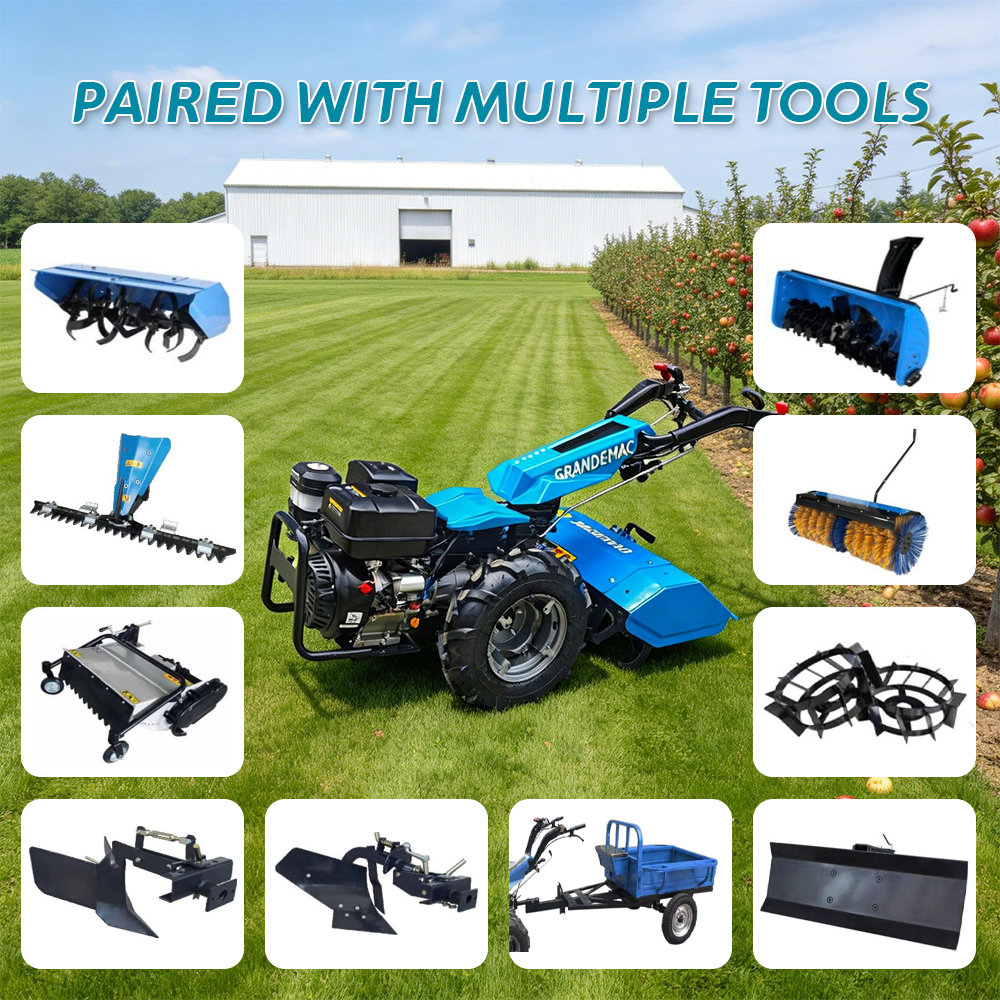
Transitioning from manual market gardening to mechanized farming presents a massive operational threshold. Growers often struggle to scale production without destroying soil structures. They want to avoid the heavy soil compaction risks typically associated with large four-wheel equipment. Traditional tractors often demand wide rows and large turning spaces.
A Two Wheel Tractor provides a compelling alternative to heavy machinery. It is not just a heavy-duty tiller. It is a modular, PTO-driven power unit. You can use it for end-to-end bed preparation, cultivation, and seeding. These machines bridge the gap between hand tools and heavy compact tractors.
However, you must approach this equipment with a clear evaluation strategy. The operational value of this machinery depends entirely on matching the right attachments. You must pair the appropriate horsepower to your specific soil type and acreage. We will explore how to build an effective workflow using this versatile platform.
Key Takeaways
Capability vs. Cost: Two wheel tractors bridge the gap between manual labor and compact tractors, offering modular PTO attachments for plowing, harrowing, and precision seeding.
Soil Health: Unlike traditional rototillers that pulverize soil and create hardpans, advanced attachments (like power harrows and rotary plows) preserve soil structure and microbial layers.
Specialized Environments: An orchard two wheel tractor offers unmatched maneuverability for under-canopy cultivation and confined market garden beds.
Evaluation Mandate: Purchasing decisions must be based on operator physical capacity, attachment compatibility (flange types), and exact soil conditions, rather than just engine horsepower.
The Operational Problem: Recognizing the Limit of Manual Cultivation
Manual bed preparation takes a massive physical toll on farmers. Broadforking a single acre requires thousands of repetitive motions. This repetitive labor quickly exhausts even the most fit operators. Raking out soil clumps adds hours to the daily workflow. Scaling production manually becomes virtually impossible on plots larger than a quarter acre. You eventually hit a strict labor bottleneck. Small farm operators need a way to prepare beds faster.
A conventional four-wheel tractor seems like the obvious upgrade path. However, heavy tractors bring severe ecological downsides to a small plot. Their large tires compress delicate soil structures deeply. High-density beds do not accommodate wide turning radii. You lose valuable planting space to tractor headlands. Over-mechanization destroys the intensive spacing models used by successful market gardeners.
You need an intermediate solution for this specific scale. This machinery functions as a modular power take-off (PTO) platform. A single engine powers dozens of specialized field implements. You simply swap the attachments. You can complete sequential cultivation and planting tasks rapidly. It offers machinery-level power while preserving human-scale bed layouts.
Soil Cultivation Workflows: From Primary Tillage to Final Bed Prep
Primary tillage involves breaking new ground or turning over heavy residue. You have two main choices here. You can use a rotary plow or a moldboard plow. Moldboard plows slice and invert the soil. Rotary plows spin aggressively to discharge soil to the right side. This side-discharge action creates raised beds in a single pass. It saves massive amounts of time during initial field setup.
Secondary tillage prepares the final seedbed for planting. Many growers compare power harrows against traditional rotary tillers. Power harrows represent a massive step forward for soil health. They stir the soil horizontally rather than vertically. This horizontal action minimizes weed seed surface exposure. It also prevents the hardpan layer typically caused by vertical rototilling. You protect the delicate soil microbial layers.
Cultivation and weed management occur later in the season. You can attach precision cultivators to sweep shallowly between crop rows. Flail mowers offer excellent cover crop termination. They shred plant matter into tiny pieces. These pieces break down rapidly into organic matter. You can then incorporate this residue easily before the next planting cycle.
Precision Planting and Seeding Applications
You can mount high-density seeders directly to the PTO unit. Vacuum seeders and mechanical drop seeders integrate seamlessly with the tractor block. These attachments rely on a steady power source. A dedicated mounting bracket secures the seeder to the rear. This integration turns a cultivation tool into a highly precise planting machine.
The tractor provides independent wheel drive and heavy traction. These features deliver consistent, slip-free forward speeds. Accurate seed spacing requires an absolutely steady pace. Pushing a manual seeder often results in jerky movements. The motorized unit glides smoothly over prepared beds. This consistent speed guarantees uniform seed spacing across long rows.
Uniform spacing yields better germination rates overall. You experience significant seed savings compared to manual push-seeders. The tractor handles uneven terrain effortlessly. However, precision seeding attachments have strict operational limitations. They require highly refined, debris-free seedbeds to function optimally. Clods or un-shredded cover crops will jam the seeder mechanisms.
Navigating Confined Spaces: The Orchard Two Wheel Tractor Advantage
Managing soil and cover crops in high-density areas presents unique challenges. Orchards, vineyards, and polyculture systems feature incredibly tight spacing. You cannot maneuver a standard tractor between established vine rows. Heavy machinery risks crushing lateral branches. You need a highly maneuverable power unit. You must navigate narrow alleys safely.
An Orchard Two Wheel Tractor is perfectly configured for these environments. It typically features a much lower center of gravity. You can add specialized wheel weights to improve hillside traction. Operators adjust the track widths to fit narrow alleys. The compact footprint allows you to turn around in extremely tight headlands.
Root-safe cultivation is paramount under fruit tree canopies. You can run shallow cultivation implements directly beneath the branches. These shallow tools terminate weeds effectively. They do this without risking damage to shallow feeder roots. The low profile prevents the handles from snagging low-hanging fruit. You maintain clean orchard floors safely and efficiently.
Evaluation Criteria: Choosing the Right Platform for Your Farm
Choosing the right platform requires matching engine power to your tools. Horsepower typically ranges from 8 to 15 HP. You must size the engine for your heaviest anticipated implement. Flail mowers require significantly more PTO power than simple seeders. A 10 HP engine easily handles a power harrow. A 15 HP engine dominates thick cover crops.
Table 1: Platform Evaluation Criteria Matrix
Evaluation Category
Entry-Level Models
Commercial/Professional Models
Transmission Type
Belt-driven, prone to slipping
All-gear drive, highly durable
Steering System
Straight axle, harder to turn
Differential with lockout feature
Horsepower
5 to 8 HP
10 to 15+ HP
Implement Hookup
Bolted flanges, slow changes
Quick-hitch systems, fast swaps
Transmission types heavily influence durability. All-gear drive systems are absolutely essential for commercial use. They withstand constant heavy loads without slipping. Belt-driven models serve entry-level needs but degrade faster. Professional operators demand the reliability of oil-bath gearboxes.
You must prioritize models featuring a differential with a lockout. A differential allows the wheels to spin at different speeds. This makes turning at the end of a row effortless. You engage the lockout when you need maximum straight-line traction. This feature drastically reduces operator fatigue. Implement compatibility also dictates your operational efficiency. Avoid proprietary attachment flanges. Look for quick-hitch systems to swap tools in seconds.
Implementation Risks and Operational Realities
Operating walk-behind equipment demands physical strength. You must recognize the risk of operator fatigue. Guiding a heavy machine on sloped terrain takes considerable effort. Rocky soils toss the machine side to side. The operator must muscle the handles to maintain straight lines. You must assess your own physical capacity realistically.
New operators face a steep learning curve. Mastering PTO safety protocols is mandatory. You must learn how reverse gear lockouts function. These lockouts prevent the tiller tines from spinning while reversing. This safety feature saves operators from severe leg injuries. Attachment calibration also requires patience. You will spend hours tweaking planting depths and roller heights.
Maintenance and servicing require diligent attention. You must consider the availability of localized parts. Cultivation implements frequently break shear pins upon hitting large rocks. You need a ready supply of these pins. You will regularly service dry clutches and adjust cables. Small engines require seasonal carburetor maintenance. You must keep air filters clean in dusty field conditions.
Conclusion
These modular platforms serve as highly practical solutions for small acreage. Market gardeners and orchard managers operating on one to three acres see massive efficiency gains. You can transition away from exhausting manual labor. You achieve this without causing the severe soil compaction typical of four-wheel tractors. The combination of power harrows and precision seeders transforms bed preparation.
Your next steps should focus on tool selection. Advise your team to first define your required implements. Choose your power harrow, flail mower, or seeder specifically. You must do this before selecting the tractor block. This sequence ensures your chosen engine provides adequate horsepower. It also guarantees perfect PTO compatibility for your most critical field tools.
FAQ
Q: Is a two wheel tractor the same as a rototiller?
A: No. A rototiller is a single-purpose machine permanently attached to its tines. A modular walking tractor is a versatile power unit. It features a Power Take-Off (PTO) shaft. You can detach the tiller and attach power harrows, plows, mowers, or seeders to the same engine.
Q: Can a two wheel tractor handle heavy clay or rocky soils?
A: Yes, but you must equip it correctly. Heavy clay and rocky soils cause traction limitations. You must add heavy wheel weights and aggressive agricultural tires. Using a rotary plow is far superior to standard tillers in these tough conditions.
Q: Are attachments interchangeable between different two wheel tractor brands?
A: Generally, no. Different brands use distinct PTO flange shapes and connection mechanisms. However, aftermarket adapters exist. You can often purchase a specific adapter plate. This adapter allows you to mount a competitor’s attachment onto your machine's PTO shaft.
Q: How difficult is it to control a two wheel tractor on a slope?
A: Controlling them on slopes requires physical effort. Machines with a lower center of gravity perform best. You can install wheel extensions to widen the wheelbase for extra stability. The operator must have sufficient physical strength to guide the machine safely across inclines.