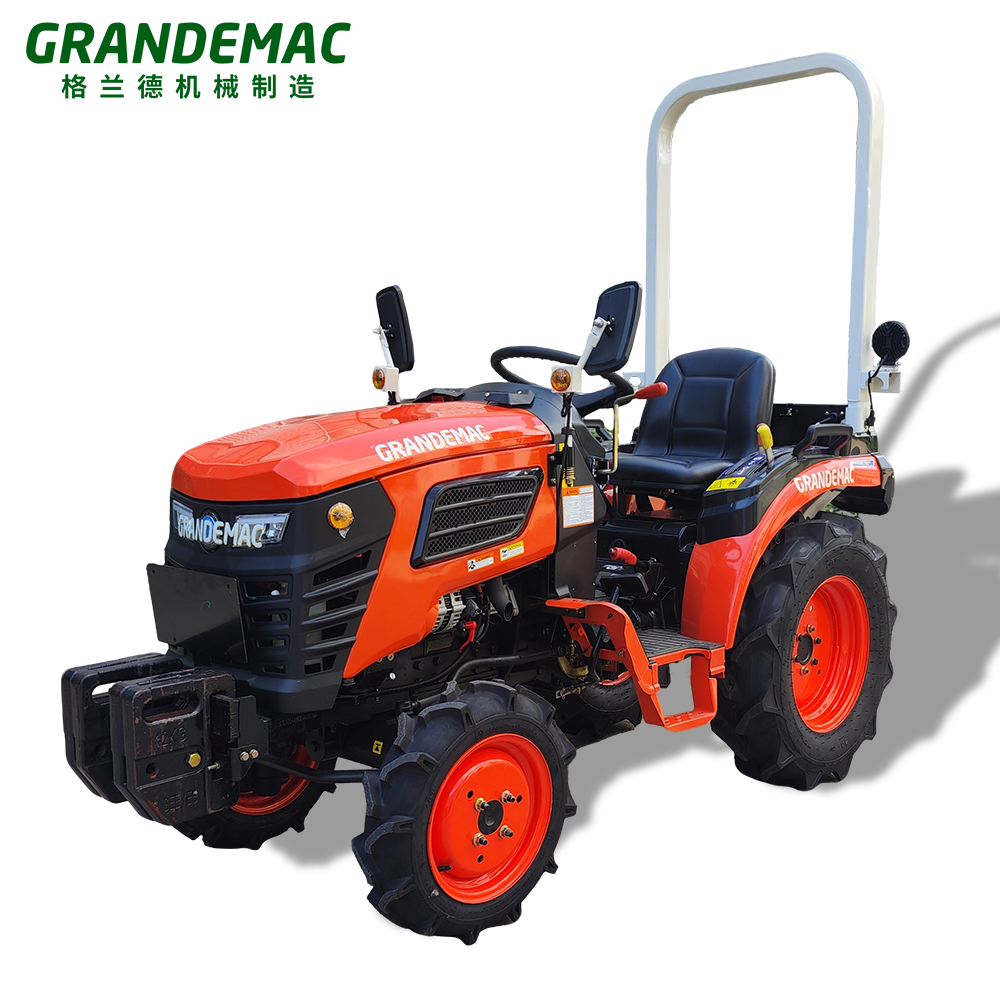
Orchard farming presents unique and daily operational constraints. You must continuously navigate narrow rows and low-hanging tree canopies. You also manage variable, often treacherous ground conditions. Traction loss on wet grass, deep mud, or steep inclines creates immediate farm bottlenecks. It leads directly to delayed chemical spraying schedules. It increases fuel consumption from excessive wheel slip. Furthermore, poor traction poses severe rollover safety risks for operators. Addressing these physical limitations requires robust mechanical solutions. Our purpose is to objectively evaluate how engaging a four-wheel-drive system directly alters equipment dynamics. We will examine how an empowered front axle translates pure mechanical advantages into operational safety, improved field efficiency, and measurable return on investment. You will learn practical strategies for conquering specific terrain challenges without destroying delicate root ecosystems.
Key Takeaways
4WD drastically improves traction on soft ground, reducing wheel slip and minimizing harmful soil compaction around delicate root zones.
On slopes, an engaged front axle provides critical engine braking capabilities, preventing freewheeling when descending with heavy implements like sprayers.
While 4WD increases upfront costs and slightly widens the turning radius, the operational uptime gained in wet seasons usually offsets the investment.
Proper operation requires disengaging 4WD on hard surfaces to prevent front-axle binding and accelerated tire wear.
The Physical Realities of Orchard Terrain (Framing the Problem)
The Threat of Slopes and Implements
Working on slopes introduces complex weight transfer dynamics. Hauling a heavy liquid sprayer up a hillside completely alters a machine’s center of gravity. Liquid sloshes backward during the climb. This dynamic fluid movement unweights the front steering tires. When the front end becomes too light, steering control vanishes. Conversely, descending a slope pushes immense weight onto the front axle. A rear-wheel-drive machine struggles to hold back heavy trailed implements. The trailing weight forcefully pushes the chassis downhill. This pushing effect causes dangerous jackknifing scenarios if operators apply brakes unevenly.
Soft Ground and Soil Compaction
Orchard soils require careful management to sustain healthy root systems. Two-wheel-drive machines fundamentally struggle in soft, loamy dirt. They compensate for their lack of traction by digging into the earth. The rear tires spin rapidly to find a solid grip. This spinning action causes excessive wheel slip. High wheel slip shreds the topsoil and carves deep ruts between the tree rows. These ruts act as localized soil compaction zones. Compacting the soil aggressively squeezes out essential oxygen and water channels. Delicate feeder roots situated just below the surface suffer permanent damage. Destroying these root networks directly impacts subsequent crop yields.
The "Wet Grass" Hazard
Farmers often underestimate the severe hazard of wet grass. Morning dew creates an incredibly slick surface layer over hard-packed dirt. Post-rain vegetation acts like a sheet of ice under rubber tires. Navigating a mild slope under these conditions frequently causes a complete loss of directional control. A standard two-wheel-drive machine easily breaks traction. Side-hilling becomes a terrifying experience. The machine begins to slide sideways down the grade. Once a lateral slide initiates, operators cannot easily steer out of it. Gravity simply pulls the dead front axle downhill. This specific hazard leads to numerous equipment collisions and operator injuries every harvest season.
How 4WD Alters Tractor Dynamics in the Field
Pulling vs. Pushing
Activating a four-wheel-drive system mechanically transforms how the machine interacts with the ground. A two-wheel-drive chassis pushes the dead weight of the front axle. The front tires essentially act as obstacles trying to roll over uneven terrain. Four-wheel drive fundamentally changes this dynamic. The front tires become active participants in forward momentum. They actively pull the chassis forward while the rear tires push. This synchronized pulling and pushing action allows the front tires to climb over mud mounds and rocks. They claw their way up slopes instead of acting like dead anchors. It dramatically reduces the rolling resistance encountered during heavy field work.
Downhill Engine Braking
Industry safety experts identify downhill engine braking as the most critical safety feature for hilly orchards. Descending a steep grade requires absolute speed control. Four-wheel drive mechanically locks the front and rear axles together through the transfer case. This rigid connection allows the engine compression to brake all four wheels simultaneously. The engine acts as a massive air pump resisting downward momentum. It prevents the machine from freewheeling. Operators no longer need to ride the service brakes. Overusing service brakes causes extreme heat buildup and eventual brake fade. Utilizing the front axle for braking keeps the descent slow, controlled, and exceptionally safe.
Weight Distribution and Center of Gravity
Specialized equipment designed for fruit production already features a lowered center of gravity. Manufacturers intentionally drop the seating position and chassis height. Adding a powered front axle enhances this baseline stability. The heavy front differential and associated drive gears add crucial static weight low to the ground. This extra mass over the front tires further anchors the machine against lateral rollover risks. The machine stays planted firmly when traversing uneven side-hills. The improved weight distribution ensures all four tires maintain an equal contact patch. Consistent ground contact directly translates to predictable handling in unstable environments.
4WD vs. 2WD: Evaluating the Operational ROI
Uptime and Weather Resilience
Farming strictly adheres to biological clocks, not human conveniences. Fungal infections demand immediate chemical applications regardless of recent rainfall. A four-wheel-drive drivetrain delivers exceptional weather resilience. It allows you to maintain critical spraying and harvesting schedules. You no longer wait three extra days for the mud to dry. Gaining access to wet fields ensures timely fungicide applications. This operational uptime saves entire crops from catastrophic spoilage. The ability to work reliably in adverse weather provides a massive operational return on investment.
Drivetrain Operational Metrics Matrix
Operational Metric
2WD Performance
4WD Performance
Traction in Mud
Poor (High Wheel Slip)
Excellent (Active Front Pull)
Steep Descent Safety
Low (Rear Braking Only)
High (Four-Wheel Engine Braking)
Soil Compaction Risk
High (Ruts from Spinning)
Low (Distributed Power)
Turning Radius
Tight (Max Steering Angle)
Slightly Wider (Axle Limits)
Fuel Efficiency
Many buyers falsely assume four driven wheels always consume more diesel. Activating the front axle does draw slightly more parasitic engine power. However, it often uses less overall fuel in muddy conditions. Two-wheel-drive configurations frequently experience ten to twenty percent wheel slip. The rear tires spin uselessly while burning fuel. Four-wheel drive eliminates this wasted energy. By achieving zero wheel slip, the machine converts every drop of diesel into forward progress. You cover more acres per hour. Finishing field tasks faster directly reduces your total daily fuel consumption.
Drawbacks and Trade-offs (The Skeptical Lens)
Objectively evaluating equipment requires viewing trade-offs through a skeptical lens. Adding a driven front axle increases the initial purchase price. It introduces more mechanical complexity. You must maintain transfer cases, extra gear oil, and exposed U-joints. Furthermore, the powered front axle slightly reduces the maximum steering angle. It inherently creates a wider turning radius. You will need slightly more room to swing around at the end of a tight orchard row. However, most operators mitigate this limitation by skillfully applying independent split brakes during tight headland turns.
Why a 30HP Orchard Tractor Hits the Sweet Spot for 4WD
Power-to-Weight Ratio
Selecting the correct horsepower class determines your daily field agility. A 30HP Orchard Tractor provides an ideal power-to-weight ratio for mid-sized operations. It generates sufficient PTO horsepower to run standard flail mowers and air-blast sprayers confidently. Crucially, the chassis remains light enough to avoid bogging down in soft, saturated soils. Heavy machinery sinks rapidly. A lighter footprint stays buoyant on top of the mud. This perfect balance ensures you complete heavy PTO tasks without destroying the orchard floor in the process.
Maneuverability Meets Traction
This specific machine footprint perfectly balances competing field demands. It must clear incredibly tight tree spacings while maintaining hillside stability. A 30-horsepower chassis possesses the exact wheelbase length required to make four-wheel drive effective on steep grades. If the wheelbase is too short, the machine becomes dangerously unstable. If it is too long, you cannot navigate the canopy rows. This footprint threads the needle beautifully. It delivers tenacious traction without sacrificing the nimbleness required for dense fruit plantations.
Implement Compatibility
Front-end loader tasks highlight the true value of an empowered front axle. Moving heavy harvest bins requires substantial front-end lifting capacity. When you scoop a heavy load, the rear tires lift slightly. They lose their traction. A rear-wheel-drive machine becomes completely stranded under heavy loader work. The 30-horsepower range paired with a driven front axle handles these tasks effortlessly. The front tires grip the dirt and pull the heavy harvest bins across the field. It vastly outperforms much higher-horsepower two-wheel-drive alternatives during material handling chores.
Implementation Risks: Operator Best Practices for 4WD
When to Disengage
Mechanical sympathy extends the life of your equipment. Operators must actively manage when they engage the front axle. You must firmly warn operators against driving in four-wheel drive on paved roads. Hard-packed dirt and asphalt offer too much grip. Turning on these surfaces causes drive-train wind-up. The front and rear axles rotate at slightly different speeds during a turn. On pavement, the tires cannot slip to relieve this rotational tension. This phenomenon is called axle binding. Axle binding destroys internal transfer case gears and causes severe premature tire wear. Always disengage the system before hitting the highway.
Follow these numbered steps when transitioning surfaces:
Stop the machine completely before leaving the dirt row.
Shift the engagement lever to the disconnected position.
Drive forward slowly to ensure the gear collar releases entirely.
Proceed safely onto the paved transit road.
Maintenance Realities
Operating in harsh environments necessitates strict maintenance adherence. The front axle requires dedicated fluid changes according to the manufacturer's intervals. You cannot ignore the front differential gear oil. Furthermore, orchard environments feature abundant debris. Low-hanging branches and thick brush constantly attack the undercarriage. You must routinely inspect the front tie-rods, rubber boots, and steering cylinder seals. A torn rubber boot allows abrasive dirt to enter the U-joints. Preventative visual inspections prevent catastrophic mechanical failures during the peak harvest rush.
Tire Selection
A four-wheel-drive system is only as good as its rubber contact patch. The tires translate mechanical torque into physical grip. Selecting the wrong tread pattern neutralizes the mechanical advantages.
R1 Agricultural Tires: Feature deep, aggressive chevron lugs. They offer maximum pulling power in deep mud. However, they aggressively tear up turf during sharp turns.
R4 Industrial Tires: Feature wider, shallower lugs. They distribute weight evenly and protect grassy orchard floors. They offer less ultimate mud traction but provide excellent puncture resistance against sharp branches.
Evaluate your specific mud-to-turf ratio before purchasing replacement rubber. Match the tread void design directly to your prevailing soil conditions.
Conclusion
Evaluating an equipment upgrade requires looking beyond the initial sticker price. Four-wheel drive serves as a fundamental requirement for operator safety and schedule reliability. It is never merely a luxury feature for hilly or wet orchards. The mechanical advantages directly solve critical field bottlenecks. The front axle prevents dangerous downhill freewheeling and eliminates soil-destroying wheel slip.
Buyers must calculate the hidden costs of their current limitations. Factor in the severe cost of missed chemical spray windows. Account for the expensive labor required to repair deep mud ruts each spring. When you tally these hidden expenses, the price premium for upgrading makes complete economic sense.
Take actionable steps to verify these claims on your own property. Schedule an on-site dealer demonstration soon. Ask to test a dedicated Orchard tractor directly on your farm's steepest actual slope. Test the turning radius between your tightest rows. Experiencing the active front-axle traction firsthand provides the final validation you need for a smart business purchase.
FAQ
Q: Does 4WD make an orchard tractor impossible to roll over?
A: No. While it significantly improves traction and downhill braking, it does not override gravity. Poor side-hill operating practices, excessive speeds, or hitting a stump on an incline easily cause rollovers. It raises the safety margin but never replaces cautious operator judgment.
Q: How much does 4WD increase the turning radius in narrow rows?
A: Powered front axles restrict the maximum steering angle due to U-joint mechanical limits. This typically adds 10 to 15 percent to the turning radius compared to 2WD models. You easily mitigate this by utilizing the independent split brakes to pivot the machine at the row end.
Q: Can I add 4WD to my existing 2WD orchard tractor?
A: No. Adding a driven front axle requires a factory-integrated transmission case, internal transfer gears, and a synchronized drive shaft. Modifying a standard 2WD chassis is structurally impossible and economically unfeasible.
Q: Is differential lock the same as 4WD?
A: They are entirely different mechanical functions. A differential lock forces the two rear wheels to spin together at the exact same speed to escape mud. Engaging the front axle provides four-point ground contact, actively pulling the chassis over obstacles.