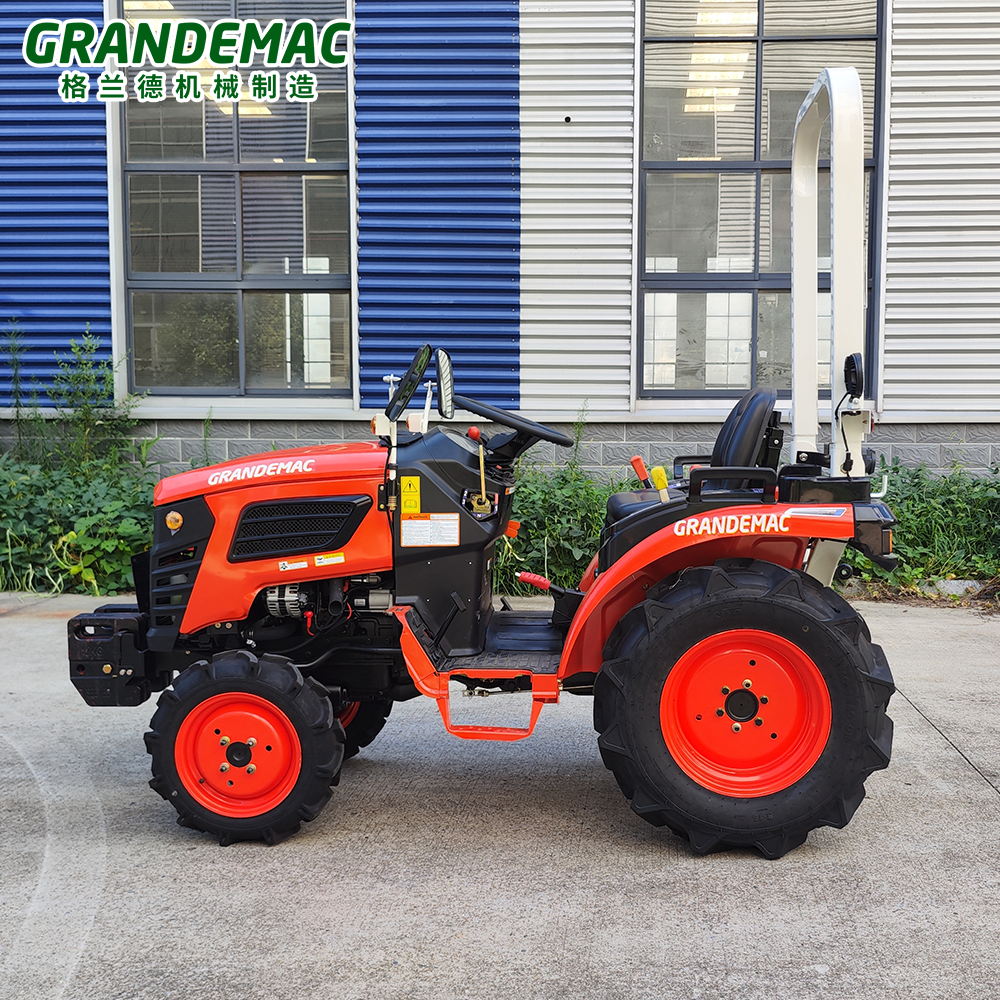
Selecting equipment for your agricultural operation requires a delicate balancing act. Modern farming increasingly relies on high-density plantings to maximize yield per acre. This shift forces growers into tighter spaces with smaller margins for error. You need a machine agile enough to navigate tight rows without tearing into valuable crop canopies. Yet, it must deliver sufficient Power Take-Off (PTO) output to run heavy, commercial-grade implements.
Buying the wrong size machine often leads to disastrous outcomes. A machine too large causes compromised yields through severe branch and fruit damage during mid-summer passes. Conversely, running an under-powered engine against oversized sprayers causes rapid equipment burnout and massive repair bills. This guide provides a pragmatic framework to evaluate your equipment options carefully. We will explore how real-world constraints dictate your final choice. You will learn how row spacing, implement demands, and varied terrain interact, helping you make an informed and highly effective equipment decision.
Key Takeaways
Size vs. Power: Small tractors offer ultimate maneuverability but often lack the PTO output required for commercial-scale sprayers and flail mowers.
The Narrow Row Standard: A true compact orchard tractor is purpose-built with a narrow track and low center of gravity, distinguishing it from standard compact utility tractors.
Future-Proofing: Row measurements must account for peak seasonal canopy growth, not just trunk-to-trunk distance, to avoid fruit damage during harvest.
Implement Dictates Purchase: Always calculate your highest-demand implement’s minimum PTO horsepower before finalizing a tractor class.
Defining the Tiers: Small vs. Compact Orchard Tractors
Orchards present highly unique operational challenges. Standard utility classifications rarely apply well to these constrained environments. Buyers must distinguish clearly between general-use machinery and purpose-built specialty equipment. Choosing correctly prevents frustrating operational bottlenecks down the road.
Small Orchard Tractors (Sub-Compact & Light Compact)
These models represent the entry level for property maintenance. They typically feature between 20 and 35 Engine HP. Manufacturers build them using a lightweight, standard frame. They excel perfectly in hobby setups or small homesteads. You can use them for light mowing, pulling small utility trailers, and maintaining properties featuring much wider plant spacing.
However, they face distinct operational limitations. A small orchard tractor inherently lacks the structural weight necessary for heavy lifting. Its lighter axles and smaller hydraulic pumps restrict lifting capacity significantly. Furthermore, the limited PTO power absolutely prohibits the use of commercial air blast sprayers. If you try to run heavy flails on these units, the engine will bog down instantly, leading to frustrating delays.
Compact Orchard Tractors (Specialty Narrow)
These machines pack serious industrial capability into a highly constrained footprint. They typically deliver anywhere from 40 to 75+ Engine HP. Manufacturers construct them using heavy cast-iron chassis. They feature narrow axles, often measuring well under 55 inches wide.
A true compact orchard tractor thrives in high-density plantings and commercial vineyards. They effortlessly run heavy PTO-driven implements day after day. Key differentiators separate them from standard models. You will find low-profile bodywork designed to slip under branches. They offer specialized creeper gears for ultra-slow harvesting speeds. They also utilize fold-down ROPS (Roll-Over Protective Structures) or highly specialized low-profile cabs to protect operators while maximizing clearance.
Dimension Criteria: Measuring for Narrow Rows and Canopies
An orchard tractor for narrow rows must navigate the field perfectly during the busy harvest season. It is simply not enough to fit between trunks during winter dormancy. You must actively account for maximum seasonal canopy expansion.
Tread Width and Turning Radius
First, you must measure your minimum required width correctly. Do not confuse track width with overall width. Track width measures from the center of one tire to the center of the opposite tire. Overall width measures from the outside edge of the tire to the outside edge of the opposite tire. The overall width truly dictates whether the machine clears your trellises and fruit zones.
Next, evaluate the turning radius meticulously. Headland space at the end of your rows is often remarkably tight.
If your machine cannot make a seamless U-turn, you risk damaging expensive end-post anchors.
You will lose valuable operational time constantly backing up and realigning.
Operators suffer higher fatigue from continuously wrestling steering wheels in confined spaces.
Vertical Clearance
Evaluate your vertical clearance carefully. Standard-height models risk snagging low-hanging branches constantly. This leads directly to avoidable crop loss and damaged equipment panels.
Fold-down ROPS: These structures prove excellent for ultra-low canopies. They allow maximum clearance when lowered. However, they expose operators directly to harsh weather and chemical spray drift.
Low-Profile Cabs: These provide essential operator protection during hazardous spraying operations. They feature sloped contours to gently push branches aside. However, you must verify the exact roof height against your lowest fruiting wire before purchasing to avoid trellis damage.
Implement Requirements: The PTO Power Threshold
A machine's physical footprint means absolutely nothing if it cannot power your essential tools. Implement capability always dictates your final purchase decision. Physical size only matters after you secure enough operational power.
Auditing Implement Demands
You must calculate your required PTO horsepower accurately. Engine horsepower alone can deceive you. Keep in mind, PTO HP usually runs 15 to 20 percent lower than the stated engine HP. The transmission and internal hydraulics consume a significant portion of the engine's raw output before it reaches the rear shaft.
Consider your two most demanding field applications:
Sprayers: Air blast sprayers demand significant continuous PTO power to spin massive high-velocity fans. They also require substantial equipment weight to maintain stability when the liquid tanks are completely full.
Mowers: Flail mowers handle thick pruning branches and heavy field debris. They demand much higher rotational torque than standard rotary brush cutters. If your PTO weakens under load, the flails will jam immediately.
Decision Logic
If your implements demand 40 or more PTO HP, standard lightweight machines fall entirely short. This reality forcefully mandates an upgrade to purpose-built, heavy-duty specialty models capable of sustaining high loads.
Implement Power Requirements and Machine Suitability
Implement Type
Typical PTO HP Needed
Suitable Machine Class
Risk of Under-Powering
Light Rotary Mower (4 ft)
15 - 20 HP
Small / Sub-Compact
Rough cuts, occasional bogging
Heavy Flail Mower (5-6 ft)
35 - 50 HP
Specialty Compact
Snapped belts, stalled engines
Weed Sprayer (Boom)
10 - 15 HP
Small / Sub-Compact
Minimal risk, easy load
Commercial Air Blast Sprayer
45 - 65+ HP
Specialty Compact
Inadequate spray coverage, PTO failure
Terrain, Traction, and Stability
Agricultural floors introduce slippery mud, wet grass, and steep inclines. Traction directly impacts your daily productivity. It also guarantees operator safety in hazardous hillside conditions.
The Need for 4WD
A mini 4WD orchard tractor is functionally mandatory for most serious commercial operations. Pulling a fully loaded spray tank through soft spring mud requires actively driven front axles. Two-wheel drive units simply spin out under heavy loads. They dig themselves into deep ruts, halting your entire schedule. Four-wheel drive provides the vital pulling force needed to conquer adverse weather windows without getting stuck.
Slope Stability
Consider the vehicle's center of gravity carefully. Standard utility units sit much higher off the ground to clear general field debris. This elevates the tip risk dangerously on steep side-hills. Specialty narrow models utilize purposely lowered drop-axles. This specific engineering drops the center of gravity drastically. It vastly improves hillside stability, keeping operators safe on uneven, sloping terrain.
Soil Compaction Mitigation
Proper weight distribution remains critical for long-term plant health. Specialty units are intentionally heavy to support large implements. However, they must not destroy your delicate soil structure. Proper tire selection effectively mitigates this severe risk. Utilizing wide radial or specialized flotation tires distributes the machine's dense mass over a much larger surface area. This prevents deep rutting. It aggressively protects delicate root zones from severe compaction, ensuring your trees absorb water and nutrients efficiently.
Implementation Risks and Operational Longevity
Many buyers fall quickly into the common "under-buying" trap. Purchasing a smaller, standard unit seems highly appealing initially due to lower retail prices. However, this often results in disastrous premature transmission failure. Overworking a small engine beyond its intended capacity guarantees frequent, catastrophic breakdowns.
Upfront Build vs. Longevity
True specialty models carry a premium price tag upfront. This reflects their highly specialized engineering. They feature thick cast-iron components, heavy-duty hydraulic pumps, and customized gearing ratios. In harsh commercial settings, this robust build translates directly to vastly extended operational lifespans. They simply withstand the brutal daily demands of spraying, mowing, and harvesting far better than standard light-duty counterparts. They rarely overheat under continuous heavy loads, ensuring you stay in the field when timing matters most.
Dealer Support and Parts
Never underestimate local dealership infrastructure. Harvest and spraying windows remain notoriously brief. If a critical part breaks, you need immediate access to exact replacements. Relying on a dealer who actively stocks specialized narrow parts ensures you never miss critical application windows. A breakdown during peak spraying season can easily ruin an entire crop if the replacement part takes weeks to arrive from overseas.
Conclusion
Choosing the correct equipment ultimately defines your operational success in the field. Standard light-duty machines excel perfectly in wide, hobby-scale rows. Conversely, heavy-duty specialty units stand as essential assets for running large implements through commercial tight spaces. They provide the necessary low profile, raw PTO output, and structural weight.
Take these immediate next steps to finalize your decision:
Audit your heaviest implement's manual to find the exact continuous PTO horsepower requirements.
Physically measure your narrowest row during full summer canopy growth, not winter dormancy.
Measure your lowest hanging fruiting wire or trellis support to determine maximum vertical clearance.
Request an on-site demo from your local equipment dealer.
Test the headland turning radius directly with a loaded implement attached to gauge maneuverability.
FAQ
Q: What is the minimum row spacing for a compact orchard tractor?
A: Minimum spacing varies based on the specific crop and canopy style. Generally, commercial high-density plantings feature 8 to 10-foot rows. Navigating these safely requires specific narrow-track models. The overall width of these specialized machines often sits below 55 inches, ensuring they pass through cleanly without snagging branches or bruising delicate fruit.
Q: Can I use a standard sub-compact tractor in an orchard?
A: Yes, you can use them easily in wide-spaced hobby settings. However, they sorely lack the hydraulic capacity, PTO power, and low profile needed for rigorous commercial tasks. While they fit easily into rows, they cannot safely pull heavy air blast sprayers or run aggressive flail mowers without stalling the engine.
Q: How much PTO horsepower do I need for an air blast sprayer?
A: It heavily depends on the tank capacity and fan diameter. Most commercial air blast sprayers require a realistic range of 40 to 60+ PTO horsepower. Always verify the manufacturer specifications, ensuring your machine can comfortably handle the continuous operational load without severely overheating the transmission or engine block.
Q: Are cab tractors feasible for tight orchard rows?
A: Absolutely. Manufacturers design specialty low-profile cabs specifically for extremely tight agricultural spaces. Their sloped, reinforced roofs gently deflect branches smoothly without damaging delicate fruit. These specialized cabs protect operators completely from harsh chemical drift while allowing safe, uninterrupted passage through incredibly dense summer canopies.