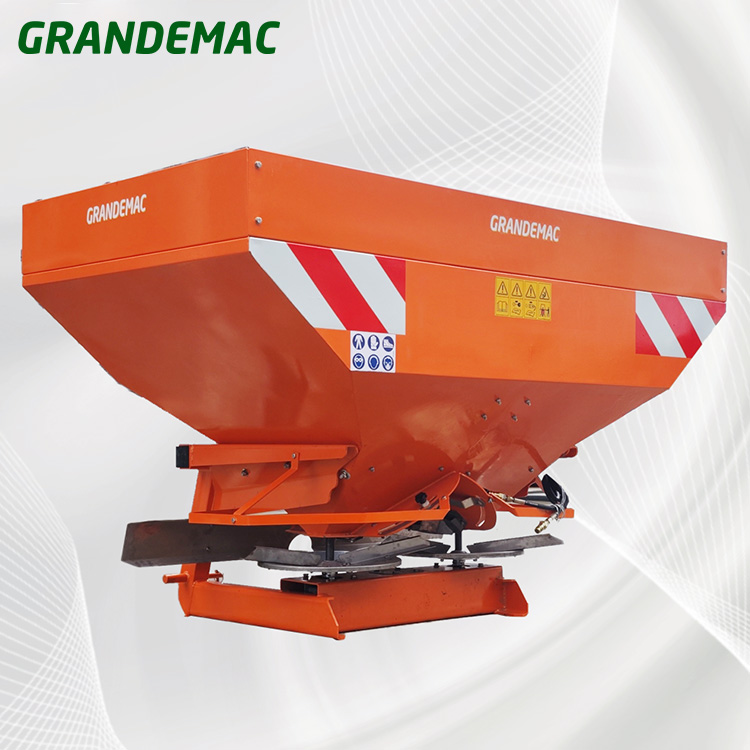
Uneven fertilizer application directly threatens your farming bottom line. Wasted agronomic inputs and localized crop burn create significant yield gaps across commercial fields. Transitioning from basic broadcast methods to precision application demands the right equipment. Using a standard tractor fertilizer spreader without proper pattern overlap often leaves distinct green and yellow stripes behind your machine. This inconsistency means parts of your crop starve while others suffer from severe nutrient toxicity. As fertilizer prices fluctuate, you simply cannot afford to throw material into nearby waterways or over-apply on headlands. This guide evaluates the mechanical realities and operational benefits of upgrading your current setup. You will learn exactly how modern twin-disc systems operate under actual field conditions. We will also explore the specific farm scenarios where investing in a double disc fertilizer spreader makes undeniable financial and agronomic sense.
Key Takeaways
Double disc spreaders utilize two contra-rotating discs to create a symmetrical, overlapping spread pattern, significantly reducing striping in the field.
They offer operational widths far exceeding single-disc models, making them the baseline standard for mid-to-large-scale acreage.
While they carry a higher upfront cost and require precise calibration, the reduction in material waste and improved Coefficient of Variation (CV) typically offset the investment.
Proper selection requires matching hopper capacity to tractor payload and ensuring corrosion-resistant (e.g., stainless steel) components.
The Mechanics: How a Double Disc Fertilizer Spreader Works
Understanding equipment mechanics helps you make better agronomic decisions. A standard drop spreader simply lets material fall straight down through holes. A centrifugal broadcast system uses spinning force to throw granules outward. Twin-disc systems optimize this centrifugal action.
The Twin-Disc Advantage
A typical twin-disc machine features two contra-rotating discs. The left disc spins counter-clockwise. The right disc spins clockwise. They distribute granular material outward. This creates an overlapping "double-pass" pattern on a single run. The overlap ensures even coverage. It prevents the heavy-center application often seen in basic models.
Flow and Agitation
The hopper channels fertilizer downward through adjustable gates. These gates control the exact flow rate. Inside the hopper base, slow-rotating agitators stir the material. They ensure consistent flow onto the spinning discs. High-speed agitation would pulverize fragile granules into dust. Dust blows away easily and wastes your money. Slow agitators prevent this granule breakdown before the material hits the spinning vanes.
Power Source Integration
These machines require steady power to maintain accuracy. Most models connect directly to the tractor's Power Take-Off (PTO) shaft. Some utilize hydraulic drive integration instead. Both systems keep disc RPMs completely consistent. Ground speed variations do not affect the spinning discs. You maintain the required spread width even when navigating small hills.
Single Disc vs. Double Disc vs. Pendulum: Evaluating Your Options
Selecting the right machinery depends heavily on your acreage and crop type. Farmers typically choose between three distinct broadcast designs.
Single Disc Limitations
Single disc models use one spinning plate. They inherently throw more material to one side. This creates a highly asymmetrical spread pattern. They also feature very narrow working widths. These units remain best suited for small paddocks, turf maintenance, or lifestyle blocks. Large commercial farms find them inefficient.
Pendulum Spreaders
A pendulum machine swings a spout back and forth. This action provides excellent accuracy. Pendulum models resist wind drift exceptionally well. However, they suffer from strict width limitations. You rarely see pendulum models achieving the massive widths required for broadacre farming. They usually max out around 12 to 14 meters.
The Double Disc Edge (The CV Factor)
Precision agriculture relies on the Coefficient of Variation (CV). The CV serves as the industry-standard metric for spread uniformity. A high CV means uneven application. A low CV indicates highly uniform coverage. Agronomists generally target a CV below 15%. Modern twin-disc machines easily hit CVs below 10%. They achieve this accuracy across massive passes. You can comfortably spread from 12m up to 36m or more. This makes them the ultimate choice for large operations.
Spreader Type
Spread Pattern
Ideal Working Width
Best Farm Application
Single Disc
Asymmetrical (One-sided)
2m - 10m
Small paddocks, turf, orchards
Pendulum
Symmetrical (Linear)
6m - 14m
Windy conditions, sensitive crops
Double Disc
Symmetrical (Overlapping)
12m - 36m+
Broadacre farming, large pastures
Core Operational Advantages for Commercial Farming
Scaling up your farm requires equipment capable of covering more ground quickly. Twin-disc systems deliver three distinct operational benefits.
Wider Application Passes (Time Efficiency)
Moving from a 12m single disc to a 24m twin-disc setup changes your workflow entirely. You instantly cut your field passes in half. Fewer passes mean massive time savings. You burn significantly less diesel fuel per hectare. Furthermore, you drastically reduce soil compaction. Limiting tractor wheel traffic protects your soil structure. Healthy soil promotes deeper root growth and higher yields.
Boundary Control Features
Applying nutrients near fences or streams presents environmental challenges. Modern twin-disc machines include boundary control features. These include deflector systems or tilt mechanisms.
Deflectors: Physical shields drop down to block fertilizer from leaving the field boundary.
Tilt Mechanisms: The machine angles slightly inward to alter the trajectory of the granules.
Independent Shut-offs: You can completely shut off one disc when driving along a waterway.
These features allow precise spreading along field edges. You never violate environmental compliance rules. You also stop wasting expensive product on gravel roads.
Material Versatility
Farm operations rarely use just one product. You need equipment capable of handling various material densities. Twin-disc machines adjust easily to different inputs. You can spread heavy superphosphate. You can broadcast lightweight urea. You can even sow cover crop seeds. You simply adjust the vane angles and the hopper drop points. This versatility maximizes your machinery investment.
Implementation Realities and Potential Drawbacks
Every equipment upgrade brings new management requirements. Twin-disc units introduce specific challenges you must acknowledge before purchasing.
Higher Initial CapEx
You must set transparent expectations regarding the purchase price. Twin-disc models cost significantly more upfront than single-disc alternatives. They utilize two heavy-duty gearboxes instead of one. They require larger hoppers and heavier frames. This higher initial capital expenditure requires a larger immediate budget. You must evaluate if your acreage justifies the premium price tag.
Calibration Complexity
Dual discs demand strict calibration routines. If you set the drop point incorrectly, the overlapping pattern fails. An incorrect vane angle ruins the distribution. This failure creates a "W" or "M" shaped uneven spread. You will see thick green stripes and yellow gaps in your crop. Complex calibration frustrates some operators initially. Proper training remains essential for success.
Maintenance Overhead
More moving parts always equal more maintenance. These spreaders utilize two gearboxes and dual agitators. Fertilizer dust causes severe corrosion rapidly. You must perform strict post-operation washdowns. You must dry the machine thoroughly. You must also adhere to strict greasing intervals for all PTO shafts and bearings. Neglecting these chores leads to expensive premature failures.
Field Calibration for Maximum Accuracy (E-E-A-T Focus)
Industry professionals never trust factory settings alone. Granule size and density change between batches. You must calibrate your machine physically in the field.
The Catch-Test Protocol
Performing a catch-test guarantees physical distribution uniformity before full-scale application.
Place equal-sized catch trays evenly across your targeted spread width.
Drive the tractor over the trays at your intended operating speed.
Pour the collected granules from each tray into separate measuring tubes.
Compare the volume levels across the tubes visually.
Adjust your vane angles or drop points if the center or edges run heavy.
This protocol visualizes your exact spread pattern. It removes all guesswork from the process.
Granular Density Considerations
A spreader requires re-calibration every time you switch fertilizer types. Lightweight urea behaves entirely differently than dense potash. Potash flies further off the spinning discs. Urea meets air resistance faster and drops sooner. You cannot use the same settings for both materials. Check your manufacturer's specific charts for each product density.
PTO Speed Adherence
The entire overlap pattern relies on centrifugal force. You must maintain the manufacturer-specified PTO RPM. This specification is usually 540 RPM. If your engine bogs down on a hill, the disc speed drops. The fertilizer will not reach the outer edges of the pattern. Choose the right tractor gear to keep engine RPMs steady regardless of terrain.
What to Look for When Shortlisting a Spreader (Buyer’s Framework)
Buying the wrong specification severely limits your field efficiency. Use these technical guidelines when evaluating different brands.
Tractor Matching
You must match the spreader's maximum loaded weight to your specific tractor's rear linkage lifting capacity. A 1200L hopper filled with dense fertilizer becomes extremely heavy. If it exceeds your rear linkage limit, you risk damaging your tractor hydraulics. It also makes the tractor's front end dangerously light. Always check your tractor manual before sizing a new fertilizer spreader.
Build Quality & Materials
Fertilizer acts as a highly corrosive agent. Standard painted steel deteriorates rapidly in this environment. Stress the importance of high-grade materials. Look for machines utilizing stainless steel hoppers. The spinning vanes and base plates must also feature stainless steel construction. Stainless steel survives highly corrosive environments and dramatically extends machinery lifespan.
Technology Integration
Modern precision agriculture requires smart implements. Discuss technology options with your dealer. Weigh cells (load cells) constantly measure the material remaining in the hopper. They adjust the flow rate automatically based on your forward speed. ISOBUS compatibility allows the spreader to communicate directly with your tractor's main screen. This integration enables variable rate application (VRA) if your farm utilizes prescription ag software.
Conclusion
A high-quality spreading system represents a critical tool for modern agriculture. We outlined the mechanical advantages of utilizing contra-rotating discs for wide, overlapping passes. We explored the efficiency gains realized through faster application times and precise boundary control.
Keep these final takeaways and next steps in mind:
Audit your current tractor specifications immediately. Verify your precise rear linkage lift capacity and PTO configuration.
Contact manufacturers to request material-specific spread charts. Ensure their machines handle the exact fertilizers you use.
Commit to a strict catch-test protocol. Field calibration prevents costly striping and yield loss.
Prioritize stainless steel components. Corrosion resistance protects your capital investment long-term.
FAQ
Q: Can a double disc fertilizer spreader be used for sowing seed?
A: Yes. You can broadcast cover crops or pastures using this equipment. You must make minor vane adjustments and restrict the hopper gate openings. Seeds are lighter than fertilizer, so the effective spread width will be significantly narrower. Always perform a catch-test to verify the new width.
Q: What is the ideal speed for operating a tractor fertilizer spreader?
A: Ideal ground speed usually falls between 8 to 15 km/h, depending on field smoothness. However, you must maintain a constant engine RPM to keep the PTO at 540 RPM. Ground-drive or GPS-linked rate controllers adjust the hopper gates automatically as your forward ground speed fluctuates.
Q: How often do spreading vanes need to be replaced?
A: Vane lifespan depends entirely on your annual acreage and material abrasiveness. Spreading highly abrasive materials like basic slag wears vanes down quickly. Check vanes annually. Replace them immediately if you notice grooving or thinned edges, as worn vanes drastically alter your target spread pattern.