

close
Choose Your Site
Global
Social Media
Views: 0 Author: Site Editor Publish Time: 2026-07-06 Origin: Site


The landscaping market is rapidly shifting toward battery-powered equipment. However, residential marketing often ignores the harsh realities of heavy-duty property maintenance. Relying on battery technology alone simply causes frustrating delays and underwhelming results for many owners. You need a reliable solution for yards over half an acre, dense overgrowth, or uneven topography. A traditional gas-powered machine remains the pragmatic choice for these specific operational thresholds. It delivers the sustained torque required to finish tough jobs without interruption.
We will move past basic marketing features in this guide. You will learn an objective evaluation framework to match engine displacement, drive mechanics, and maintenance realities to your property. We focus explicitly on walk-behind and self-propelled gas models. By the end, you will understand the strict cutoff points between residential utility and commercial-grade necessity.
Engine Sizing is Contextual: Higher cubic capacity (CC) does not just mean faster cutting; it prevents stalling in damp or densely packed grass.
Terrain Dictates the Drive System: Flat lawns suit push or Front-Wheel Drive (FWD); slopes and hills strictly require Rear-Wheel Drive (RWD) or All-Wheel Drive (AWD) to prevent operator fatigue and turf damage.
Fuel Quality is the Top Failure Point: Ethanol-blended fuels degrade carburetor seals. Committing to a gas mower requires a strict ethanol-free fuel or stabilizer regimen.
Specialty Edges Require Specialty Tools: Standard rotary mowers fail on extreme ditch banks, where equipment like a verge flail mower is required.
Electric alternatives offer quiet operation and zero emissions. However, they hit a hard performance wall under strenuous conditions. You must identify the exact threshold where electric alternatives fail. At this point, a heavy-duty lawn mower machine becomes the only viable solution.
We define success in gas-powered landscaping through three strict criteria:
Continuous Runtime: Properties exceeding 0.5 to 1 acre demand sustained operation. Waiting for battery charge cycles introduces unacceptable downtime. Gas tanks refill in seconds. You keep moving until the job is done.
Torque Under Load: Thick grass species like Bermuda or Zoysia create immense resistance. Wet conditions multiply this drag. Combustion engines provide the mechanical necessity of sustained torque. They power through dense vegetation without experiencing significant RPM drops. Battery mowers often stall or trigger thermal overloads here.
Longevity in Harsh Conditions: Property maintenance involves rough commercial-use patterns. Operators regularly strike hidden branches, rocks, and thick roots. Heavy-duty steel decks handle these debris strikes beautifully. Lightweight poly-deck alternatives often crack or warp under similar abuse. Combustion engines also endure extended high-heat operation better than early-generation battery packs.
Common mistakes occur when buyers underestimate their yard's density. Never evaluate a mower based solely on lot size. Grass type and moisture levels matter just as much.
Engine displacement measures the volume of the engine's cylinders in cubic centimeters (cc). This metric directly translates to real-world cutting performance. It tells you how much dense grass the mower can process before stalling.
Consider this feature-to-outcome mapping:
140cc to 160cc: These engines serve as the residential baseline. They are ideal for flat, routinely maintained lawns. They struggle in overgrown brush or wet conditions.
160cc to 190cc+ (Commercial Grade): You need this tier for challenging environments. High-displacement engines conquer overgrown brush and wet grass. They also generate enough surplus power to drive heavy All-Wheel Drive (AWD) transmissions without slowing the blade.
Modern mowers rely heavily on Overhead Valve (OHV) technology. Older flathead engines suffered from poor airflow and excessive heat. OHV engines place the valves directly over the combustion chamber. This design serves as the baseline requirement for reliable starting. It dramatically improves thermal efficiency and reduces exhaust emissions.
Deck size geometry introduces another critical trade-off. A standard 21-inch deck offers excellent agility. It navigates tight landscaping easily. It also fits through standard backyard gates without scraping. Conversely, 28-inch wide-area walk-behinds exist for larger properties. They significantly reduce your total pass count. However, they limit maneuverability around complex garden beds.
Engine Size (cc) | Best Grass Condition | Drive System Compatibility | Ideal Lot Size |
|---|---|---|---|
140cc - 150cc | Dry, thin, frequently cut | Push or FWD | Up to 1/4 Acre |
160cc - 170cc | Moderate thickness, occasional wetness | FWD or RWD | 1/4 to 1/2 Acre |
190cc+ | Thick, overgrown, dense species | RWD or AWD | Over 1/2 Acre |
Pushing a 90-pound gas mower takes a physical toll. This method is viable on perfectly flat ground. However, human endurance scales poorly on inclines. Self-propelled systems transition from luxury to necessity as your yard's slope increases.
You must evaluate self-propelled transmissions based on topography:
Front-Wheel Drive (FWD): This system works best for flat yards with multiple obstacles. FWD allows the operator to tip the front wheels up. You can pivot the mower quickly without fully disengaging the drive mechanism. It saves time during tight turns.
Rear-Wheel Drive (RWD): This is the industry standard for uphill mowing. When you push a mower up an incline, gravity shifts its weight backward. RWD capitalizes on this weight transfer. It provides necessary traction where front wheels would simply spin in the dirt.
All-Wheel Drive (AWD): Contractors and rural homeowners rely on AWD. It is strictly essential for undulating terrain, severe slopes, or damp grass. It prevents turf damage by distributing torque evenly across all four wheels.
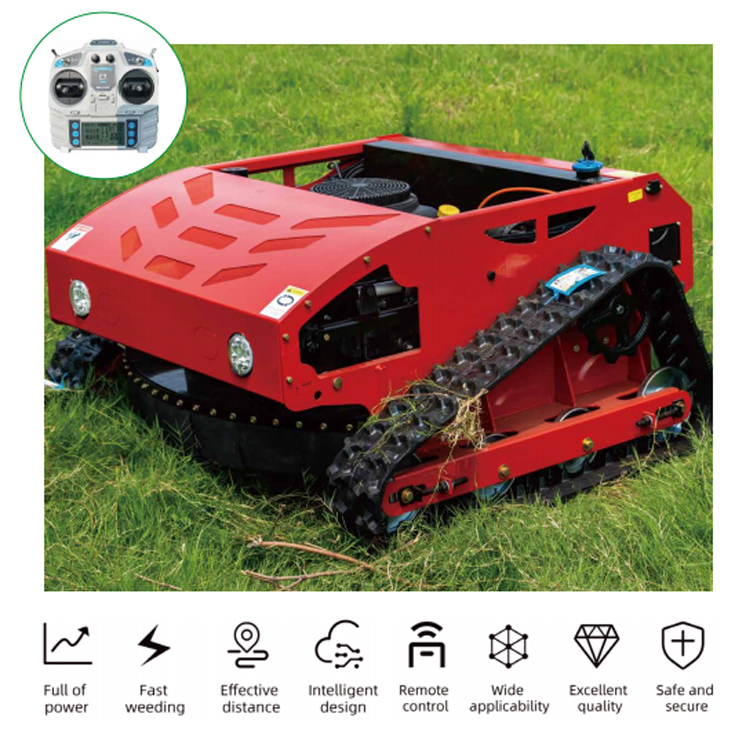
You must acknowledge extreme terrain limitations. Standard rotary mowers fail entirely on severe ditches or highway edges. Tipping a standard mower on a steep angle starves the engine of oil. For steep, rugged embankments, buyers must step outside traditional categories. You should evaluate a verge flail mower for these jobs. They provide safe, scalping-free brush clearing where standard models fail.
Gasoline equipment introduces a specific maintenance burden. Carburetor fouling remains the primary pain point for property owners. Understanding fuel chemistry prevents most operational failures.
The modern ethanol problem plagues small engines. Most pump gas contains 10% to 15% ethanol (E10/E15). Ethanol acts as a solvent and a desiccant. It actively absorbs atmospheric moisture while sitting in your garage. This moisture leads to phase separation. The water and ethanol mixture detaches from the gasoline and sinks to the carburetor bowl. It rapidly degrades rubber seals and rusts metal jets. We strongly recommend strict use of ethanol-free fuel (often sold as REC-90). If this is unavailable, you must use commercial marine-grade stabilizers.
Commit to this routine maintenance checklist to ensure reliability:
Oil Change Intervals: Perform an oil change every 50 operating hours. Always change the oil at the start of a new season. Old oil loses viscosity and accelerates engine wear.
Air Filter Replacement: A clogged filter ruins fuel efficiency. A choked engine runs rich. It wastes expensive fuel and creates carbon-fouling on the spark plug. Inspect the filter monthly.
Blade Sharpening Frequency: Dull blades tear grass instead of cutting it cleanly. Torn grass invites lawn diseases. Furthermore, a dull blade forces the engine to work harder. The engine consumes much more gas just to maintain RPMs. Sharpen blades twice a season.
Avoid leaving untreated fuel in the tank over winter. This single mistake accounts for the vast majority of hard-starting issues in the spring.
You can now build a strict matching logic based on the preceding criteria. Avoid buying a machine based on brand colors or promotional discounts. Select your profile below.
Profile A: The Budget-Conscious Suburbanite
Your yard is small, flat, and routinely maintained. You do not need massive torque. Look for a 140cc engine paired with a Push or FWD system. A 21-inch stamped steel deck provides excellent agility. It keeps the overall machine weight manageable.
Profile B: The Feature-Focused Homeowner
Your medium-sized yard features mild hills and thicker grass patches. Step up to a 160cc engine. You absolutely need RWD to handle the inclines without fatigue. Prioritize variable speed control to match your walking pace. A built-in deck washout port helps maintain the machine easily.
Profile C: The Heavy-Duty Operator
Your property is large, uneven, and features rough terrain. You demand commercial-grade reliability. Specify an engine over 190cc. Pair it with an AWD transmission. A cast aluminum deck resists rusting and absorbs heavy impacts. Look for a blade brake clutch (BBC). This feature keeps the engine running while you empty the grass bag, saving you endless pull-starts.
Your next-step actions dictate the machine's true lifespan. Always verify local dealership support for your chosen engine brand. Honda, Briggs & Stratton, and Kohler dominate the market for a reason. Big-box store return policies expire quickly. Long-term parts availability and local service relationships matter far more than initial purchase convenience.
Buying a gasoline lawnmower is an investment in raw power, extended runtimes, and proven durability. While electric options have their place, combustion engines remain unrivaled for dense grass and expansive acreage.
We urge you to avoid overbuying engine displacement for tiny, flat lawns. Excess weight only makes maneuvering tedious. However, we strongly caution against under-buying drive systems if your property features notable inclines. Pushing a heavy deck uphill ruins the landscaping experience. Finally, secure a local service relationship prior to your purchase. Reliable access to replacement belts, sharp blades, and carburetor service ensures your mower runs flawlessly for a decade.
A: No. Higher CC means more torque for thick grass, but it also increases the dry weight of the mower and consumes more fuel. Match the CC to the grass density and yard size. Overbuying CC for a small, flat lawn only makes turning difficult.
A: Ethanol-free gasoline (often sold as recreation fuel or engineered fuel) is best. If unavailable, use 87 octane with a high-quality fuel stabilizer added immediately at the pump. This prevents moisture buildup and protects the carburetor from internal corrosion.
A: Yes, for properties over 1/4 acre or those with inclines exceeding 10 degrees. The internal belt and transmission require occasional adjustment, but the drastic reduction in operator fatigue easily justifies the slight maintenance increase.
A: Rotary mowers use a single spinning blade suited for residential turf. Verge flail mowers use a horizontal drum with heavy-duty Y- or T-blades. They are designed for commercial brush clearing, heavy weeds, and steep roadside ditches where standard rotary mowers would stall or break.


