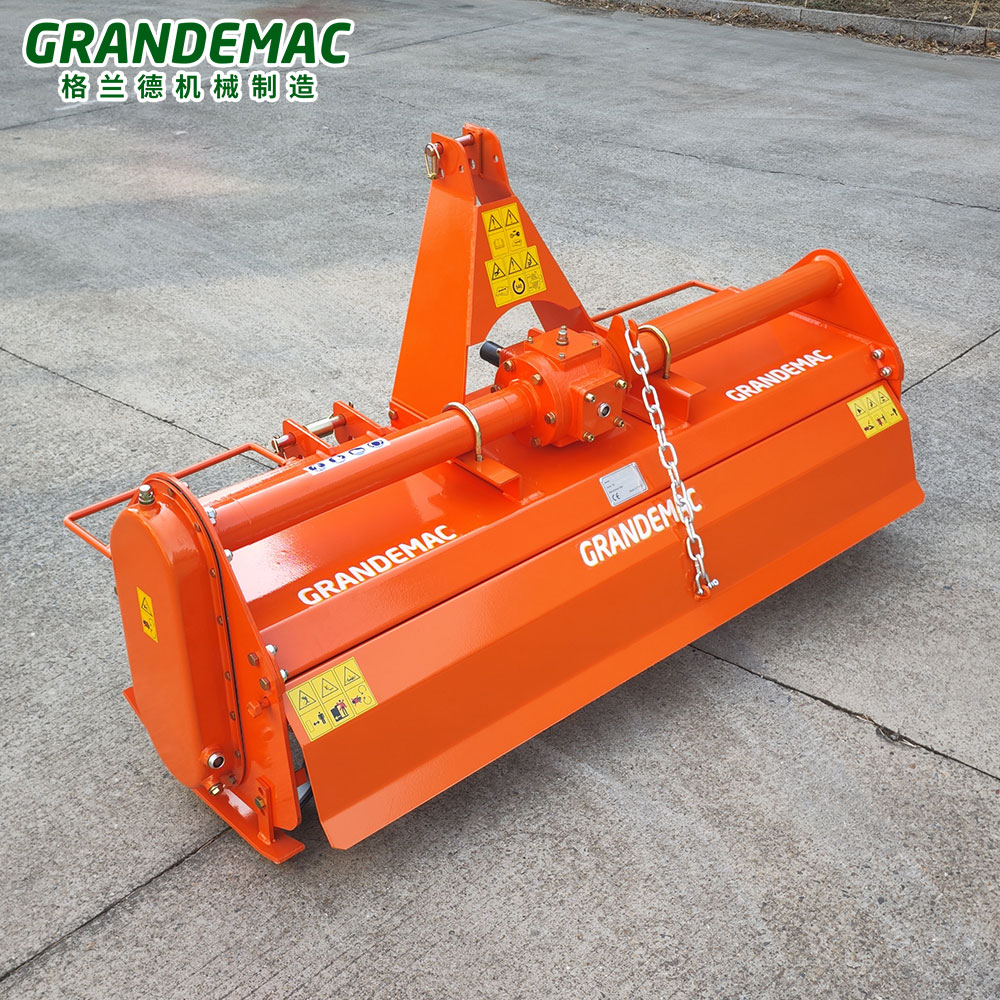
A true measure of operational efficiency happens where metal meets dirt. The fundamental success of your farm equipment is determined directly at the point of soil contact—the blades. If you get this interface wrong, the entire operation will inevitably suffer. Using the wrong blade configuration leads to wasted tractor horsepower and premature gearbox wear. It also causes severe soil degradation, such as creating impermeable hardpans. Equipment operators often ignore this critical variable until mechanical failures occur in the field. Selecting the correct blade shape (C versus L) and flange density (4 versus 6) for specific soil conditions remains vital. It is the most critical step in evaluating and purchasing a rotary tiller. This guide will show you exactly how to match these technical configurations to your unique agricultural environments and daily needs.
Key Takeaways
L-blades provide a finer finish in loose soils but risk creating hardpan layers in heavy clay.
C-blades require less horsepower to penetrate compacted or wet soils and reduce the risk of soil smearing.
4-blade flanges prevent clogging in heavy, wet conditions, while 6-blade flanges deliver finer seedbeds in loamy environments.
Sizing a Medium Rotary Tiller requires balancing tractor PTO horsepower with blade configuration and target soil density.
Visible machine bouncing or excessive fuel consumption are primary indicators of a blade-to-soil mismatch.
Why Blade Configuration is the Core Evaluation Metric for a Rotary Tiller
Equipment buyers routinely make a common evaluation mistake. They over-focus on the overall working width of the implement. They want to cover maximum ground in minimum time. However, they ignore the crucial mechanics of soil engagement. Width means very little if the machine cannot penetrate the ground properly. The blades do the actual work. They define how well the machine performs under stress.
Engine horsepower must translate efficiently to ground engagement. Power moves from the tractor through the PTO shaft. It enters the implement gearbox and turns the rotor. When blades hit the dirt, they face intense resistance. If you use an improper blade profile, soil resistance spikes rapidly. This forces the gearbox and driveline to absorb massive shock loads. The blades dictate how smoothly power converts into effective tillage.
Mismatching your configuration creates severe operational consequences. First, you will experience significantly reduced fuel efficiency. The tractor struggles to pull a lagging rotor. Second, increased vibration damages the equipment. It wears out rotor bearings and structural welds quickly. Finally, poor soil aeration occurs. Instead of breaking up clumps, the wrong blades can compact the earth further. This damages root development for future crops.
C-Blades vs. L-Blades: Engineering Differences and Soil Impact
L-Blades (The Standard Profile)
L-blades feature a distinct, sharp 90-degree bend. This aggressive angle creates a flat cutting bottom. They chop straight down and shear horizontally across the soil profile. They are the most common factory default for general-purpose equipment.
These blades perform best in specific environments. You should use them in sandy, loamy, or previously worked soils. They are excellent for fast weed eradication. They excel at shallow mixing and incorporating surface organic matter. They grab loose soil and toss it aggressively, creating a uniform, fine texture.
However, implementation risks exist. Wet clay presents a major problem. The flat bottom of the L-blade smears the soil at its maximum working depth. Over time, this repetitive smearing creates an impermeable layer underground. We call this a hardpan. It restricts deep root growth and ruins field drainage. You must avoid L-blades in heavy, saturated conditions.
C-Blades (The Penetration Profile)
C-blades rely on different design mechanics. They feature a gradual, continuous curve rather than a sharp angle. This sweeping shape allows them to enter the ground smoothly. They do not chop the earth; they slice through it.
You will find C-blades best suited for harsh environments. They excel in heavy clay, compacted earth, and tough virgin ground. When the ground resists, the curved shape helps the blade pull itself downward. They handle dense, sticky materials much better than angular profiles.
Evaluation criteria strongly favor C-blades for power conservation. The curved shape slices into the soil with less sudden resistance. Therefore, they require much less peak horsepower from the tractor. They also significantly reduce the risk of hardpan formation. Because they lack a flat shearing edge, they do not smear the subsoil.
Flange Density: Evaluating 4-Blade vs. 6-Blade Setups
4 Blades per Flange (High-Clearance Setup)
A four-blade configuration spaces the cutting tools wider apart on the rotor. This specific setup leaves larger soil clods behind. Because fewer blades strike the ground per revolution, the machine encounters less drag. Consequently, it requires less overall horsepower to maintain operating speed.
This clearance matters deeply for specific soil matches. It is ideal for heavy, sticky clay. It also performs brilliantly in rocky soils. The wider gaps allow debris and wet mud to pass through freely. You need this clearance to prevent the rotor housing from clogging or binding. If a machine packs full of mud, it stops tilling and starts dragging.
6 Blades per Flange (High-Refinement Setup)
Six blades per flange create a much denser cutting matrix. The outcomes are dramatically different. This setup chops the earth continuously. It produces a highly refined, powdery seedbed. For crops requiring delicate soil prep, this configuration provides unmatched texture.
The best soil match includes sandy and loamy soils. It also works perfectly for secondary tillage passes. You use it when the ground is already relatively loose, and you need finishing work.
Consider this critical scalability note. When outfitting a Medium Rotary Tiller with 6-blade flanges, power matters. You must ensure the tractor has adequate PTO horsepower. It must maintain optimal rotor RPM under a continuous heavy load. A dense blade setup will bog down an underpowered tractor quickly.
Decision Matrix: Matching Configuration to Your Target Soil
To simplify your evaluation, rely on tested pairings. Different soil structures demand specific mechanical approaches. Use these guidelines to establish a baseline for your equipment order.
Heavy/Compacted Clay: Specify C-blades paired with 4-blade flanges. This setup reduces drag substantially. It prevents rotor stalling and avoids hardpan creation in wet conditions.
Loam/Ideal Agricultural Soil: Specify L-blades paired with 6-blade flanges. This maximizes your mixing efficiency. It is the best choice for fast organic matter incorporation.
Rocky or Root-Heavy Terrain: Specify heavy-duty C-blades and a robust friction-slip clutch. C-blades glance off rocks more effectively than L-blades. This deflection protects the driveline from catastrophic shock loads.
Building trust in your equipment requires honesty about your environment. We strongly advise buyers to evaluate their most challenging soil condition. Do not buy a machine based on your average field condition. If twenty percent of your land is brutal clay, configure the machine for the clay. The heavy-duty setup will handle the loam easily, but a light-duty setup will fail in the clay.
Configuration Selection Guide
Soil Type
Blade Shape
Flange Density
Primary Benefit
Heavy Clay
C-Blade
4 Blades
Prevents clogging, avoids hardpan
Sandy / Loam
L-Blade
6 Blades
Fine seedbed, fast weed control
Rocky Ground
C-Blade
4 Blades
Deflects impacts, protects driveline
Virgin Sod
C-Blade
6 Blades
Slices heavy roots, refines turf
Diagnosing Poor Performance and Blade Wear
Even properly specified equipment experiences issues over time. You must learn to read the operational symptoms of a mismatch. Identifying these early prevents deeper mechanical failures.
Watch for specific operational symptoms. If your tractor is "bouncing" or struggling to maintain depth, stop immediately. This usually means L-blades are hitting a dense hardpan and deflecting upward. Another symptom is soil building up rapidly. If mud clogs the rotor housing, you likely have too many blades for the current moisture level. The soil cannot clear the housing fast enough.
Knowing when to replace blades involves maintenance realities. Do not rely on subjective timelines or annual schedules. Instead, outline objective criteria for replacement. Look for these specific degradation signs:
Loss of the original cutting angle on the leading edge.
Visibly rounded tips that fail to penetrate the soil surface.
Structural metal fatigue, such as hairline cracks near the bolt holes.
Uneven wear patterns across the rotor, causing severe operational vibration.
Shortlisting Your Next Medium Rotary Tiller
Selecting the right equipment requires a systematic approach. Follow these objective steps before contacting a dealer. This ensures you buy a machine engineered for your specific reality.
Audit soil composition: Test your fields to understand your ratio of clay to sand and silt. This dictates your blade profile.
Match to available tractor PTO horsepower: Do not max out your tractor capacity. Always leave a 15-20% buffer to handle unexpected dense patches.
Select the blade shape and rotor density: Choose C or L blades, and 4 or 6 flanges. Base this directly on the data gathered in steps 1 and 2.
Verify the manufacturer's warranty: Check the documentation regarding gearbox and rotor shaft durability. Ensure the warranty covers your specific heavy soil loads.
Conclusion
Blade configuration is not a secondary feature or an afterthought. It dictates the fundamental operational viability of your equipment. It determines fuel efficiency, soil health, and overall driveline lifespan. Ignoring the ground engagement mechanics invites persistent agricultural and mechanical failures.
Buyers must prioritize soil compatibility over default factory configurations. The standard setup sitting on a dealer lot rarely suits every farm. Insist on the exact blade shape and flange density your soil demands. Taking the time to customize this interface protects your land and your machinery.
Take action today by mapping out your most challenging field conditions. Gather your tractor's exact PTO horsepower specifications. Bring this concrete data to your equipment dealer. Work together to build a properly configured implement that thrives in your unique soil.
FAQ
Q: Can I swap L-blades for C-blades on the same rotary tiller?
A: Yes, in many cases you can. However, you must address compatibility first. While many rotor flanges accept both shapes, bolt-hole spacing varies by manufacturer. You also must verify rotor housing clearance. C-blades sweep wider and might strike the inner housing if the machine was exclusively designed for compact L-blades.
Q: What size tractor is required for a Medium Rotary Tiller with a 6-blade configuration?
A: You typically need a baseline of 30 to 50 PTO horsepower. This depends heavily on the total working width. However, dense soils combined with a 6-blade setup create massive drag. In heavy clay, you will absolutely require the higher end of that power band to maintain RPM.
Q: How do I prevent my rotary tiller from creating a hardpan?
A: Recommend using C-blades instead of L-blades, as their curved shape prevents bottom smearing. Additionally, avoid tillage entirely when the soil is overly wet. Finally, occasionally vary your tilling depth between passes to break up any developing subsurface compaction layers.