Transitioning from a walk-behind mower to a ride-on machine is rarely just a budget question. It acts as a strict evaluation of your time constraints, operator fatigue limits, and daily terrain realities. Property owners and commercial operators often miscalculate true work capacity. They tend to focus only on static cutting width rather than sustained acreage output over a four-to-eight-hour window. This common oversight frequently leads to wasted labor hours and severe physical exhaustion. We will define the empirical differences in work capacity between a traditional push mower and a dedicated ride-on unit. You will learn how to match the right equipment to your specific property profile. Our ultimate goal is to help you maximize your operational efficiency without overbuying unnecessary power.
Key Takeaways
Acreage Thresholds: Walk-behind mowers see a sharp drop in operator efficiency past 0.5 to 0.75 acres due to physical fatigue; a lawn tractor maintains consistent output across 1 to 2+ acres.
Speed vs. Precision: Lawn tractors win on straight-line speed and towing capacity, but walk-behinds dominate on highly landscaped properties and steep inclines.
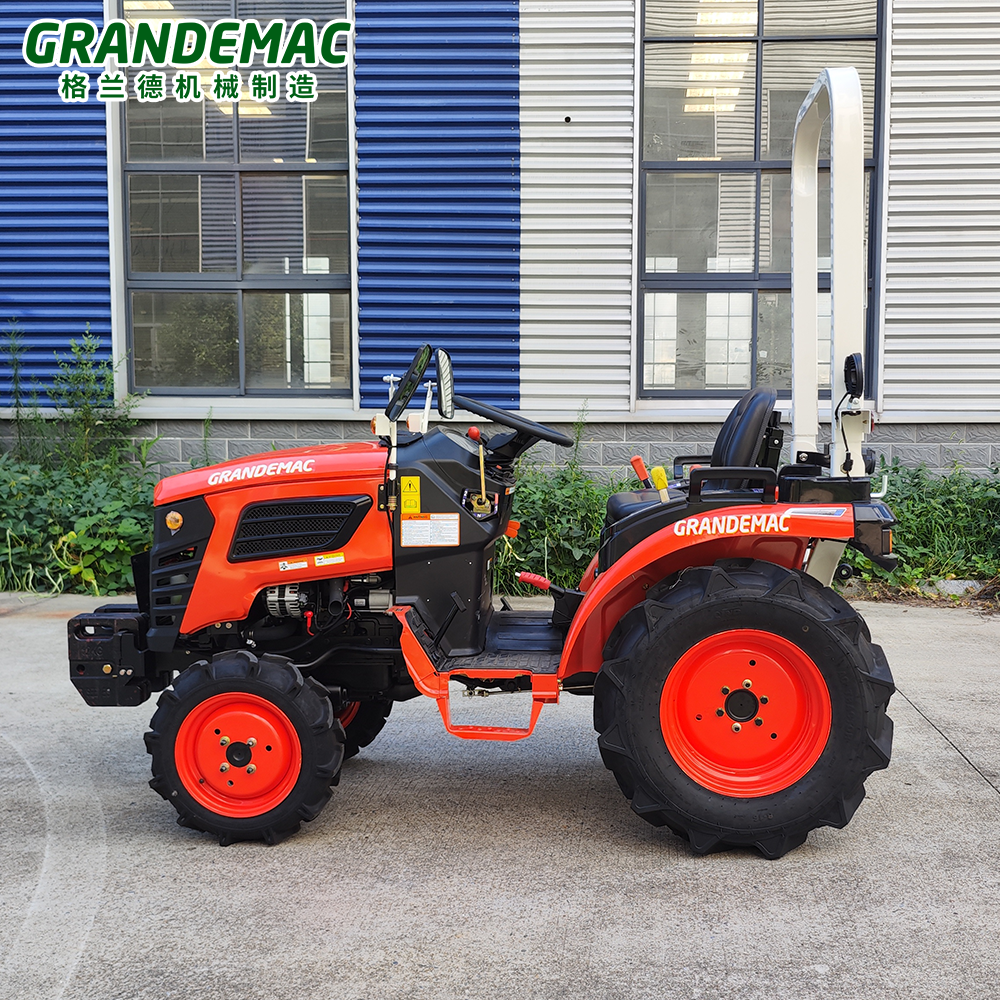
Scalability: For agricultural or mixed-use properties requiring PTO (Power Take-Off) or heavy hauling, evaluating sub-compact options like a 25HP Orchard Tractor becomes necessary when a standard lawn tractor's transaxle reaches its limits.
Defining "Work Capacity" in Ground Care
Work capacity represents more than just the physical size of a mower deck. Industry professionals calculate it using a very specific metric. We define it as the actual amount of ground cleared within a set timeframe. You must account for real-world variables.
The Output Formula
You can determine theoretical work capacity using a standard mathematical formula. The basic equation is: Cutting Deck Width x Forward Speed x Efficiency Factor. The efficiency factor accounts for overlapping your cut paths and turning around at the end of a row. Most professionals use an efficiency factor of 80 percent for standard residential lawns.
Mowing Capacity Formula Variables
Variable
Description
Impact on Output
Cutting Deck Width
The total width of the mower blades in inches.
Wider decks cut more grass per pass but reduce maneuverability.
Forward Speed (MPH)
The average operating speed during the task.
Higher speeds increase output but may reduce cut quality.
Efficiency Factor
Time lost to turns, overlapping paths, and obstacles.
Lower factors apply to complex yards heavily populated by trees.
Human Element vs. Machine Limits
Theoretical capacity always degrades in the real world. A walk-behind mower relies entirely on human walking speed. Most operators walk at roughly two to three miles per hour. Fatigue sets in quickly. As the operator tires, the forward speed drops significantly. The machine output becomes severely limited by human stamina.
A ride-on machine bypasses this human limitation entirely. A standard lawn tractor operates at a sustained four to seven miles per hour. It maintains this speed regardless of operator stamina. You sit comfortably, allowing the machine to do the physical labor. This creates a massive gap in sustained acreage output over a long shift.
Functional Capacity vs. Cutting Capacity
Work capacity also includes the ability to perform secondary tasks. Walk-behind mowers generally serve a single purpose. They cut grass. Ride-on machines offer diverse functional capacities. You can tow heavy dump carts. You can pull core aerators across compacted soil. You can attach mechanical sweepers to collect autumn leaves. These secondary functions dramatically increase the overall utility value of the machine.
The Lawn Tractor Advantage: Sustained Output on Open Turf
Open fields require sustained momentum. Ride-on equipment excels in these unobstructed environments. Let us look closely at how sustained output changes ground care strategies.
Acreage per Hour Realities
A standard 42-inch ride-on machine clears roughly one to one-and-a-half acres per hour. More importantly, it maintains this aggressive pace consistently. You do not slow down during hour three. The hydrostatic transmission keeps the momentum fluid. This predictable output allows you to schedule maintenance tasks accurately.
Reduced Operator Fatigue
Ergonomics play a major role in property maintenance. Multi-hour mowing sessions destroy human joints. Pushing heavy machinery across uneven turf causes back strain. Riding on a padded seat eliminates this physical toll. You steer effortlessly. You control speed via foot pedals. This ergonomic advantage keeps you fresh for other weekend projects.
Versatility Through Attachments
The rear hitch completely changes how you manage your property. It turns a single-use mowing engine into a multi-season utility tool.
Dump Carts: Move soil, mulch, and firewood effortlessly across long distances.
Broadcast Spreaders: Apply fertilizer and grass seed evenly over large areas.
Dethatchers: Pull spring tines through dead grass to improve soil health.
Snow Blades: Push light snow accumulations off paved driveways during winter.
Known Limitations
No machine is perfect. Ride-on units carry specific weaknesses. They have much broader turning radii compared to push models. You will struggle to navigate around tightly planted trees. Narrow garden gates frequently block access to fenced backyards. Traction loss remains a serious risk. They can tip over on slopes greater than 15 degrees. You must respect these physical limits to operate safely.
Best Practices for Ride-On Efficiency
Always mow up and down gentle slopes, never across the face.
Overlap each cutting pass by three to four inches to avoid leaving uncut strips.
Keep the tires properly inflated to ensure an even, level deck cut.
Walk-Behind Mowers: Where Agility Beats Raw Speed
Raw speed means nothing in a crowded space. Highly landscaped properties require agility. Traditional push mowers provide unmatched precision when navigating complex terrain.
Maneuverability in Complex Landscapes
Highly segmented yards reduce a tractor's efficiency drastically. Multiple garden beds create obstacles. Mature trees force you to back up constantly. Hardscape patios require careful edging. A walk-behind mower is actually faster in these practical scenarios. You can pivot a push mower on a dime. You easily trim close to retaining walls. You eliminate the need for secondary string trimming.
Slope Stability and Safety
Steep hillsides present serious dangers for ride-on equipment. A walk-behind serves as the superior choice for uneven terrain. It features a much lower center of gravity. You stand firmly on the ground. You can shift your body weight instantly to maintain safe balance. If a push mower slips, you simply let go of the safety bar. The engine stops immediately.
Storage and Transport Logistics
Equipment storage often dictates purchasing decisions. Push mowers offer a highly compact footprint. They fit easily into standard residential garages. You can tuck them away in small backyard sheds. Transporting them requires minimal effort. You can load a push mower into the back of a standard pickup truck. You do not need to buy or store a heavy-duty utility trailer.
Commercial Walk-Behinds (Nuance)
We must differentiate basic consumer push mowers from heavy commercial units. Commercial hydro-drive walk-behinds offer massive cutting decks. They range from 36 to 48 inches wide. They feature dual hydrostatic drives for effortless steering. However, they still require operator walking stamina. They represent a middle ground for professional landscapers tackling steep, highly landscaped client properties.
Common Mistakes with Walk-Behinds
Mowing too fast, which bends the grass blades instead of cutting them cleanly.
Failing to clean the undercarriage, leading to rusted decks and poor airflow.
Using a push mower on properties exceeding one acre, causing severe operator burnout.
Scaling Up: When to Consider a 25HP Orchard Tractor
Properties larger than three acres expose the hidden weaknesses of light-duty mowers. Heavy brush and agricultural tasks demand serious mechanical upgrades. You must recognize when standard consumer equipment reaches its absolute breaking point.
Recognizing Lawn Tractor Limits
Standard ride-on mowers utilize lightweight stamped steel decks. These decks bend easily when they strike hidden rocks. They rely on belt-driven, non-serviceable transaxles. These transmissions overheat quickly when pulling heavy loads up sustained grades. Standard mowers cannot handle rough, uncultivated brush. They stall in tall pasture grass. Their tires lack aggressive agricultural tread.
The Heavy-Duty Alternative
Property owners managing specialized terrain require the next tier of machinery. Orchards, small hobby farms, and thick brush lots demand durability. Evaluating sub-compact options like a 25HP Orchard Tractor becomes a strict necessity. These machines bridge the gap between residential mowers and massive farm equipment. They offer true agricultural capabilities in a slightly smaller, highly maneuverable frame.
Key Capability Leaps
Upgrading to a sub-compact utility machine introduces entirely new mechanical advantages. The engineering differs fundamentally from residential mowers.
Diesel Engine Torque vs. Gas Engine HP: Gas engines spin fast to create horsepower. Diesel engines generate massive low-end torque. This torque pushes through thick, wet vegetation without bogging down the cutting blades.
Heavy-Duty PTO Capability: A rear Power Take-Off (PTO) shaft drives mechanical implements directly from the engine. You can run heavy rotary cutters, soil tillers, and large agricultural sprayers.
Ground Clearance and 4WD: Standard mowers get stuck easily. Orchard tractors feature increased ground clearance. Selectable four-wheel drive pulls the machine effortlessly through muddy, rutted orchard rows.
Structural Integrity: They utilize heavy cast-iron front axles and robust steel frames. These components withstand daily abuse in rough environments.
Final Decision Framework: Shortlisting Your Ideal Machine
Making the final choice requires an honest assessment of your specific property. Do not buy based on neighborhood aesthetics. Buy based on empirical data and functional requirements.
Criteria 1: Property Size
Total acreage provides the clearest baseline for your decision.
Under 0.5 Acres: Choose a walk-behind mower. It offers agility, easy storage, and plenty of capacity for small lots.
0.75 to 2 Acres: Choose a standard ride-on tractor. The time savings and reduced fatigue easily justify the size upgrade.
3+ Acres or Rough Terrain: Choose a garden tractor or sub-compact utility machine. Standard residential mowers will fail prematurely under these heavy workloads.
Criteria 2: Topography & Obstacles
The shape of your land dictates the necessary machine style. Flatter, open spaces heavily favor wide-deck tractors. You can maximize your forward speed safely. Conversely, slopes over 15 degrees demand walk-behinds or specialized low-profile equipment. Tightly packed landscaping, narrow walkways, and delicate flower beds also push the needle back toward agile push mowers.
Criteria 3: Utility Needs
Evaluate your secondary tasks. If you only cut grass, a push mower or zero-turn unit works perfectly. If you need to haul split firewood, move gravel, or tow heavy soil carts, heavily weight your decision toward a ride-on tractor. A solid rear hitch provides immense value for active property management.
Next Steps
Take concrete measurements before you visit a local dealership. Measure the exact width of your narrowest backyard gate. Assess the grade of your steepest hillside using a simple smartphone level app. Finally, calculate your current weekly mowing time. This data empowers you to select a machine perfectly tailored to your exact environment.
Quick Decision Matrix
Feature
Walk-Behind Mower
Lawn Tractor
Orchard / Sub-Compact Tractor
Ideal Acreage
Up to 0.75 Acres
1 to 2 Acres
3+ Acres
Steep Slopes (>15°)
Excellent / Safe
Poor / Unsafe
Moderate (with 4WD/ROPS)
Utility / Towing
None
Light Duty (Carts, Sweepers)
Heavy Duty (PTO, Tillers)
Obstacle Agility
High
Low
Low
Conclusion
Work capacity represents much more than just the diameter of a cutting deck. It exists at the precise intersection of acreage, sustained speed, operator fatigue, and complex terrain. Push mowers offer incredible precision and safety on steep hillsides, but they demand intense physical labor. Ride-on models deliver ergonomic comfort and vast utility, but they require wide-open spaces to function efficiently.
We strongly encourage buyers not to overbuy massive equipment for small, highly complex yards. The lack of maneuverability will frustrate you daily. Conversely, we strictly caution against underbuying. Using a manual push mower on a two-acre property wastes your valuable time and energy. Evaluate your land honestly, measure your obstacles carefully, and invest in the machinery best suited to your operational reality.
FAQ
Q: At what property size is a lawn tractor justified over a walk-behind?
A: Typically around the 0.75 to 1-acre mark, where time savings offset the higher cost.
Q: Can a lawn tractor mow steep hills safely?
A: No, standard recommendations cap lawn tractors at a 15-degree incline due to rollover risks; walk-behinds or specialized slope mowers are required for steeper grades.
Q: How much faster is a lawn tractor than a self-propelled walk-behind?
A: A self-propelled mower averages 2.5 mph; a standard tractor mows effectively at 4-5 mph, effectively doubling gross output when paired with a larger deck.
Q: Will a 25HP Orchard Tractor damage residential turf?
A: Yes, their heavier weight and aggressive agricultural tires can cause turf compaction or ruts, making them better suited for agricultural, rough-cut, or heavy utility applications rather than pristine lawns.