Selecting the right rotary cultivator is a crucial step in achieving efficient land preparation and maximizing crop yields. A properly matched rotary cultivator not only aligns with your tractor’s power and size but also suits your soil type, field conditions, and cropping patterns. In this guide, we will help you navigate the essential factors—ranging from blade material and tine configuration to gearbox and PTO considerations—so you can confidently choose a rotary cultivator that meets your specific needs. Jiangsu Grande Machinery Manufacturing Co., Ltd., with years of expertise in agricultural machinery, offers a range of rotary tillers designed to optimize both small-scale and commercial farming operations. Using the correct rotary cultivator can significantly reduce labor costs, improve soil structure, and ensure healthier crop growth over the long term.
Quick Buying Checklist
Before diving into specifications, here’s a one-line verdict for fast decision-making: ensure your tractor PTO matches the cultivator’s horsepower requirements, the working width aligns with your tire track, and the cultivator suits your soil and crop conditions.
Stop or Go: Three Immediate Checks
Tractor PTO Horsepower: Always check that your tractor’s PTO horsepower meets or exceeds the rotary cultivator’s requirement. Undersized tractors can overload the gearbox, reduce efficiency, and shorten equipment life. Choosing a cultivator that matches or slightly exceeds the PTO ensures smoother operation and prevents unnecessary wear.
Working Width vs. Tyre Track: The cultivator’s working width should match your tractor’s tire track for optimal soil coverage and smooth maneuverability. Too wide or too narrow a tiller may cause uneven tillage or missed areas, while an appropriately sized implement increases productivity per pass.
Soil and Field Conditions: Assess your soil type, compaction, moisture levels, and any residue from previous crops. Different rotary cultivators handle various field conditions differently, so choose one suited to your terrain and cropping plan. This upfront evaluation can save time and prevent equipment damage in the long run.
Understanding Your Land and Cropping Needs
Soil Type Matters
Soil composition significantly influences rotary tiller performance:
Clay Soil: Heavy and dense soils require strong, reinforced blades capable of penetrating compacted layers without excessive tractor power. Additionally, adjustable depth settings help prevent overloading the tractor while ensuring thorough tillage.
Loam: Well-balanced loam soils are versatile, allowing standard rotary cultivators to achieve good turnover and soil aeration. Loam also responds well to varying tine configurations, which can enhance soil mixing and weed control.
Sandy Soil: Light soils are less resistant, so smaller or medium rotary cultivators are sufficient, though care must be taken to prevent excessive soil displacement or erosion. In sandy conditions, proper speed and blade arrangement reduce dust generation and maintain uniform soil coverage.
Field Size and Terrain
Field size and layout dictate tiller selection:
Small Plots: Compact, one-way tillers are ideal for home gardens or small farms. They are easy to maneuver, allow precise control in tight areas, and reduce labor intensity.
Large Farms: Medium to heavy-duty rotary cultivators cover more area efficiently and handle higher tractor horsepower, improving throughput for commercial-scale operations. Operators can complete large fields faster, saving time and fuel.
Orchards and Vineyards: Narrow or side-shift models are preferable to navigate between rows without damaging crops. Their flexibility ensures that valuable plants remain unharmed while maintaining consistent soil preparation.
Crop and Residue Considerations
Rotary cultivators also need to match your crop type and residue management:
Row Crops: Precision width and tine arrangement prevent soil disruption near plant roots, maintaining optimal plant spacing.
Vegetable Beds: Even and shallow tillage ensures seedlings are not uprooted and helps retain soil moisture.
Cover-Crop Residue: High-residue fields require cultivators with reinforced blades and robust gearboxes to prevent clogging and maintain efficiency. Efficient residue handling improves decomposition and enhances nutrient cycling for the next crop.
Matching Cultivator Specs to Your Tractor
PTO Horsepower vs Recommended Tiller Sizes
Selecting a cultivator that matches tractor PTO ensures optimal performance. As a rule of thumb: small tillers (0.8–1.2 m) suit tractors under 40 HP, medium tillers (1.3–1.8 m) fit tractors of 40–80 HP, and heavy-duty models (over 2 m) require tractors above 80 HP. Always allow a safety margin to avoid overloading. Matching power correctly also reduces fuel consumption and prolongs the tractor’s operational life.
Width and Tyre-to-Tyre Advice
The working width of your rotary cultivator should generally match or slightly exceed the tractor’s tire track. This ensures uniform coverage and prevents overlap or gaps. For row crops or irregular terrain, adjustable widths or side-shift functionality improve precision and allow better adaptation to field conditions.
Tine Count, Flanges, and Power Requirements
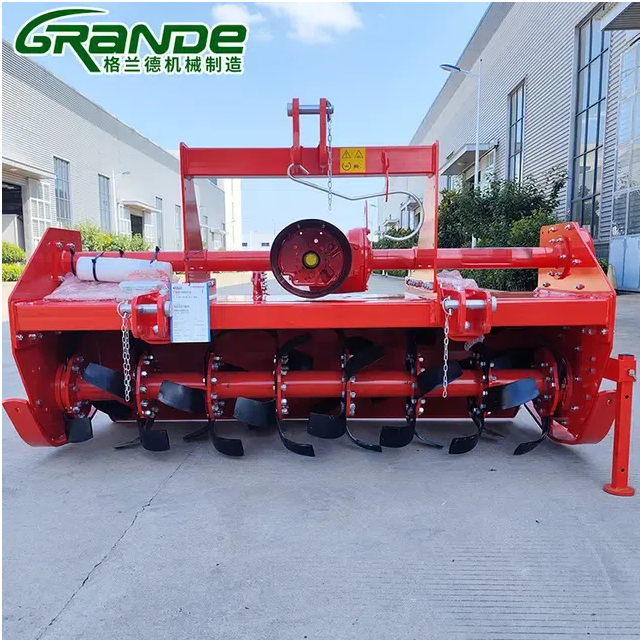
Higher tine counts improve soil mixing but demand more power. Flanged tines are stronger and better for heavy-duty work, while single tines suffice for lighter soils. Choosing the right combination reduces wear, maintains consistent soil turnover, and ensures balanced tiller operation.
Comparing Cultivator Types
One-Way vs Two-Way
One-Way: Tines rotate in a single direction, suitable for light to medium soils and general-purpose tillage. Pros include simplicity, lower cost, and ease of maintenance; cons include less thorough soil pulverization in tough soils.
Two-Way: Tines rotate in opposite directions, providing better mixing, leveling, and faster field coverage. Ideal for compacted or high-residue fields but requires more tractor power and slightly higher maintenance.
Side-Shift Models
Side-shift rotary cultivators are perfect for row-crop farming or orchards, allowing operators to adjust lateral movement for precision tillage. This flexibility reduces crop damage, ensures even soil preparation along rows, and improves overall operational efficiency.
Deep-Loosening Models
For compacted soils, deep-loosening rotary tillers penetrate beyond surface layers, improving aeration, water infiltration, and root development. Choose these when traditional tillers cannot break hardpan layers effectively. They also help enhance soil health over multiple cropping seasons.
Blade and Shaft Materials: Choosing by Workload
Material Options and Heat Treatment
Rotary cultivators come with ordinary, reinforced, or wear-resistant blades. Ordinary blades suit light, low-frequency work; reinforced blades handle moderate soils; wear-resistant blades withstand heavy-duty, high-residue, or abrasive soil. Heat-treated steel blades last longer, resist deformation, and maintain cutting efficiency even under demanding conditions.
Blade Layout and Helix Arrangement
Proper blade layout and helix angles affect balance, vibration, and overall tillage efficiency. Well-designed arrangements reduce tractor load, provide uniform soil turnover, and extend service life. Optimized helix angles also enhance cutting performance and minimize operator fatigue during long hours of fieldwork.
Accessories, Gearbox, and PTO Considerations
Skid Plates, Depth Control, and Safety Features
Skid plates protect the cultivator from uneven terrain, while depth control ensures consistent tillage depth. Shear bolts, clutches, and safety shields prevent damage to both the implement and tractor in case of obstacles. Proper safety features reduce downtime and protect operators from accidents.
Gearbox Rating and Serviceability
The gearbox must match the tractor’s PTO torque and field conditions. Easily serviceable gearboxes with accessible lubrication points reduce downtime, lower maintenance costs, and extend equipment lifespan. High-quality gearboxes also improve torque transfer and reduce vibration during operation.
Cost vs ROI and Buying Checklist
Service Life, Spare Parts, and Dealer Support
Before purchase, consider expected service life, availability of spare parts, local dealer support, and warranty terms. Investing in a high-quality rotary cultivator pays off by reducing maintenance costs, improving cultivation efficiency, and increasing crop productivity. Reliable after-sales support ensures uninterrupted farming operations.
Conclusion
Choosing the right rotary cultivator involves matching tractor horsepower, working width, soil conditions, and blade material to your land and cropping needs. Always verify PTO compatibility, assess field layout, and select durable blades suited for your workload. Jiangsu Grande Machinery Manufacturing Co., Ltd. offers a range of rotary tillers—from light-duty to heavy-duty, ordinary to wear-resistant, and one-way to side-shift models—ensuring there’s a perfect fit for every farm. Using the correct rotary cultivator improves soil preparation, reduces labor, and enhances crop yields efficiently. For personalized guidance or to explore our full range of rotary cultivators, contact us today and equip your farm with machinery designed for performance and reliability.


