Overgrown embankments, hidden debris in ditches and steep roadside verges can turn routine maintenance into slow, hazardous work; a verge flail mower brings reach, controllable hydraulics and fine mulching to those exact problem spots. Jiangsu Grande Machinery Manufacturing Co., Ltd., with its experience in designing durable agricultural implements, builds the AGF line of side-mounted hydraulic arm mowers to help smallholders, contractors and landscape teams work faster, safer and with less follow-up clearing.
Real problem: Why slopes, verges and ditches are costly to maintain
Slopes, embankments and roadside verges are deceptively time-consuming to manage. Manual clearing or using a standard rear-mounted mower forces operators to place the tractor in unstable positions or to make multiple risky entries into soft ground. Hidden stones, wire and root masses cause frequent stoppages and can damage equipment, while trimmings left in place create extra trips for collection and disposal. For municipalities and smallholders alike, that means more operator hours, wear on machines and higher logistical overhead for debris handling.
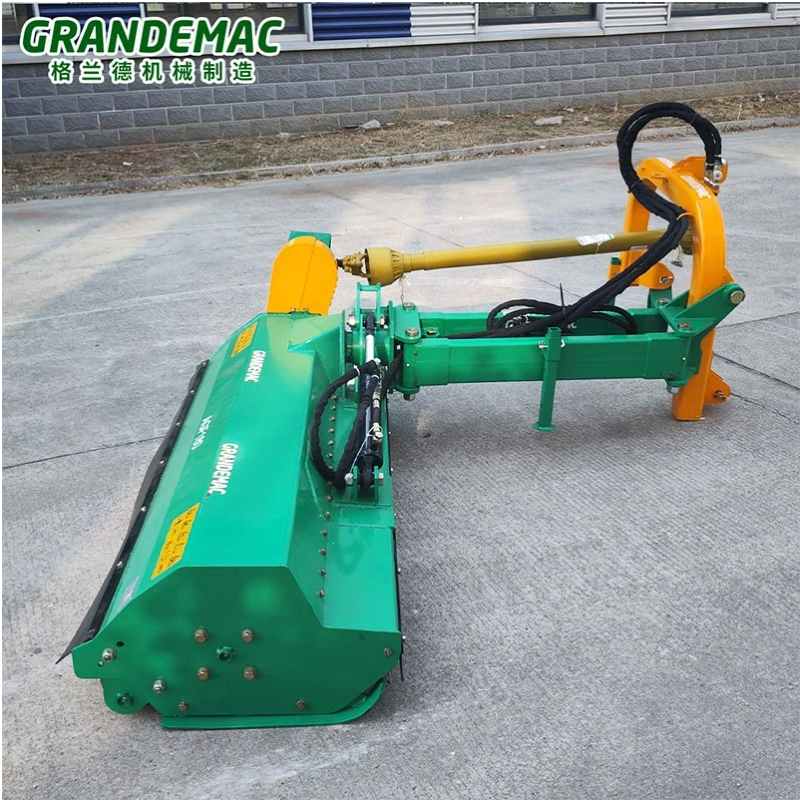
A verge flail mower addresses these issues by combining a side-reach cutting head and a hydraulic arm with a flail rotor that chops material finely. Instead of moving the tractor into hazardous positions, the operator keeps the machine on firm ground and uses the hydraulic arm to reach embankments and ditches. The flail action reduces the need for follow-up raking or loading, because cut material is distributed as mulch that breaks down in place. This approach reduces risky tractor positioning, decreases downtime caused by impacts, and shortens the total time spent per job.
What makes a verge flail mower better than a topper or brushcutter?
A topper or brushcutter slices vegetation with rigid blades or a dense line head and is effective on open flat ground, but it behaves differently around obstacles and on slopes. The core difference lies in the way material is processed and how the machine copes with impacts. A verge flail mower uses swinging flail blades that absorb shocks when they hit stones or root clumps; the blades pivot and transfer less shock to the rotor and gearbox. This behavior significantly lowers the risk of broken parts and reduces thrown debris compared with the high-energy strikes of rigid-blade cutters.
Beyond safety, a verge flail mower produces fine mulch rather than creating large clumps of cut material. With a topper, operators often need additional passes or manual clearing to remove bulky cuttings from ditches or orchard rows. By contrast, the flail’s chopping action disperses the material evenly, dramatically cutting the time spent on secondary cleanup. In practical terms, that means fewer passes, less handling of cuttings, and a higher-quality finish without the need for manual follow-up.
When to use a flail vs other tools
Choose a flail when you are dealing with mixed vegetation, slopes, or surfaces where hidden objects are likely. A flail is also the better choice when you want to mulch-in-place rather than collect cuttings. Use a topper or brushcutter for quick surface topping on large even fields where speed is the priority and there are few hidden obstacles. In short, the flail excels where safety, mulching and reach matter; the topper excels where raw speed over flat, clean terrain is the priority.
Time & cost savings: how a verge flail mower cuts hours per job
Time savings with a verge flail mower emerge from several practical efficiencies. First, the side-mounted hydraulic arm allows operators to make a single pass along a stretch of verge while reaching into ditches and slopes, rather than making multiple passes with different tools or repositioning the tractor repeatedly. Second, the mulching result eliminates the separate task of collecting and removing cut material, which often consumes a significant portion of job time. Third, because swinging blades deflect on impact, the machine experiences fewer sudden stops and fewer component failures, which reduces repair-related downtime.
To illustrate qualitatively, consider maintaining two hectares of roadside verge scattered with small shrubs and embankments. Using a standard cutter and manual follow-up, the job could require multiple tool passes: a high-speed pass to cut, one or two passes for collection, and extra passes where terrain prevented close cutting. With a verge flail mower, the operator typically completes the same area in one or two controlled passes, with the fine mulch left in place. Even without calculating exact currency savings, the time reduction is clear: fewer passes and less manual clearing translate directly to lower labor hours, fewer machine hours and less fuel consumed per completed job.
Operators also save on equipment overlap. A flail’s adaptability to a range of tractor horsepower means fleets do not need multiple specialized machines for slopes and flat areas; the same side-mounted flail can handle both. This consolidation reduces logistical complexity and the time spent transporting and switching implements between jobs.
Working on slopes and embankments: practical tips for safer, cleaner cuts
When working on slopes, safety is the priority. Position the tractor on firm, level ground whenever possible, and use the verge flail mower’s hydraulic reach to place the cutting head at the desired position. Adjust tilt gradually to match the angle of the embankment and make shallow passes when the ground is soft to avoid tractor instability. Keep engine revs steady and ground speed moderate to maintain consistent rotor speed; sudden changes in direction or speed can unsettle the machine and cause uneven results or increased wear.
Traffic and public safety are critical on roadside jobs. Use signage and cones to create a buffer zone, and ensure bystanders remain well clear. For very steep banks, work incrementally from the top down rather than attempting a single deep reach. These small operational habits improve both cut quality and operator confidence, allowing teams to finish jobs faster with lower perceived risk.
How swinging blades protect the drum
The swinging blade system of a flail mower is a protective mechanism. When a flail blade strikes a stone, it swings backward, dissipating the impact energy and reducing force transmitted to the rotor and gearbox. This reduces the likelihood of bent shafts or broken gear teeth and results in fewer emergency stops. Over time, the reduced shock load also means bearings and couplings have a longer service life, lowering maintenance frequency and contributing indirectly to time savings.
Best flails and blade choices by vegetation type
Different conditions call for different flail designs. For fine grass and soft weeds, lighter Y-shaped or teardrop flails produce a clean finish and fine mulch. For coarse, fibrous vegetation such as reed beds or tough scrub, heavier hammer or double-edged flails deliver more chopping power while still retaining the swinging safety benefit. In mixed conditions where both fine grass and woody growth are present, medium-weight reversible flails give the best balance between cutting performance and impact resistance. Choosing the correct flail profile for the primary vegetation type optimizes rotor speed and reduces unnecessary wear.
AGF product fit: which models for which job?
Jiangsu Grande’s AGF range is tailored to meet common job profiles encountered by smallholders and contractors. The AGF160 is recommended for compact tractors and orchard work, offering nimble reach and good tilt control for close-in trimming between tree rows. The AGF180 is a versatile middle model suited to municipal verge maintenance and contractors who cover mixed terrain; it balances cutting width with hydraulic arm reach. The AGF200 is designed for larger-scale roadside maintenance where wider coverage and higher rotor inertia help process thicker vegetation.
All AGF models feature side-hung mounting, substantial hydraulic flip capability and robust rotors designed for frequent engagement with embankments. These traits make them especially effective when operators need to keep the tractor on firm ground while the head reaches into precarious areas. The consistent design philosophy across the AGF range simplifies operator training and spares inventory, which in turn reduces fleet downtime.
Case checklist: pre-job planning and what to inspect on site
Effective pre-job planning shortens total job time and reduces surprises. Walk the route ahead of the tractor to spot hidden wires, large stones, forks and concrete obstructions. Mark hazards and plan a route that lets you maintain good tractor footing. For roadside jobs, arrange traffic control and clear a laydown area for maintenance tasks. Inspect the mower before starting: check for loose bolts, ensure flails are in good condition and confirm that hydraulic hoses show no abrasion. Verify gearbox oil level and PTO guard integrity. On arrival, reconfirm that all crew members have appropriate personal protective equipment and understand stop signals. These checks are brief but pivotal in preventing delays and protecting both people and machines.
Conclusion
When slopes, embankments and ditches are part of the maintenance terrain, a well-specified verge flail mower reduces job time, lowers repair interruptions and improves operator safety by enabling reach, mulching and impact-tolerant cutting. Jiangsu Grande Machinery Manufacturing Co., Ltd. designs the AGF machines to match these real-world needs, combining hydraulic arm flexibility with durable flail systems to keep work efficient and reliable. To learn which AGF model fits your sites or to arrange a video demo or on-site assessment, contact us — AGF Series.
FAQ
Can a verge flail mower handle thick reed and rushes?
Yes. With the appropriate heavier flails and correct PTO speed, a verge flail mower can chop dense reed and rush stands and deposit the material as mulch that decomposes faster than large cuttings.
How much faster is a flail compared with standard cutting and manual clearing?
Although exact times vary by site, the flail frequently reduces the number of passes required and eliminates separate manual clearing tasks. That translates into noticeably fewer operator hours and less machine running time for typical verge jobs.
Is it safe to work from the tractor while reaching over ditches?
Yes, provided the tractor remains on stable ground and the operator uses the hydraulic arm to position the head. Proper pre-job inspection, correct tilt settings and conservative ground speed make this a safe, efficient operating method.
What spare parts should I always have on hand for verge work?
Keep a set of flails suited to your vegetation type, a spare bearing or two, a spare PTO shaft coupling and a length of hydraulic hose. These items address the most common interruptions and help keep downtime to a minimum.


