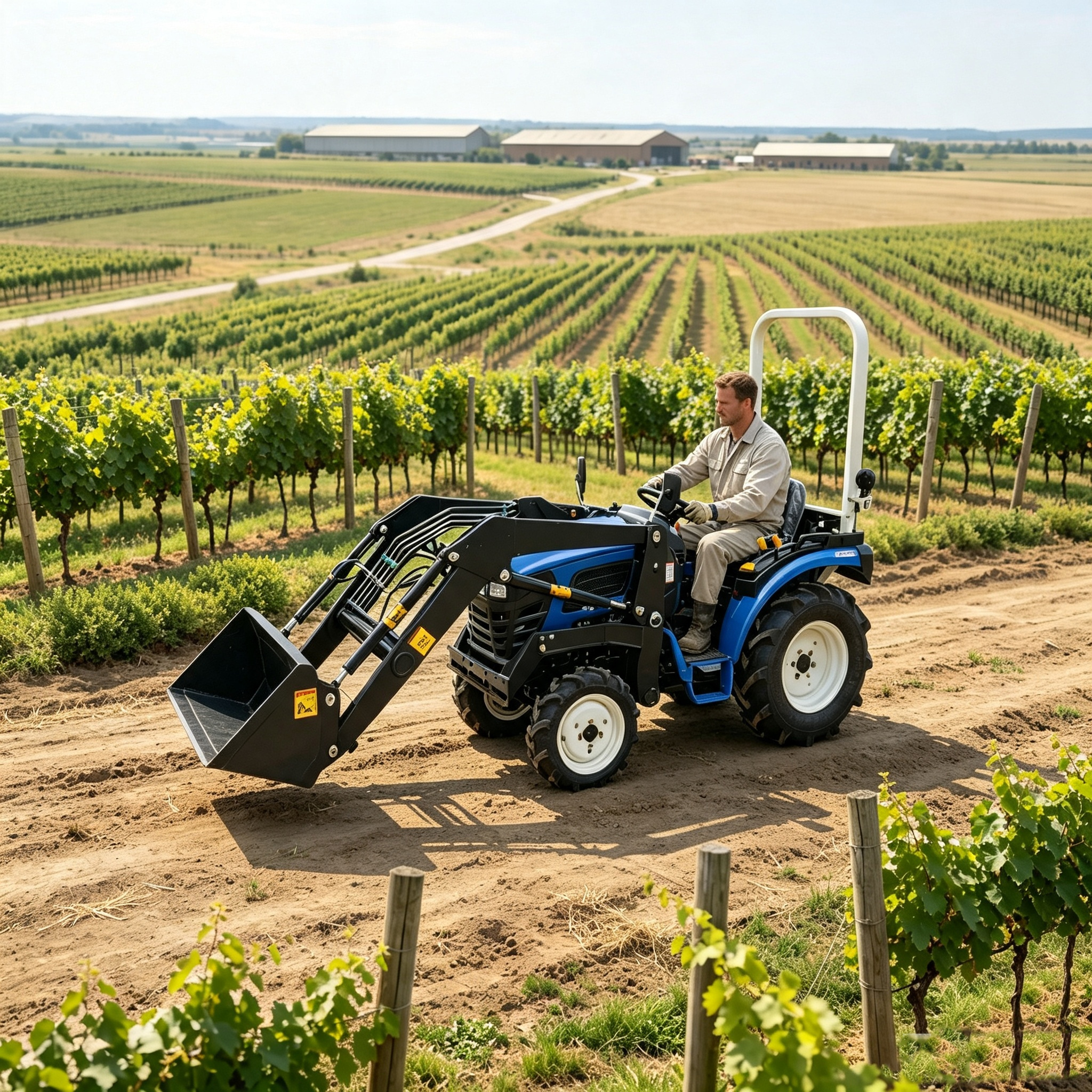
Purchasing specialized agricultural equipment involves high capital stakes. Making the wrong choice directly damages mature canopies. It leaves sprayers severely underpowered. It causes excessive soil compaction over time. A standard utility machine differs significantly from a dedicated apple orchard tractor. The latter provides a distinct low profile. It utilizes a deliberately narrow track. It integrates specialized shielding for fragile branches. A successful investment requires matching tractor dimensions to your specific orchard architecture. High-density trellis systems demand different dimensions than traditional tree spacing. You must also ensure sufficient power outputs for your heaviest implements. We will explore how to evaluate footprint constraints properly. We will review power take-off (PTO) and hydraulic demands. You will learn how to mitigate hidden implementation risks successfully.
Key Takeaways
Dimensions Dictate the Purchase: Row spacing, turning headlands, and canopy height narrow down viable models before looking at horsepower.
PTO HP > Engine HP: Air-blast sprayers and heavy flail mowers require high PTO horsepower; engine HP alone is a deceptive metric.
Safety & Compliance: Chemical applications necessitate specific cab filtration standards (Category 4) or specialized folding ROPS.
TCO Relies on Dealer Proximity: Maintenance downtime during peak harvest or spray seasons costs more than the initial purchase price difference.
The Operational Reality: Standard Tractors vs. a Fruit Orchard Tractor
Standard models do not belong in tight rows. You risk severe operational issues. A dedicated fruit orchard tractor protects your canopy. It protects your developing fruit simultaneously. It maintains an ultra-low center of gravity. Smooth exterior profiling is entirely mandatory. Engineers design specialized fenders specifically for this environment. They install shielded lights to prevent branch snagging. This strategic shielding prevents bruised fruit during crucial harvest windows. Standard utility models lack these specialized exterior guards. They easily hook onto support wires. They rip down protective netting. They cause irreversible mechanical damage to fruiting wood.
Weight distribution directly impacts long-term soil health. It also dictates root vitality. Apple trees rely on highly sensitive, shallow feeder roots. Heavy standard machines crush these essential root systems repeatedly. Specialized machines distribute weight much more evenly across the ground. They minimize deep rutting in wet conditions. They reduce overall soil compaction substantially. Compaction destroys water infiltration rates. It starves roots of necessary oxygen. You preserve soil structure by choosing proper equipment. Lighter, well-balanced machines glide over the orchard floor. They protect your underground assets year after year.
Narrow headlands create strict turning radius constraints. You simply cannot afford wide, clumsy turns. High-density trellis systems leave minimal room at row ends. Articulated frame designs solve this turning issue perfectly. Specialized front-axle mechanisms also help immensely. They allow extremely sharp turn angles. These features are strictly non-negotiable for modern high-density plantings. You must turn tightly to save fuel. You save valuable operational time. You avoid backing up awkwardly during tight maneuvers. A standard machine forces you to skip rows. It complicates your spraying patterns significantly.
Core Evaluation Framework: Specs vs. Outcomes
Dimension Matching
You must match machine width accurately to your row spacing. We recommend a strict rule of thumb for this process. Leave at least 12 to 18 inches of clear space. This gap sits safely between the tire and the mature tree canopy. You prevent accidental branch damage this way. Tractor tires should never rub against lower limbs. Calculate this clearance during the peak summer growing season. The canopy reaches maximum spread during this time.
Vertical clearance matters just as much as width. Height restrictions dictate your final purchasing options heavily. You navigate under established canopies daily. Protective hail netting often creates a strict, hard ceiling. You cannot push past these physical limits safely. Measure your lowest hanging branches accurately. Measure the clearance under your shade structures. Ensure the exhaust stack does not exceed these measurements. Ensure the cab roof clears all obstacles comfortably.
Standard Tractor vs. Specialized Orchard Model Comparison
Feature Category
Standard Utility Model
Specialized Orchard Model
Profile Height
Tall, upright seating
Low, sloped hood
Track Width
Adjustable, generally wide
Fixed narrow track
Exterior Shielding
Exposed lights, sharp edges
Smooth, snag-free fenders
Turning Radius
Standard pivot
Bi-speed or articulated steering
Powering Implements: PTO & Hydraulics
You must adopt an implement-first sizing strategy. Frame your entire buying decision around your farm's most demanding tool. This tool is almost always the air-blast sprayer. Engine horsepower alone deceives many first-time buyers. You need actual power delivered directly to the attachments. Calculate the exact requirements of your heaviest flail mower. Check the specific fan resistance on your sprayer.
An orchard tractor with PTO and hydraulic lift is strictly required. It guarantees seamless transitions between distinct jobs. You switch between spraying, mowing, and harvesting effortlessly. It lifts heavy bin trailers efficiently during picking season. You rely on strong lift capacities daily. Weak linkage systems fail under heavy, wet fruit bins. Robust linkage ensures safe transport across uneven terrain.
Hydraulic flow rates demand careful scrutiny. Distinguish clearly between continuous flow and peak flow. Do not under-size these vital hydraulic flow rates. This severe mistake leads to sudden overheating. Prolonged operational shifts demand continuous high-volume flow. Motors driving leaf pullers require constant pressure. Motors driving sweepers need unwavering fluid delivery. Undersized pumps burn out prematurely. They stall your attachments mid-row.
Hydraulic Flow Requirements by Implement
Implement Type
Typical Flow Demand
Operation Type
Air-Blast Sprayer (Fan)
High (15-20+ GPM)
Continuous
Bin Trailer Lift
Low (5-10 GPM)
Intermittent
Flail Mower (Hydraulic offset)
Medium (10-15 GPM)
Intermittent
Rotary Sweeper
High (15+ GPM)
Continuous
Operator Protection: Cab Enclosures vs. ROPS
Category 4 cab filtration represents a strict compliance necessity. Frequent chemical spraying demands superior respiratory protection. You must protect operators from hazardous airborne particulates safely. Category 4 systems utilize active carbon filters. They maintain positive air pressurization inside the cabin. This pressurization actively forces clean air outward. It prevents toxic chemical drift from entering the operator space. You cannot achieve this protection using standard dust filters. The return on investment extends beyond basic safety compliance. Optimal operator comfort significantly reduces daily fatigue. Air-conditioned cabs keep drivers alert during hot summer months. Reduced fatigue improves overall driving precision. High precision prevents accidental tree strikes.
Folding Roll-Over Protective Structures (ROPS) serve a specific purpose. Ultra-low canopy setups severely restrict full cab usage. Specialized cabs sometimes cannot fit underneath V-trellis systems. You must evaluate ROPS trade-offs carefully. A folding ROPS allows passage under the lowest branches securely. You flip it down only when absolutely necessary. However, safety protocols change drastically during chemical applications. Personal Protective Equipment (PPE) requirements increase heavily without a sealed cab. Operators must wear respirators. They must wear full Tyvek suits. You sacrifice comfort for necessary clearance. Weigh these operational trade-offs before finalizing your configuration.
Hidden Implementation Risks
The proximity rule governs long-term operational success heavily. The most famous brand is rarely your smartest choice. The best brand usually features a reliable dealership nearby. A 30-mile radius represents the ideal distance. Immediate parts availability remains paramount. Critical spray windows often last only 72 hours. Weather conditions dictate these tight schedules aggressively. Equipment downtime ruins an entire harvest easily. Pests like codling moth multiply rapidly if left unchecked. You cannot wait weeks for replacement parts. A local dealer stocks essential filters. They provide emergency repair services immediately. Prioritize this local support network over flashy brand colors.
You must evaluate proprietary vs universal attachments carefully. Avoid vendor lock-in whenever possible. Single manufacturer ecosystems limit your future flexibility severely. Some brands force you into buying their specific implements exclusively. Universal front linkages offer significantly better adaptability over time. Standardized hydraulic couplings keep your options completely open. You might want a specialized sweeper from another company later. A universal mounting system allows this seamless integration. Proprietary sensors often reject third-party equipment interfaces. Open-architecture systems protect your long-term machinery investments securely.
Maintenance accessibility presents a unique challenge. Engineers pack narrow machines incredibly tightly. Compact engine bays increase labor time for basic tasks. Routine maintenance simply takes much longer. Mechanics struggle to reach oil filters easily. They fight tight clearances to change air elements. Keep these extended service times in mind constantly. Ask the dealer to demonstrate a basic filter change. Observe the accessibility of daily grease points. Hard-to-reach grease points get ignored frequently. Ignored grease points lead to catastrophic bearing failures.
Shortlisting the Best Orchard Tractor for Fruit Farms
You must execute a rigorous audit of your orchard architecture first. Follow these specific steps to map your requirements accurately.
Map all existing row widths accurately.
Measure turning spaces at the end of every row.
Calculate maximum slope gradients across your hilliest blocks.
Measure the lowest hanging branch height at mature fruiting stage.
The best orchard tractor for fruit farms fits these exact measurements perfectly. It navigates the mapped terrain safely without tipping. Slope gradients dictate the required center of gravity heavily. Steep hills require the lowest possible profile for stability.
Next, you must calculate true power needs accurately. List the required PTO horsepower for all current implements. Include planned future implements in this master list. Never size a machine based solely on today's needs. Add a strict 15-20% buffer to your final calculation. Mechanical inefficiency reduces delivered power predictably. Tractors also lose peak horsepower slightly as they age. A brand new 60 PTO HP machine drops performance after 5,000 hours. The buffer ensures you never stall your vital attachments. It keeps fan speeds optimal on your critical air-blast sprayer.
Finally, we strongly advise requesting a comprehensive on-site demo. Do not buy expensive machinery blindly from a catalog. On-farm demonstrations are incredibly vital to success. Test the machine exactly where it will operate daily. Use your actual sprayer during this crucial test run. Fully load the sprayer tank to maximum capacity. Evaluate overall stability on your steepest side-hills. Check turning mechanics under realistic, heavy loads. Does the front end lift? Does the steering bind? You uncover hidden flaws quickly during a real-world test. Every serious dealership accommodates these demonstration requests eagerly.
When planning a new apple orchard tractor project, always consider operator feedback. Drivers spend thousands of hours in these specific seats. Their physical comfort matters deeply. Ask them to evaluate the control layout during the demo. Ensure they can reach hydraulic levers smoothly. Ensure visibility remains excellent while looking backwards.
Conclusion
Selecting the right machinery dictates your operational efficiency for decades. You must prioritize physical dimensions first to guarantee safe canopy clearance. You must prioritize implement capacity second to ensure effective spraying and mowing. Operator safety and regional dealer support follow closely behind. A machine lacking strong local backing creates unacceptable harvest risks. Your next step is clear and straightforward. Audit your current implement power requirements immediately. Map your row spacing meticulously. Schedule an on-site dealership consultation using these hard numbers. You will make a highly confident, data-driven purchasing decision.
FAQ
Q: How do I budget for a new apple orchard tractor project?
A: Look beyond the initial sticker price carefully. Factor in daily fuel consumption accurately. Budget for specialized maintenance tools. Account for necessary replacement filters. Check local agricultural grants immediately. Many regions offer robust tax incentives for upgrading machinery. Governments reward farms adopting compliant, highly efficient equipment. Build a comprehensive budget spreadsheet capturing these diverse operational variables.
Q: Can I use a compact utility tractor instead of a specialized orchard tractor?
A: We strongly advise against this compromise. Compact tractors seem cheaper initially. However, they lack the necessary PTO power-to-width ratio completely. They also lack specialized exterior shielding. Their exposed tires and lights snag delicate branches constantly. They cause severe crop damage during harvest season. Their taller center of gravity also makes them unsafe on sloped orchard terrain.
Q: What is the minimum PTO horsepower needed for an air-blast sprayer?
A: A realistic baseline starts around 60 to 75 PTO horsepower. This number varies depending heavily on fan size. It also depends on total tank capacity. You must check the specific sprayer manual always. Pushing a large sprayer using an underpowered machine causes dangerous overheating. It also fails to push chemical drift into the upper canopy effectively.