Introduction
The agricultural industry is evolving rapidly, and one tool leading the charge is the rotary cultivator. These machines are revolutionizing soil tillage with their efficiency, speed, and precision. As sustainability and productivity become key priorities, products like the rotary cultivators from Grandemac are becoming essential.In this article, we’ll explore why rotary cultivators are gaining popularity. You'll learn about their benefits, technological advancements, and the role they play in shaping the future of soil tillage.
Why Rotary Cultivators Are Gaining Popularity
The Shift Towards Mechanized Farming
With increasing demand for higher crop yields and the need to manage larger tracts of land, mechanization is a necessity for modern farming. Rotary cultivators are a perfect example of this shift. Unlike traditional manual tilling methods, these machines provide farmers with the power to prepare soil more quickly and efficiently.
The rising labor costs and the need to maximize operational time have pushed farmers toward adopting rotary cultivators. With their ability to perform soil preparation in a single pass, these machines significantly reduce time spent on fieldwork, allowing farmers to focus on other critical tasks.
Environmental and Economic Benefits
Rotary cultivators are not just about speed; they also bring environmental and economic benefits. One of their primary advantages is the improvement of soil health. By breaking up compacted soil, they enhance aeration and water retention, creating an ideal environment for plant roots.
From an economic perspective, these machines can help farmers save on labor costs by reducing the number of workers required for soil preparation. Additionally, the uniformity of tilling produced by rotary cultivators improves seedbed conditions, leading to more consistent crop yields, further enhancing profitability. High-quality, wear-resistant blades make these machines both durable and fuel-efficient, lowering long-term operational costs.
Meeting the Challenges of Modern Agriculture
Modern agriculture faces numerous challenges, from erratic weather patterns to shrinking arable land. Rotary cultivators help address these issues by enabling precision farming. Equipped with advanced technology, such as GPS and AI sensors, these machines can adjust their operation to meet the specific needs of the soil. This not only maximizes the efficiency of tillage but also minimizes environmental impact by reducing unnecessary soil disturbance. These machines are adaptable to various terrains, such as paddy fields, dry land, orchards, and even vegetable greenhouses, making them a versatile solution for diverse agricultural needs.
How Rotary Cultivators Work: A Deeper Look
Key Components of a Rotary Cultivator
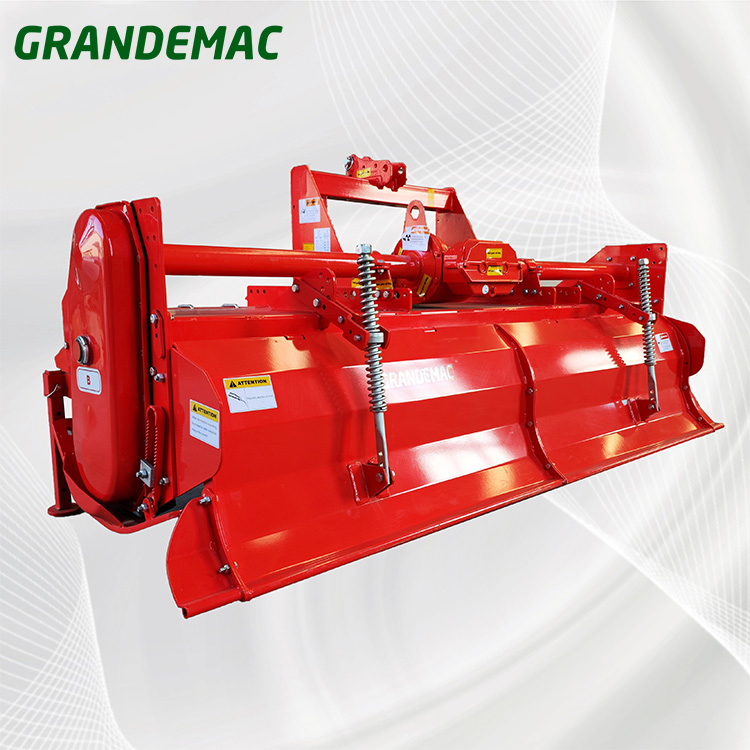
Rotary cultivators are made up of several key components that contribute to their efficiency and versatility in soil preparation. Each part plays a vital role in ensuring that the cultivator works effectively across different farming applications. These include:
● Blades or Tines: The rotating blades, or tines, are the heart of the cultivator. They break up compacted soil, chop up weeds, and incorporate organic matter into the soil, allowing for smooth and even soil preparation. The blades can be adjusted for different conditions and soil types, ensuring optimal performance.
● Rotor Shaft: The rotor shaft holds the blades in place and ensures their rotation. It is the mechanism that drives the blades, enabling them to penetrate the soil and perform the tilling process. The rotor shaft is typically powered by the tractor’s PTO, ensuring powerful and consistent performance.
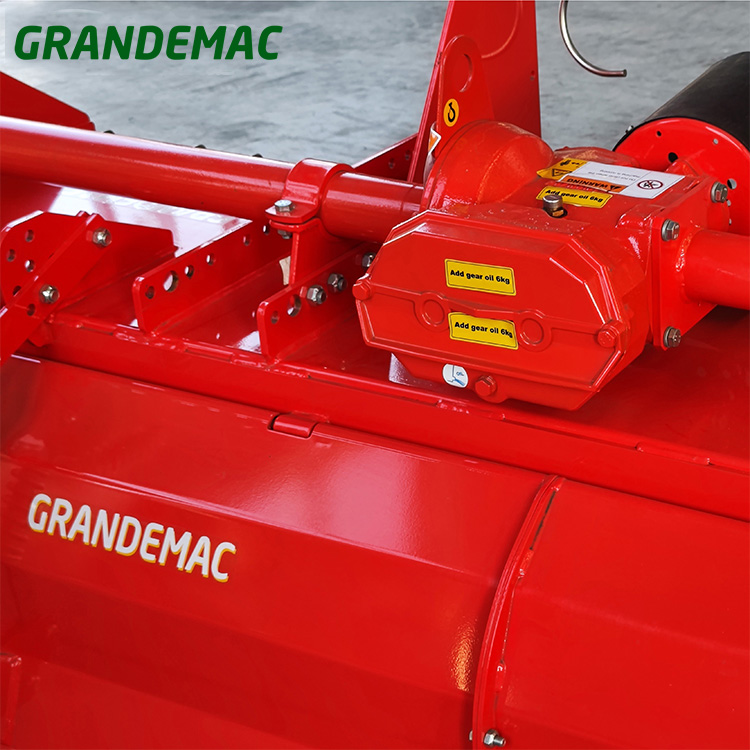
● Gearbox and Side Transmission: These components are responsible for controlling the rotation speed of the blades. The gearbox manages the power transfer from the tractor to the cultivator, while the side transmission ensures the proper speed for different farming conditions. Adjusting the speed allows for better control over soil processing, ensuring the machine works efficiently on various soil types.
● Skid Plates: Skid plates are crucial for maintaining the proper tilling depth during operation. They help guide the cultivator across the soil at the correct height, preventing the blades from going too deep or staying too shallow. This ensures a consistent and controlled tilling depth, which is essential for achieving the ideal soil structure needed for planting. Many models feature adjustable skid plates, allowing operators to fine-tune the depth according to the specific requirements of their crops and soil conditions.
Component | Function Description |
Blades or Tines | Rotating blades help break up soil clumps, allowing for smooth soil preparation. |
Rotor Shaft | Holds and rotates the blades, enabling the tilling process. |
Gearbox and Side Transmission | Controls the rotation speed of the blades and manages power from the tractor. |
Skid Plates | Helps control the tilling depth, ensuring proper soil structure. |
Operational Process
A rotary cultivator works by using the power from a tractor to rotate its blades. These blades penetrate the soil, breaking up clumps and mixing in organic material. The adjustable depth settings ensure that the tilling process is tailored to the soil's needs. Whether it’s preparing a seedbed or refining the soil after initial plowing, the rotary cultivator offers versatility for different farming scenarios. Some models can perform multiple operations in one pass—plowing, soil crushing, stubble removal, and leveling—making them highly efficient.
Types of Rotary Cultivators
Farmers can choose from a variety of rotary cultivators based on their farm size, soil condition, and tractor power. These range from light-duty models for small gardens to heavy-duty machines designed for large-scale farms.
● Light-Duty Models: Perfect for small farms or gardens, they work well with tractors ranging from 15–30 HP.
● Medium-Duty Models: Designed for medium-sized operations, these cultivators handle moderately compacted soil.
● Heavy-Duty Models: Built for large farms, these machines can tackle the toughest, clay-rich soils.
Model | Suitable Applications | Tractor Horsepower Range | Suitable Soil Types |
Light-Duty Models | Small farms or gardens | 15–30 HP | Ideal for loose soil |
Medium-Duty Models | Medium-sized operations | 30–60 HP | Suitable for moderately compacted soil |
Heavy-Duty Models | Large farms or commercial use | 60+ HP | Ideal for heavy, clayey soils |
Key Benefits of Using Rotary Cultivators in Soil Tillage
Time and Labor Savings
Rotary cultivators are designed to cover large areas in a short time, making them essential for high-efficiency farming. By eliminating the need for multiple passes, they allow farmers to finish the job quicker, reducing labor costs and improving productivity.
Improved Soil Structure and Crop Yields
The process of tilling with rotary cultivators enhances soil aeration and improves its texture, which are crucial for root growth. By incorporating organic material into the soil, rotary tillers improve soil fertility, leading to healthier crops and higher yields.
Versatility and Multi-functionality
From primary tillage to secondary soil refinement, rotary cultivators can handle a variety of tasks. This makes them ideal for different types of farming, from small-scale vegetable gardens to large commercial fields. Their ability to tackle a range of soil types and conditions makes them indispensable for modern farming.
Technological Innovation in Rotary Cultivators
GPS and Sensor Integration for Precision Farming
Many modern rotary cultivators are equipped with advanced technologies, such as GPS systems and sensors, that allow for precise tillage. These smart machines can adjust their depth and speed based on real-time soil conditions, ensuring optimal performance and minimal resource use.
The Future of Autonomous Rotary Cultivators
The agricultural industry is moving toward automation, and rotary cultivators are no exception. Future machines may feature full autonomy, reducing the need for manual labor. These self-operating machines could work continuously, providing farmers with significant labor and cost savings while increasing operational efficiency.
Innovations in Sustainability
Environmental sustainability is a growing concern in agriculture. Rotary cultivators, particularly those powered by electric or hybrid engines, are playing a key role in reducing farming's carbon footprint. Additionally, by minimizing soil disturbance and reducing the need for chemical inputs, rotary cultivators support sustainable farming practices.
Expanding the Role of Rotary Cultivators in Sustainable Farming Practices
Contributing to Conservation Tillage
Rotary cultivators play an essential role in conservation tillage methods, which aim to reduce soil erosion and improve water retention. By minimizing soil disturbance, these machines preserve the structure and health of the soil, promoting long-term sustainability in farming.
Supporting Regenerative Agriculture
Regenerative agriculture focuses on rebuilding soil organic matter and restoring biodiversity. Rotary cultivators are integral to these practices, as they help incorporate organic materials into the soil, improving its health and fertility for future crops.
Market Trends and Growth in the Rotary Cultivator Sector
Global Market Expansion
The demand for rotary cultivators is expanding globally. As farmers in emerging markets seek ways to increase productivity, mechanization becomes an essential solution. The agricultural machinery market is expected to grow significantly over the next decade, with rotary tillers and cultivators leading the way.
Future Projections for Rotary Cultivators
The future of rotary cultivators looks promising, with a continued focus on smart, connected machines. As agriculture becomes more data-driven, cultivators that can communicate with other farm equipment and provide real-time insights will be essential for farmers looking to maximize efficiency.
Competitive Landscape and Consumer Trends
Farmers are increasingly looking for versatile, customizable machines that can handle a wide range of farming tasks. Manufacturers are responding by designing multi-functional rotary cultivators that are easy to maintain and compatible with various soil conditions.
Conclusion
Rotary cultivators are transforming modern agriculture by improving soil health, reducing labor costs, and boosting crop yields. These machines are becoming essential for sustainable farming. Technological advancements make them more efficient and eco-friendly. By investing in rotary cultivators, like those from Grandemac, farmers can stay competitive and optimize soil preparation for better crop output.
FAQ
Q: What is a rotary cultivator and why is it gaining popularity in soil tillage?
A: A rotary cultivator, also known as a rotary tiller, is an agricultural machine used to prepare soil by using rotating blades. It's gaining popularity due to its ability to efficiently break up compacted soil, enhance soil aeration, and reduce labor costs.
Q: How does a rotary cultivator improve soil health?
A: Rotary cultivators help improve soil health by breaking up hard soil, improving aeration, and mixing organic material into the soil. This leads to better water retention, enhanced microbial activity, and improved seedbed preparation.
Q: Why are rotary cultivators more efficient than traditional plowing methods?
A: Rotary cultivators are more efficient because they combine multiple functions, such as plowing, soil crushing, and leveling, in one pass. This saves time and reduces fuel and labor costs compared to traditional tilling methods.
Q: What should I consider when choosing the right rotary cultivator for my farm?
A: When selecting a rotary cultivator, consider factors like tractor horsepower, soil type, and the size of your farm. You’ll want a model with adjustable depth settings and durable blades suited to your specific farming needs.


