Introduction
In agriculture, efficiency is key. For farmers looking to optimize their soil preparation, understanding the field capacity of a Heavy Duty Rotary Tiller can make all the difference. Field capacity refers to the area of land that can be tilled by the machine in a given amount of time. A higher field capacity means that larger areas can be worked in less time, directly impacting productivity.
In this article, we’ll explore the field capacity of Heavy Duty Rotary Tillers, how it’s calculated, and the factors that influence it, helping farmers make informed decisions to improve efficiency.
Understanding Field Capacity in Agricultural Equipment
What is Field Capacity?
Field capacity is defined as the maximum area a tiller can process in one hour under ideal conditions. It is a crucial metric in large-scale farming, as it determines how quickly a tractor and tiller can prepare a field for planting. The higher the field capacity, the more productive the farming operation can be, reducing the overall time spent on soil preparation.
The field capacity of a tiller is typically expressed in hectares per hour or acres per hour. Understanding this value helps farmers plan their workflow and determine how much time it will take to till a specific area.
Factors Affecting Field Capacity
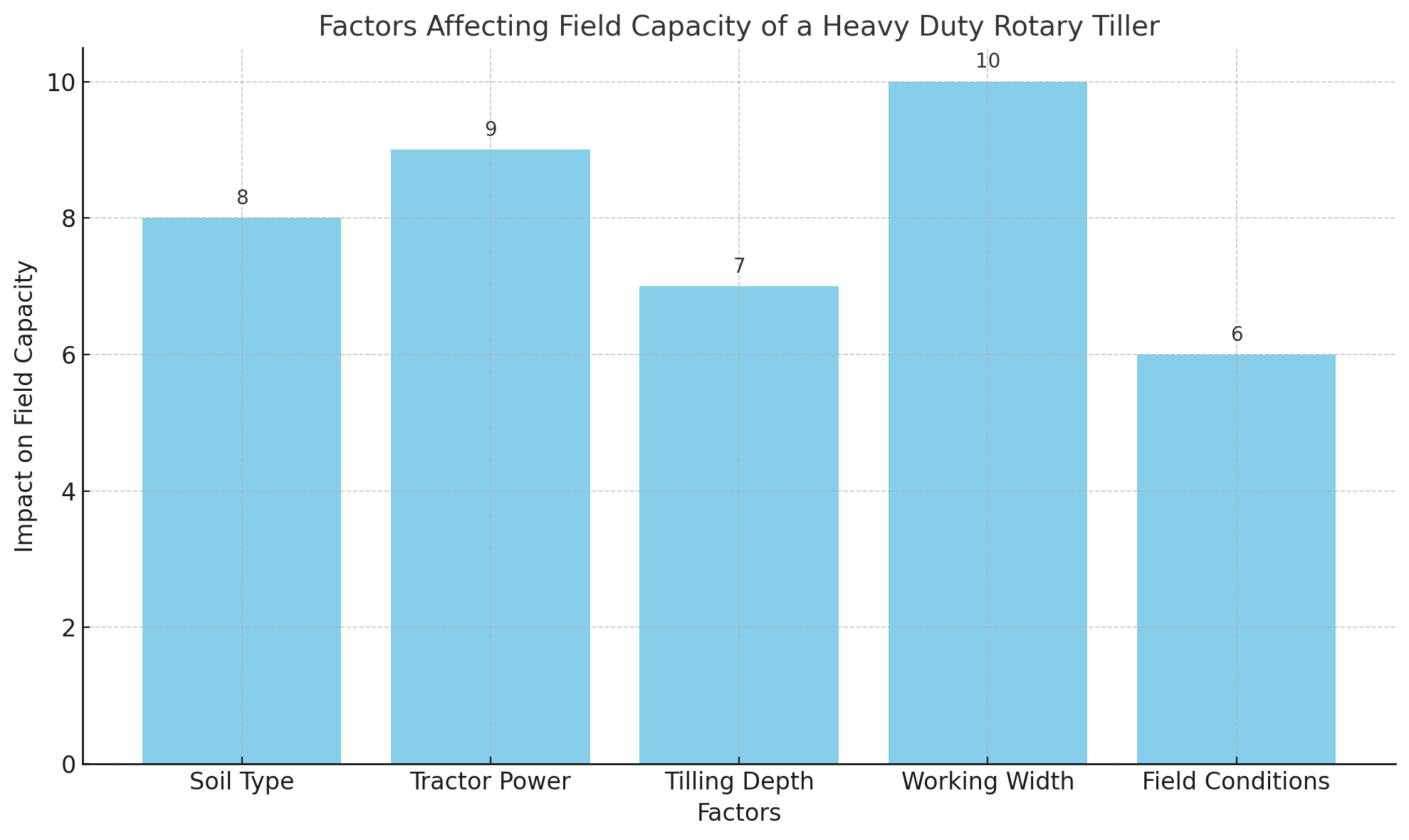
Several factors contribute to the field capacity of a Heavy Duty Rotary Tiller:
● Soil Type: The density and texture of the soil play a significant role. Loamy or sandy soils are easier to till and can be worked more quickly. In contrast, clay-heavy or rocky soils require more power and time to till.
● Tractor Power (PTO Horsepower): The PTO horsepower of the tractor directly affects how well the tiller performs. A tractor with more horsepower can handle larger, heavier tillers, which can increase the field capacity.
● Tilling Depth and Width: The working width and depth of the tiller affect the amount of soil covered in each pass. A wider tiller will cover more ground, while a deeper tilling depth may slow down the process due to increased soil resistance.
● Field Conditions: Obstacles like rocks, uneven terrain, and moisture content in the soil can all impact the efficiency of the tilling process, thus affecting field capacity.
Field Capacity of Heavy Duty Rotary Tillers
How Field Capacity Varies by Model
Field capacity can vary significantly depending on the design of the Heavy Duty Rotary Tiller. Models with wider working widths and more powerful blades tend to have higher field capacities. For example, a Heavy Duty Rotary Tiller designed for large-scale farms with a working width of 72 inches or more will typically have a higher field capacity compared to a smaller model meant for residential or small farm use.
● Light-Duty Tillers: These tillers are usually smaller, with working widths between 36 to 48 inches. Their field capacity is limited, making them more suitable for smaller fields and lighter soils.
● Heavy-Duty Rotary Tillers: With a working width ranging from 60 to 84 inches, these models are designed to handle larger areas and tougher soil conditions. Their field capacity is significantly higher, making them ideal for commercial farming operations.
Field Capacity Calculations for Heavy Duty Rotary Tillers
Calculating the field capacity of a Heavy Duty Rotary Tiller involves considering several factors:
1. Working Width (in meters or inches): The wider the tiller, the more ground it can cover in one pass.
2. Speed (in kilometers per hour or miles per hour): The speed at which the tractor travels impacts the area covered.
3. Efficiency Factor (based on conditions): This factor adjusts for field obstacles, soil resistance, and tilling depth.
Always account for field conditions like rocks or uneven terrain, as these will reduce the actual field capacity compared to ideal conditions.
Impact of Tractor Power on Field Capacity
Tractor Horsepower and Tiller Size
The tractor’s PTO horsepower is one of the most significant factors influencing the field capacity of a Heavy Duty Rotary Tiller. For a tiller to operate at its full potential, the tractor must provide sufficient power. If the tractor is underpowered, the tiller may struggle to maintain speed or depth, reducing its field capacity.
For example, a Heavy Duty Rotary Tiller designed for commercial use may require a tractor with a PTO horsepower range of 50 to 100 HP. Using a smaller tractor with insufficient horsepower will cause inefficiencies and may even lead to damage to the equipment.
PTO Horsepower vs. Tiller Performance
An underpowered tractor can lead to several issues:
● Slower Tilling: If the tractor can’t supply enough power, the tiller will work more slowly, reducing the field capacity.
● Increased Wear and Tear: Underpowered tractors may strain the tiller, leading to faster wear on components like the blades and gearbox.
On the other hand, an overpowered tractor can also cause problems. Excess horsepower can lead to unnecessary fuel consumption, increased operational costs, and difficulty in controlling the tiller.
Practical Tips for Maximizing Field Capacity
Adjusting Depth and Speed for Maximum Efficiency
To maximize field capacity, adjusting the tiller’s depth and speed based on soil type is crucial. For instance:
● Shallow Tilling: For lighter soils, set the tiller to a shallow depth. This allows the tractor to move faster, covering more area in less time.
● Deep Tilling: For clay or compacted soils, set the tiller to a deeper depth. However, this may slow down the tilling process, so balancing speed and depth is essential.
Regular Maintenance and Setup
Regular maintenance plays a significant role in maintaining the field capacity of your Heavy Duty Rotary Tiller. Ensure that:
● Blades are sharp and well-maintained to maximize efficiency.
● Gearboxes and other moving parts are properly lubricated and checked for wear to avoid unexpected downtime.
● Tines are replaced when worn to maintain consistent tilling quality.
Regular maintenance and proper setup ensure consistent field capacity, reduce downtime, and improve the overall lifespan of your Heavy Duty Rotary Tiller.
Conclusion
Understanding the field capacity of a Heavy Duty Rotary Tiller is crucial for large-scale farming. By considering factors like working width, tractor power, and soil conditions, farmers can improve tilling efficiency and speed up soil preparation. Choosing the right Heavy Duty Rotary Tiller ensures higher productivity, covering more land in less time. GRANDEMAC provides durable, high-performance tillers designed to handle diverse soil types and conditions, delivering long-lasting results with optimal field capacity.
FAQ
Q: What is the field capacity of a Heavy Duty Rotary Tiller?
A: The field capacity of a Heavy Duty Rotary Tiller refers to the area it can till per hour under ideal conditions. It is influenced by factors like the tiller's working width, tractor power, and soil type.
Q: How do I calculate the field capacity of a Heavy Duty Rotary Tiller?
A: To calculate field capacity, multiply the working width by the tilling speed, then adjust for field conditions and soil resistance. A higher working width and faster speed increase field capacity.
Q: What factors affect the field capacity of a Heavy Duty Rotary Tiller?
A: Key factors include soil type, tractor horsepower, tilling depth, and field conditions. Harder soils or obstacles like rocks reduce field capacity, while loose, sandy soils increase it.
Q: Can a Heavy Duty Rotary Tiller handle rocky soils?
A: Yes, Heavy Duty Rotary Tillers are specifically designed to handle tough soils, including rocky and clay-heavy terrains. Their robust construction allows them to maintain high field capacity under these conditions.
Q: Why is field capacity important for farming operations?
A: Field capacity determines how efficiently a tiller works, helping farmers cover larger areas in less time. This directly impacts productivity, reducing downtime and increasing farm efficiency.


