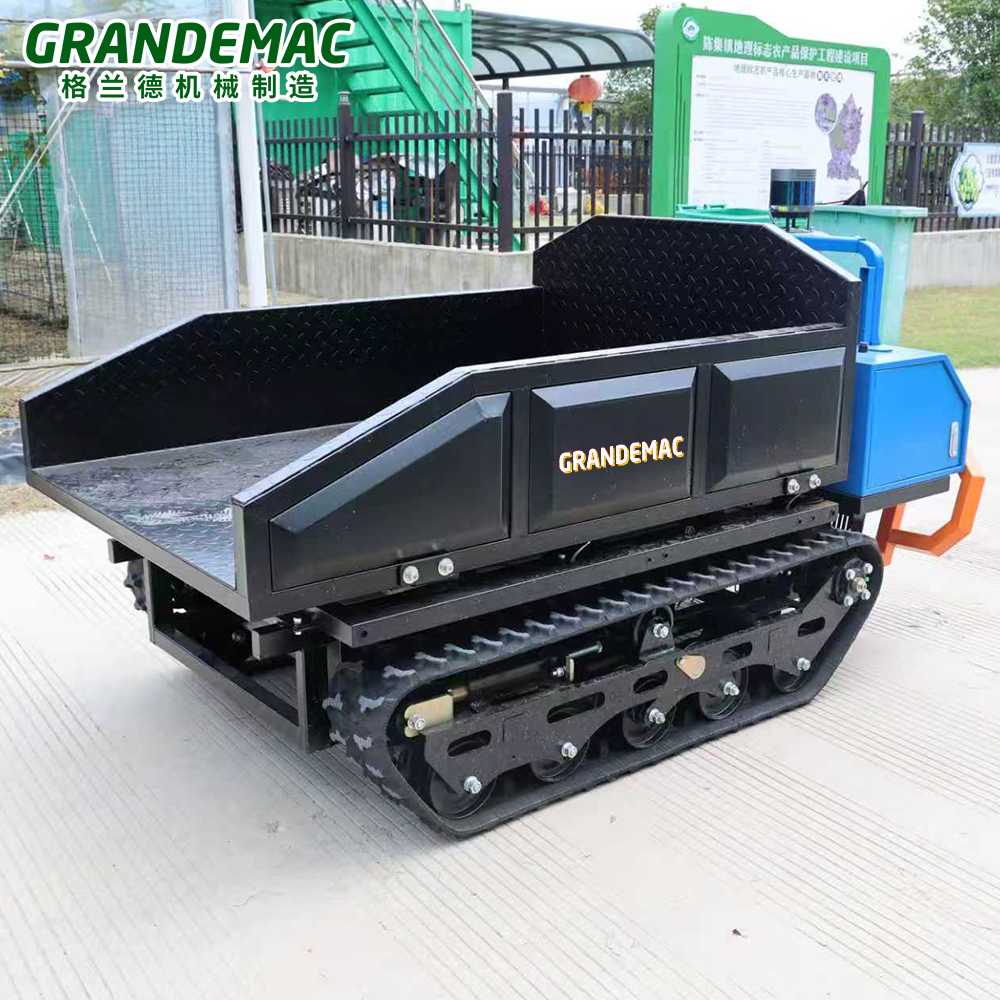
Margin pressures heavily impact modern agriculture. Hidden costs often stem from inefficient field-to-facility logistics, severe soil compaction, and weather-delayed harvests. Farmers lose significant revenue when crops rot in the field simply because transport equipment cannot reach them. Standard wheeled utility vehicles work reasonably well on dry, perfectly flat ground. However, you need high-traction, low-impact alternatives when terrain deteriorates. Heavy rains quickly turn farm paths into impassable bogs. In these conditions, traditional wheels simply sink, spin, and destroy valuable topsoil.
A purpose-built tracked machine bridges the gap between heavy agricultural machinery and standard transport logistics. It offers a critical, proactive solution for operations looking to scale efficiency safely. Exploring these high-flotation options opens entirely new operational windows for your farm. You protect your profit margins and keep complex harvest schedules precisely on track, regardless of adverse weather or challenging topography.
Key Takeaways
A tracked transport vehicle (or crawler transport dumper) replaces wheels with continuous tracks to distribute weight, drastically reducing soil compaction and rutting.
The primary ROI driver is extending operational windows; they allow for material transport in wet, steep, or muddy conditions where standard equipment fails.
Evaluating a tracked agricultural carrier requires weighing payload capacity against undercarriage maintenance costs and track lifespan.
Implementation succeeds when decision-makers account for total cost of ownership (TCO), including operator training and routine undercarriage clearing.
Understanding the Tracked Transport Vehicle
We define this equipment by its distinct ground-contact mechanism. It utilizes a continuous track system instead of standard pneumatic wheels. This mechanical shift fundamentally changes how the machine interacts with fragile terrain. Traditional axles create severe, concentrated point loads. Every ounce of cargo weight pushes down through four small tire contact patches. Tracks operate differently. They distribute the machine's entire mass evenly across a massive surface area.
Depending on your geographical region or specific industry, you will encounter varying terminology. Many farm operators refer to it as a tracked transport vehicle. Others prefer the industrial term crawler transport dumper. Some equipment dealers explicitly market them as tracked agricultural carriers. Despite the semantic differences, these names all describe the same essential workhorse designed for ultimate flotation.
The physics of ground pressure explain the immense biological advantage. Standard heavy-duty tires easily exert 30 to 40 pounds per square inch (PSI) on the ground. Tracks often drop this pressure dramatically below 5 PSI. This massive PSI reduction directly protects your farm soil health. You avoid destroying the microscopic soil pores vital for proper water drainage and deep root penetration. Healthy soil structures directly correlate to higher seasonal yields.
Best Practices for Soil Health
Monitor field moisture levels before dispatching any equipment.
Map your primary transport corridors to limit cross-field traffic.
Use tracked machines specifically during the highest moisture periods.
The Farm Logistics Bottleneck: Why Standard Transport Fails
Standard farm logistics break down frequently under demanding environmental conditions. You likely recognize these operational failures. We see them compound rapidly during critical seasonal pushes. Traditional utility task vehicles (UTVs) and compact tractors simply lack the mechanical footprint required for extreme environments.
Consider these exact breakdown scenarios:
Pulling heavy, fully loaded harvest bins out of saturated, muddy fields after sudden rainstorms.
Transporting dense bulk fertilizer up steep, slippery inclines without triggering catastrophic rollover risks.
Navigating heavily rutted, frozen forest paths to deliver winter feed to remote livestock herds.
Moving irrigation pipes across soft, recently tilled loam without burying the axles.
Inefficiency carries steep, often untracked hidden costs. You waste expensive diesel fuel every second your wheels slip and spin. You lose precious labor hours dispatching secondary tractors to rescue stuck vehicles. Most importantly, deep wheel ruts cause severe, long-lasting soil compaction. This physical compaction permanently degrades your crop yields over time by suffocating root zones.
Tracks directly mitigate these specific logistical bottlenecks. They maintain continuous, stable ground contact across highly uneven surfaces. This consistent contact preserves the underlying terrain and protects your fragile transport timeline. You stop fighting the local environment. Instead, you keep materials moving smoothly, ensuring your facility processes fresh crops immediately after harvest.
Core Use Cases and Operational Benefits
Modern farm operations rely on these specialized machines to solve distinct logistical challenges. Integrating a tracked agricultural carrier eliminates bottlenecks across three primary categories.
Wet-Weather Harvesting
Rainy seasons constantly threaten delicate harvests. You must move specialty crops, soft fruits, or orchard yields quickly before they spoil on the branch. Traditional tractors create massive trenches in wet fields, ruining the ground for next season. Tracked machines let you continue harvesting actively during heavy rain. They glide effortlessly over wet, slick fields without destroying the underlying soil profile. Your crews keep picking, and your logistics team keeps hauling.
Steep and Marginal Terrain
Standard tractors easily roll over on hillsides. Their high center of gravity makes hillside navigation incredibly dangerous for operators. Tracked machines feature a remarkably low center of gravity. Their continuous track traction safely grips steep slopes and slick embankments. You can finally utilize marginal, hilly terrain previously considered too dangerous or inaccessible for standard farm equipment. This expands your usable acreage significantly.
Heavy Material Distribution
Farms constantly move dense, awkward, and heavy supplies. You regularly need to distribute crushed gravel, bulk fertilizer, heavy fencing materials, and large feed bunks. A rugged crawler machine effortlessly hauls these massive payloads across soft ground. You achieve precise material distribution exactly where you need it. You completely avoid the massive expense of building dedicated, compacted gravel haul roads into your remote pastures.
Common Mistakes in Material Hauling
Overloading the hopper beyond the manufacturer weight rating.
Distributing the payload unevenly, causing one track to bear excess weight.
Ignoring the shift in the center of gravity when raising the dump bed on an incline.
Evaluation Framework: How to Assess a Tracked Agricultural Carrier
Choosing the right equipment requires a systematic, evidence-based evaluation. You must align the machine specifications directly against your most challenging farm environments.
Payload vs. Ground Pressure Trade-off
Never evaluate ground pressure based solely on an empty machine. You must calculate the actual operating PSI when the hopper holds its absolute maximum payload. A machine might boast impressively low empty PSI figures. However, it might compress your delicate soil severely once you load it fully with wet gravel. Ask the dealer for the fully loaded PSI specifications before finalizing any purchase.
Track Type Selection
You must choose carefully between rubber and steel tracks based on your primary terrain. Each material offers distinct advantages and drawbacks.
The comparison chart below highlights the critical differences between track materials.
Feature
Rubber Tracks
Steel Tracks
Terrain Suitability
Turf, mud, pavement, soft soil
Abrasive rock, heavy forestry, demolition
Pavement Crossing
Safe; causes zero damage
Destructive; gouges asphalt instantly
Operator Comfort
High vibration absorption; smooth ride
Low absorption; harsh ride on hard surfaces
Durability
Susceptible to sharp rock cuts
Highly resistant to punctures and cuts
Powertrain and Hydraulics
Evaluate the engine reliability carefully. Look for well-known engine manufacturers supplying the power plant. Assess how seamlessly the hydraulic systems integrate into the overall chassis. You need incredibly robust hydraulics for smooth, fully loaded dumping actions. If you plan to run auxiliary attachments like augers or trenchers, ensure the hydraulic pump offers sufficient flow rates (gallons per minute).
Safety and Compliance Standards
Agricultural work remains inherently hazardous. Look exclusively for machines featuring essential, modern safety features. Roll-Over Protective Structures (ROPS) save lives on steep grades. Easily accessible emergency stop mechanisms prevent catastrophic accidents during loading. Ensure the machine complies fully with your regional agricultural workplace safety frameworks. Never bypass safety interlocks to speed up a job.
Implementation Realities and Fleet Integration
Integrating these powerful machines into your logistics fleet requires realistic expectations. We build operational trustworthiness by acknowledging the mechanical downsides alongside the benefits. Preparation prevents expensive surprises down the road.
Maintenance Truths
Tracks demand specific, routine upkeep. Undercarriages accumulate thick mud, rocks, and field debris rapidly. Operators must clear this buildup daily using a shovel or pressure washer. Ignoring undercarriage debris causes premature tensioner failure and stretches the tracks. Furthermore, complete track replacement generally costs significantly more than buying new pneumatic tires. You must budget proactively for these long-term consumable parts.
Operator Adoption
Driving a tracked vehicle feels entirely different from driving a standard pickup truck. It utilizes skid-steer turning mechanics. Operators used to standard steering wheels face a definite learning curve. Factor in proper training time before deploying the machine during a busy harvest. Proper training ensures operators use smooth, non-destructive turning techniques. Aggressive, zero-radius pivots tear up delicate topsoil instantly. Teach your team to use wide, sweeping three-point turns whenever possible.
Evaluating Financial Returns
Calculating your return on investment involves a straightforward economic model. First, add your initial capital expenditure. Next, factor in projected track replacement costs over five years. Finally, add your routine maintenance expenses. Now, subtract the massive financial value of prevented downtime. Subtract your saved manual labor hours. Most importantly, subtract the value of your protected crop yields. Farms usually realize highly positive financial returns by simply keeping their operations running during adverse weather events.
Conclusion
A tracked transport machine represents a highly strategic, long-term logistics investment. It transcends the basic capabilities of a standard utility cart. By bridging the gap between heavy tractors and light trucks, you unlock entirely new levels of operational resilience. You gain the power to move materials precisely when you need to, regardless of ground conditions.
To successfully integrate this equipment, follow these action-oriented steps:
Audit your absolute worst farm terrain and identify your most weather-dependent logistics routes.
Determine your strict minimum payload requirements for daily feeding or harvesting operations.
Select your ideal track material based primarily on paved road crossings and terrain harshness.
Request a site-specific demonstration to see the equipment perform on your actual farm soil.
Consult a detailed spec-comparison guide or speak directly to a qualified equipment specialist to finalize your purchase.
FAQ
Q: What is the difference between a tracked transport vehicle and a UTV?
A: A tracked vehicle utilizes continuous tracks instead of wheels. This fundamental design changes weight distribution and steering mechanics. Tracks provide massive surface area contact, allowing navigation through deep mud and steep terrain. Standard UTVs rely on wheeled point loads, making them highly prone to sinking and severe wheel slip in harsh conditions.
Q: How long do rubber tracks last on a crawler transport dumper?
A: Rubber tracks typically last between 1,000 and 1,500 operating hours. This lifespan depends heavily on your specific terrain. Abrasive gravel surfaces degrade rubber quickly, while soft agricultural soil extends track life significantly. Operator skill also plays a major role; aggressive pivot turning drastically accelerates rubber track wear.
Q: Do tracked agricultural carriers damage turf or crops?
A: They exert much lower ground pressure overall, completely preventing deep, damaging wheel ruts. However, tracks can still damage turf during sharp turns. Because they use skid-steer mechanics, aggressive pivoting can tear up topsoil quickly. Proper operator training prevents this issue, ensuring crews use smooth, wide turns over delicate ground.
Q: Can these vehicles cross paved farm roads?
A: Rubber-tracked variants can safely cross paved farm roads without causing any surface damage. Their flexible treads absorb impacts and grip asphalt smoothly. Steel tracks, however, will heavily gouge and destroy asphalt or concrete surfaces. You should restrict steel-tracked models exclusively to dirt, mud, and severe off-road terrain.