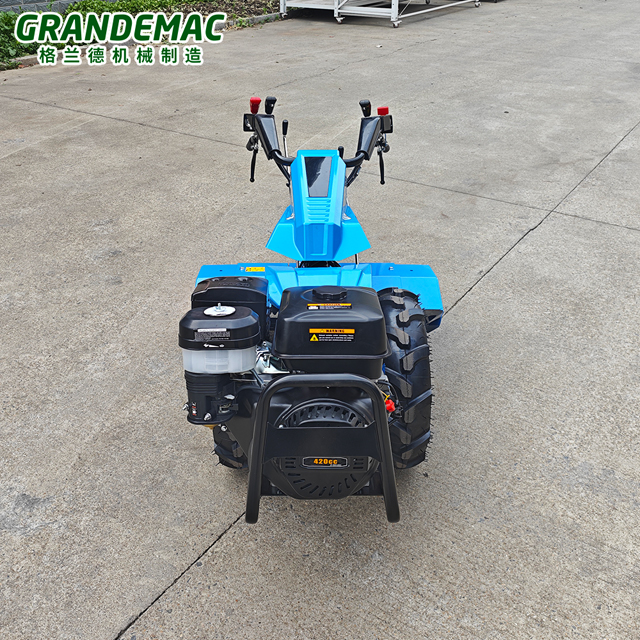
A Two Wheel Tractor bridges the gap between manual labor and expensive four-wheel compact machines. It serves as a highly specific utility investment for serious growers. Many small farms rely on these walk-behind units daily for diverse tasks. Purchasing a premium power unit requires significant capital. You must get the specifications right the first time. The wrong machine can slow down operations. It can also cause severe physical strain on the operator. Replacing mismatched equipment drains farm budgets quickly.
This guide provides an objective evaluation framework for shortlisting machines. We examine farm topography, operator physical capacity, and implement scalability. You will learn exactly how to match equipment to your daily agricultural tasks. We break down engine requirements, transmission types, and essential safety features. Read on to make a confident, data-driven purchasing decision.
Key Takeaways
A two wheel tractor’s true value lies in its PTO (Power Take-Off) and implement compatibility, not just engine horsepower.
Transmission type (All-Gear vs. Hydrostatic) directly dictates the machine’s longevity, maintenance requirements, and operator fatigue.
Reversible handlebars and differential locks are mandatory features for diverse, multi-implement farm operations.
Total Cost of Ownership (TCO) must factor in the price of heavy-duty attachments and local dealership support for proprietary parts.
Evaluating Core Specifications: Power, PTO, and Transmission
Many buyers focus entirely on engine size when shopping. This represents a fundamental mistake in agricultural equipment sourcing. You must evaluate the entire powertrain holistically.
Engine Horsepower vs. Usable Power
Buyers often fall into the trap of over-buying horsepower. Extra horsepower adds significant weight to the power unit. Heavy machines become unnecessarily difficult to handle in tight rows. You must define realistic horsepower requirements for your specific daily tasks.
An 8 to 10 HP engine serves as the sweet spot for standard market gardening. This size comfortably runs 30-inch power harrows and rotary plows. It balances adequate torque against manageable physical weight. Operations requiring heavy flail mowing demand more power. Pulling heavy plows through unbroken clay soil also requires extra grunt. For these intense tasks, look for engines in the 11 to 14+ HP range. Remember to match the engine output to your heaviest intended implement.
Transmission Architectures
The transmission architecture dictates how the machine performs under load. It also determines long-term maintenance needs. Buyers generally choose between two dominant systems.
All-gear transmissions offer exceptional durability. They excel at power transfer efficiency. These gearboxes handle heavy, constant-load tasks perfectly. Soil working attachments like rotary plows thrive on all-gear units. You will also experience lower long-term maintenance requirements. They do not rely on fluid pressure to drive the wheels.
Hydrostatic transmissions (HST) provide a different operational experience. They utilize hydraulic fluid to offer seamless speed adjustments. You can change ground speed without shifting gears or clutching. This feature is ideal for mowing, snow removal, or sweeping. However, buyers must evaluate the inherent trade-offs. HST units require a higher upfront investment. They suffer from parasitic power loss, robbing some horsepower from the PTO. They also demand stricter hydraulic fluid maintenance.
Transmission Architecture Comparison Chart
Feature
All-Gear Transmission
Hydrostatic Transmission (HST)
Speed Control
Stepped gears (requires clutching)
Seamless, infinite variability
Power Efficiency
High (direct mechanical transfer)
Moderate (parasitic loss present)
Best Use Cases
Deep tillage, constant-load pulling
Mowing, sweeping, snow removal
Maintenance Needs
Low (periodic gear oil changes)
High (strict hydraulic fluid schedules)
The PTO Profile
The Power Take-Off (PTO) connects the engine power to the active implement. You must verify standard spline configurations. Some manufacturers use proprietary connections. Proprietary PTOs force you to buy attachments exclusively from one brand. Standard splined shafts offer much greater flexibility. Always ensure the PTO operates independently of the wheel speed. Independent PTOs allow you to stop the tractor's forward motion while the implement keeps spinning. This is critical for clearing material from a clogged mower or tiller.
Implement Ecosystem and Scalability
A walk-behind machine is rarely just a tiller. You should frame the tractor as a universal power hub. The actual evaluation must center on attachment availability. The best power unit becomes useless without the right tools.
The Power Unit Paradigm
Farm scale often changes over time. Your equipment must scale alongside your operation. Before selecting a brand, review its complete implement catalog. Ensure they support your current and future agronomic methods.
Look for these four critical implement categories:
Rotary Plows: Essential for breaking new ground and building raised beds.
Flail Mowers: Necessary for shredding thick cover crops and woody brush.
Power Harrows: Ideal for preparing fine seedbeds without inverting the soil layers.
Precision Seeders: Required for accurate, high-density vegetable planting.
Quick Hitch Compatibility
Switching heavy implements manually takes time and physical effort. Quick-coupling systems solve this problem. You must assess the availability and cost of quick hitches for your shortlisted brands.
Best Practice: Always check if third-party implements can adapt to the unit. Some manufacturers deliberately design proprietary mounting flanges. This creates vendor lock-in. An open ecosystem allows you to source aftermarket attachments. You can often find specialized tools from independent fabricators. Adapters exist for major brands, but they add extra length and weight to the machine.
Front-Mount vs. Rear-Mount Balance
Walk-behind units perform two distinct categories of work. Soil-working tools trail behind the machine. Mowing and clearing tools sit in front of the machine. To accommodate both, the power unit needs reversible handlebars. You simply rotate the steering column 180 degrees. This flips the drive direction. Handlebar reversibility is non-negotiable for a versatile farm hub. Verify the reversing mechanism operates smoothly. Cable binding during rotation indicates poor engineering design.
Terrain Constraints and Using a 2 Wheel Orchard Tractor
Farm topography heavily influences equipment selection. Flat, open fields forgive bulky machines. Restricted spaces and steep hills demand specific engineering features. You must evaluate how the unit interacts with your unique landscape.
Maneuverability in Restricted Spaces
Many growers operate in highly confined environments. High-tunnel greenhouses, dense market garden beds, and mature tree lines restrict movement. When used as a 2 Wheel Orchard Tractor, the machine must navigate tight canopies effortlessly. Evaluate the turning radius carefully. Check if the wheel track width is adjustable. Adjustable axles allow you to narrow the profile for tight rows. You can widen them again for stability on slopes. Consider the overall vertical profile as well. Low-hanging fruit branches easily snag on tall air intake stacks or prominent exhaust mufflers.
Traction and Differential Systems
Navigating loose soil or mud requires excellent traction control. Basic models use straight solid axles. These force both wheels to turn at the same speed. Solid axles make end-of-row turning incredibly strenuous. You physically drag one wheel through the dirt to pivot.
Advanced units feature a differential system. This allows the outside wheel to spin faster than the inside wheel during a turn. Steering becomes effortless. However, an open differential loses traction if one wheel slips in mud. Therefore, a lockable differential (Diff-Lock) is an absolute necessity. You unlock it for easy steering at the row's end. You lock both wheels together for straight-line traction in mud or on inclines. Never buy a commercial-grade unit lacking a diff-lock.
Wheel Weights and Extensions
Steep gradients pose severe rollover risks. Walk-behind units possess a relatively high center of gravity. You must assess the availability of stabilizing accessories.
Bolt-on Wheel Weights: These lower the center of gravity effectively. They also increase tire bite in hardpack soil.
Axle Extensions: These widen the wheelbase substantially. A wider stance prevents lateral rollovers on hillsides.
Track Systems: Some manufacturers offer rubber track replacements for standard wheels. Tracks provide unmatched hillside stability and distribute weight to prevent soil compaction.
Ergonomics, Safety, and Operator Realities
Agricultural sales brochures rarely discuss operator fatigue. They highlight engine specs and ignore the human element. You must prioritize ergonomics to protect your physical health during long planting seasons.
Physical Demands
We must transparently address the physical exertion required. Walk-behind units are not passive machines. You do not sit in a padded seat. You walk, steer, lift, and pivot the equipment constantly. Operating them demands core strength and stamina. Heavy attachments like rotary plows require balancing. If you select a machine too large for your physical frame, productivity drops. The operator tires out long before the fuel tank empties. Test the balance of the machine in person before buying.
Vibration Damping
Gasoline engines and spinning tines generate intense vibrations. These vibrations travel directly up the steering column into your hands. Prolonged use without damping leads to severe operator fatigue. Over time, it can cause nerve damage in the hands and wrists. Check the machine for shock-absorbing handlebar mounts. Premium manufacturers isolate the handlebars using heavy-duty rubber blocks. This simple feature drastically extends your daily working capacity.
Critical Safety Mechanisms
Walk-behind tractors use powerful, exposed blades. Safety mechanisms must function flawlessly. Verify the presence of an Operator Presence Control (OPC). Many farmers call this a "deadman switch". If you lose your grip or trip, the OPC instantly cuts the engine or stops the PTO. Older machines lacked this feature, leading to severe accidents.
Common Mistake: Ignoring the reverse PTO lockout. When you shift into reverse while using rear-mounted tines, the machine backs toward your legs. A proper safety system automatically disengages the PTO when reverse gear is selected. Never bypass this mechanism. It exists strictly to prevent lower-limb amputations.
Dealership Support and Warranties
Even the most robust mechanical systems eventually fail. Belts snap, cables stretch, and clutches wear down. Your purchasing decision must account for the logistics of repair and maintenance.
Sourcing and Assembly
Buyers often weigh the risks of direct-to-consumer (DTC) models versus dealer-prepped machines. DTC units ship in wooden crates. They require significant home assembly. You must fill fluids, adjust control cables, and calibrate the clutch. If you lack mechanical experience, this process introduces errors. Improper assembly voids warranties. Fully assembled, dealer-prepped machines remove this risk. The dealer ensures proper fluid levels and tests all safety mechanisms before handover.
Parts Availability and Lead Times
Investigate the supply chain thoroughly. Find out where replacement cables, clutches, and standard wear parts originate. An unsupported machine during peak planting season creates a critical business risk. If a proprietary gear fails in May, you cannot wait six weeks for overseas shipping. Local dealerships maintain stock of high-wear items. They keep your farm running during crucial weather windows. Ask the dealer explicitly about their current parts inventory for your chosen model.
Warranty Exclusions
Always analyze standard warranty terms before signing an invoice. Manufacturers frequently differentiate between "commercial use" and "residential use." Market gardening usually falls under commercial use. This classification often slashes the warranty duration significantly. A three-year residential warranty might drop to a six-month commercial warranty. Furthermore, read the fine print regarding the engine versus the transmission. Engine manufacturers (like Honda or Kohler) supply their own warranties. The tractor manufacturer covers the gearbox. Ensure you understand who processes which claim if a breakdown occurs.
Conclusion
Sourcing the right walk-behind equipment requires a structured, logical approach. You must define your primary agricultural tasks first. Next, select the specific implements required for those tasks. Finally, size the power unit to handle those specific implements. Never reverse this order. Evaluating engine requirements, transmission durability, and essential safety features ensures long-term operational success.
Your next step requires practical action. Map out your farm's tightest bottlenecks and steepest grades. Measure your row widths and high-tunnel doorways. Once you have these dimensions, contact a local dealer. Request an on-site demo or seek local dealer rentals. You must test the physical handling and vibration levels under real field conditions. Hands-on experience prevents costly purchasing errors and secures the right mechanical partner for your farm.
FAQ
Q: Is a hydrostatic transmission worth the extra cost on a two wheel tractor?
A: It depends heavily on your primary use-case. Hydrostatic transmissions are highly recommended for tasks requiring constant back-and-forth motions. Snow blowing, sweeping, and precision mowing benefit greatly from seamless speed control. However, HST is less critical for long-row soil working. Deep tillage prefers the raw pulling power of an all-gear setup.
Q: How much horsepower do I actually need for a small market garden?
A: A machine producing 8 to 10 horsepower serves as the baseline for most market gardens. This range hits the perfect sweet spot. It provides enough torque to confidently run a 30-inch power harrow or a standard rotary plow without making the machine overly heavy.
Q: Can one machine work for both open field beds and as a 2 wheel orchard tractor?
A: Yes. A single unit easily performs both open-field tillage and tight-canopy orchard mowing. Reversible handlebars let you run front-mounted mowers or rear-mounted tillers. Adjustable wheel track widths allow you to narrow the profile for orchard tree lines or widen it for field stability.
Q: Are heavy wheel weights necessary?
A: Wheel weights are usually necessary when operating heavy front-mounted implements. They counterbalance attachments like flail mowers. This drastically reduces the lifting strain on the operator when pivoting the machine. They also provide essential traction in loose soil or on steep inclines.