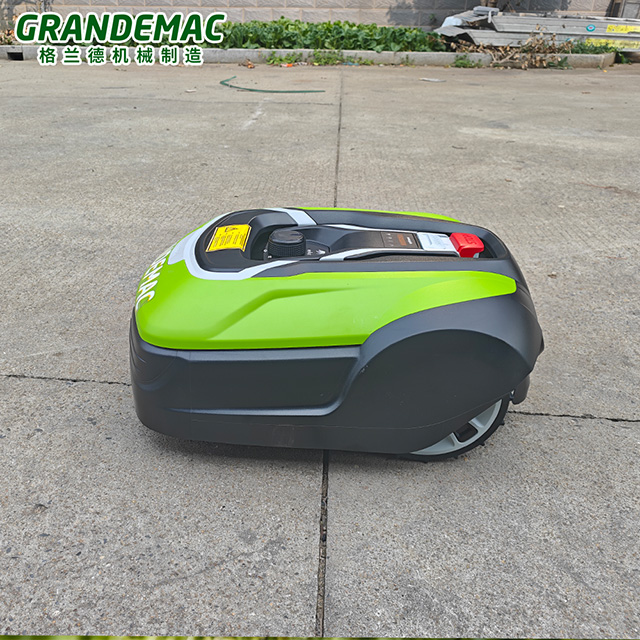
Property maintenance has shifted drastically in recent years. Homeowners are rapidly moving away from traditional gas mowers. Autonomous solutions now offer incredible time savings and eco-friendly benefits. However, the high upfront cost makes this a serious long-term investment. You cannot just pick a model at random. Strict property-to-machine matching ensures you get reliable performance day after day. This guide provides an objective, criteria-based framework for discerning buyers. We evaluate how an Electric robot lawn mower handles specific yard realities. It helps you cut through flashy marketing claims to find what truly works. By the end, you will understand exactly how to align mower capacity, navigation types, and terrain handling with your unique landscape. You will know exactly what specifications matter most for your property size.
Key Takeaways
Manufacturer maximum acreage ratings often assume flat, rectangular lawns; buyers must downgrade expected capacity by 15–20% for complex terrain.
The choice between perimeter wire and wire-free (RTK/GPS) models dictates initial installation effort, ongoing maintenance, and budget.
Slope handling capability is a hard limitation; exceeding a mower’s maximum incline rating will result in traction failure and safety halts.
Total Cost of Ownership (TCO) favors robotics over 3–5 years when factoring in gas savings, zero oil changes, and eliminated landscaping service fees.
Matching Mower Capacity to Property Size and Terrain
Manufacturers always advertise a theoretical maximum cutting capacity. They test their models on perfectly flat, open, and rectangular testing fields. Real-world residential lawns rarely look like these pristine environments. You must understand the difference between ideal conditions and your actual yard topology.
Battery constraints play a massive role in daily operation. Most entry-level models use smaller lithium-ion batteries. They mow for about an hour before returning to base. They might take two hours to recharge. This downtime drastically limits how much grass they cut per day. If you have a larger lot, you need higher battery capacity. Otherwise, the machine fails to maintain a uniform cut across the whole lawn. We recommend downgrading any manufacturer acreage claim by roughly 20 percent. This buffer accounts for complex navigation and frequent turns.
Incline ratings represent a hard physical limitation. You must measure the steepest hill on your property before buying. Basic models handle slopes around 20 percent (11 degrees). Advanced models push up to 40 percent (22 degrees) or higher. Traction dictates success here. Cheap tires spin out on damp grass. Once a machine loses traction, internal sensors detect the slip. The system immediately triggers a safety halt. You then have to manually rescue the stranded unit.
Complex yards introduce multi-zone challenges. Your property might feature separated lawn sections, narrow side passages, and garden beds. Basic models struggle to navigate narrow corridors. They bounce aimlessly between boundaries. Premium units allow digital corridor programming. They travel smoothly between the front and back yards. Always map out physical obstacles like tree roots and pathways before selecting a model.
Terrain and Capacity Comparison Chart
Yard Profile
Recommended Acreage Buffer
Minimum Incline Rating
Multi-Zone Capability Needed
Flat, open rectangle
0% - 5% reduction
15% - 20%
Low
Sloped, few trees
10% - 15% reduction
25% - 35%
Medium
Separated yards, steep hills
20% - 25% reduction
40%+ (AWD preferred)
High (Digital Corridors)
Perimeter Wire vs. GPS-Guided Navigation Systems
Navigation technology dictates your installation experience. It also determines long-term maintenance needs. The market currently splits between traditional wired systems and newer wire-free alternatives. Each approach carries distinct advantages and frustrating drawbacks.
Wired systems remain the reliable industry standard. You must bury a physical boundary wire around your entire yard. This upfront labor requires time and effort. You peg the wire to the ground or bury it shallowly. Once installed, reliability is exceptionally high. Wired units cost less because they rely on simple radio frequencies. However, wires break easily. Core aeration, enthusiastic digging dogs, or sharp gardening tools can sever the loop. Finding a wire break often feels tedious.
RTK GPS systems offer a premium, wire-free alternative. They map digital boundaries via a smartphone app. You simply drive the unit around your yard once to set the perimeter. Installation takes minutes instead of days. You can easily adjust boundaries if you plant a new garden. However, these systems demand a premium price point. They also rely on strong satellite geometry. Tall tree canopies or multi-story buildings block satellite signals. Signal dropouts leave the unit confused and paused in the middle of your yard.
Collision avoidance technology varies wildly across price tiers. Entry-level units rely on basic bump-and-turn sensors. They physically strike an object, reverse, and pivot away. This method works fine for empty yards. It poses risks if you have fragile landscaping. Advanced models utilize cameras or LiDAR sensors. They "see" obstacles before impact. If you have pets or children who leave toys outside, vision-based avoidance becomes mandatory.
Smart Features, Security, and App Control
These machines spend their lives outdoors. They represent a significant financial investment sitting on your grass. Protecting this investment requires robust security protocols. Superficial app features rarely add value, but targeted security tools prevent theft and misuse.
Anti-theft systems deter opportunistic criminals. If someone picks up the machine, tilt sensors trigger an ear-piercing alarm. The best models require a mandatory PIN code for any manual intervention. If a thief steals the unit, it becomes a useless brick without the PIN. High-end units include active GPS tracking. You can track the hardware on your phone if it leaves your geofenced property.
Weather sensibility protects your turf from mechanical damage. Wet grass clumps together under the cutting deck. Heavy machines driving on soaked soil create deep, muddy ruts. Rain sensors solve this problem automatically. When the sensor detects moisture, the unit stops cutting. It drives itself back to the charging base. It waits until the weather clears before resuming the schedule.
Consider these essential smart integrations for hands-off management:
Remote Start and Stop: Pause operation instantly when hosting a backyard event.
Digital Height Adjustment: Change the cutting blade height directly through the app without turning the machine upside down.
Weather API Syncing: Advanced apps check local forecasts. They skip scheduled sessions if heavy storms approach.
Smart Home Ecosystems: Voice control integration lets you command the unit using standard home assistants.
Shortlisting and Selecting the Right Model
Finding the perfect match requires brutal honesty about your yard. You must separate baseline needs from premium upgrades. Up-selling is common in this industry. You do not always need all-wheel drive or AI cameras. Reliable mid-range workhorses handle most suburban lawns perfectly well.
Create a strict framework for premium features. Pay for all-wheel drive only if your slopes exceed 30 percent. Pay for RTK GPS only if burying a wire is impossible or you change landscaping frequently. Pay for AI object detection only if you have unpredictable variables on the grass. Otherwise, a standard perimeter wire model delivers the exact same cutting quality for half the price.
Product highlighting helps contextualize these choices. Consider the Optimow 15 Robotic Lawn Mower as a prime example. It balances crucial multi-zone mapping capabilities with robust weather adaptation. It perfectly suits standard residential layouts requiring mid-to-large capacity. It navigates typical yard complexities without demanding the highest premium price tier. It represents the sweet spot between advanced autonomy and reliable daily functioning.
Before you make a final purchase, you must complete a physical yard audit.
Audit the Terrain: Walk the entire yard looking for deep ruts, exposed roots, or loose gravel. Fill in holes to prevent the wheels from getting trapped.
Measure the Incline: Use a smartphone level app to measure your steepest slope. Never guess this metric.
Locate the Power Source: Identify an outdoor outlet for the base station. Ensure the location remains mostly shaded to protect the battery from extreme summer heat.
Select the Installation Method: Decide whether you will spend a weekend burying a perimeter wire or invest in a wire-free GPS system.
Conclusion
The best autonomous mower is strictly scaled to your unique topography. It must also match your tolerance for initial setup labor. Flashy app features matter very little if the machine cannot climb your backyard hill. Reliable navigation and adequate slope ratings must remain your top priorities.
Avoid buying capacity you do not need, but never underestimate your terrain complexity. Always leave a 20 percent acreage buffer. Protect your investment with robust PIN codes and lift alarms. Recognize the hard limitations of satellite navigation under heavy tree cover.
Your next step is straightforward. Walk outside today and measure your true mowable square footage. Check the slope angles on your steepest hills. Use those exact figures to filter out inadequate models before shortlisting your top three options.
FAQ
Q: Do electric robot lawn mowers collect grass clippings?
A: No, they do not collect clippings. They act as micro-mulchers. Because they cut the grass frequently, they only snip off tiny millimeters of the grass blade. These micro-clippings fall deep into the soil. They decompose quickly, returning essential nitrogen and nutrients to the lawn, which promotes healthier, greener grass.
Q: Will a robot mower eliminate the need to do yard work entirely?
A: No. While they handle the bulk of the mowing, they cannot cut flush against fences, retaining walls, or garden borders. You will still need to use a string trimmer every few weeks to manage the edges and keep the property looking perfectly manicured.
Q: What happens if a robot mower runs over dog toys or pet waste?
A: Basic models will drive straight over pet waste, spreading it across the lawn. They may also chop up small dog toys. Advanced models use AI cameras to spot and avoid these objects. However, best practice requires you to clear the lawn of debris and waste before scheduled sessions.
Q: Can an electric robot lawn mower cross a driveway to reach another lawn?
A: Yes, but it requires specific setup. For wired systems, you must cut a groove in the driveway to run the boundary wire across. For GPS models, you simply map a digital corridor. The driveway surface must be relatively smooth; they struggle crossing deep gravel.