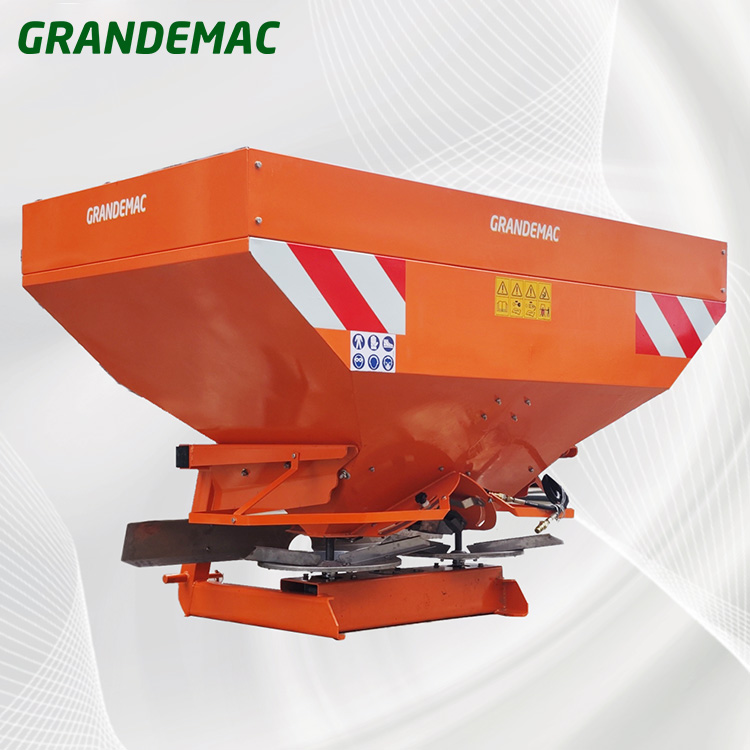
High fertilizer prices make application accuracy a strict requirement today. It is no longer an optional upgrade. Poor distribution directly erodes your profit margins. You waste valuable inputs. You also risk localized crop burn. Selecting the right equipment requires careful planning. You must align your land topography and crop type. You also need to match your specific tractor capabilities. Different spreaders use completely different mechanics. You need to understand these mechanisms to succeed in the field. This guide provides an objective framework. You can use it to evaluate various spreader types. We base this evaluation on your operational scale. We also look at durability requirements and precision capabilities. You will learn how to avoid common purchasing mistakes. You will also learn how to protect your yields. Every farm faces unique challenges. Accurate nutrient delivery solves many of them.
Key Takeaways
Broadcast vs. Drop: Broadcast models maximize coverage speed for open fields, while drop spreaders offer wind-resistant precision for boundaries or sensitive crops.
Double Disc Dominance: A double disc fertilizer spreader offers superior overlap consistency and swath width compared to single-disc setups, essential for commercial field operations.
Material Matters: Investing in a stainless steel fertilizer spreader significantly extends equipment lifespan when handling highly corrosive materials like nitrogen and potash.
Why Spreader Selection Directly Impacts Your Bottom Line
Choosing the wrong equipment costs you money. It affects your entire farming operation. Input cost control relies heavily on precision. Mismatched spreaders create application gaps. These gaps cause severe yield reduction. Plants simply do not get enough nutrients. Conversely, poor distribution causes overlapping. Overlaps waste expensive fertilizer. They also create potential soil toxicity. Your crops can suffer from severe nutrient burn.
Operational efficiency is another critical factor. Farm work happens on strict timelines. Application windows are often very narrow. You cannot afford unexpected delays. Downtime destroys your carefully planned schedule. Clogging stops your progress entirely. Poor calibration forces you to redo your work. Equipment failure halts your entire operation. A reliable machine prevents these expensive delays.
You need clear success criteria for your purchase. A successful purchase achieves a low Coefficient of Variation (CV). The CV measures the uniformity of your spread pattern. A low CV means highly even distribution. You must achieve this uniformity consistently. You also need to maintain an appropriate field speed. Balancing speed and accuracy defines a truly successful application.
Core Types of Fertilizer Spreaders: Strengths and Limitations
Broadcast (Spinner) Spreaders
Broadcast models remain incredibly popular. This mechanism uses fast spinning discs. The discs throw granular material in a wide arc. They cover large areas quickly. You can choose between single and double disc models. Commercial operations generally prefer a double disc fertilizer spreader. It serves as the industry standard for uniform application. It offers perfectly symmetrical spread patterns. It also provides much wider effective swaths. These swaths often reach over 100 feet. This high efficiency comes at a cost. Broadcast models are very susceptible to wind drift. Boundary inaccuracies happen frequently. You need edge-control deflectors to mitigate these issues.
Drop Spreaders
Drop spreaders operate on a completely different principle. The mechanism drops material directly below the hopper. It relies on gravity and a calibrated agitator. This method offers maximum precision. You experience zero wind drift. The fertilizer lands exactly where you want it. However, you face significant trade-offs. Coverage is strictly limited to the exact hopper width. This results in a much slower application rate. You must make many more passes across your field. Drop spreaders work best for boundaries or highly sensitive crops.
Pendulum Spreaders
Pendulum models offer a unique middle ground. The mechanism uses a rapidly swinging spout. This spout distributes material from side to side. It creates a highly uniform spread pattern. Pendulum units are excellent for smaller operations. They handle various materials effectively. You can spread seed or fertilizer easily. The main trade-off involves capacity. They generally offer lower hopper capacities. Twin-disc broadcasters usually hold much more material. Pendulum units require more frequent refill trips.
Matching Equipment to the Application Environment
Orchards & Vineyards
Orchards present unique operational challenges. You cannot use standard broadacre equipment here. The requirement calls for narrow machine profiles. You need low clearance models. High machines will cause severe canopy damage. You must protect your fruit and branches. The equipment must "band" fertilizer strictly at the root zones. You achieve this via specialized deflectors. Some models use dual-belt outputs instead. You absolutely should not broadcast nutrients into the empty alleys. Weeds will consume those misdirected nutrients.
Broadacre Fields
Open fields require completely different strategies. You need to cover massive areas quickly. The requirement focuses on high capacity. Trailing models fit this role perfectly. You need extremely wide swaths. This minimizes tractor passes and saves fuel. Compatibility with precision agriculture technology is crucial. Look for ISOBUS integration. Variable rate application allows you to adjust flow dynamically. Auto-steer integration ensures perfectly straight lines. These tech features maximize your overall efficiency.
Small Farms & Mixed Use
Small farms operate on tighter budgets. You need one machine to do many jobs. The requirement prioritizes maximum versatility. A standard fertilizer spreader might need to handle cover crop seeds too. You might occasionally use it for lime. 3-point hitch compatibility is essential. It allows for quick attachment to smaller tractors. Easy maneuverability in tight spaces matters greatly. You often navigate around fences and outbuildings. Compact designs serve small farmers best.
Critical Evaluation Dimensions: Hardware and Precision
Durability dictates your long-term success. Fertilizer chemicals are highly corrosive. They will destroy weak materials quickly. You must evaluate build quality carefully. Corrosion resistance is paramount. We can compare common hopper materials easily.
Material Type
Key Advantages
Primary Limitations
Polyurethane
Lightweight, completely rust-proof, affordable.
Prone to UV degradation, can crack under heavy impact.
Painted Steel
Lowest initial cost, structurally rigid.
Highly vulnerable to rust, requires constant repainting.
Stainless Steel
Maximum corrosion resistance, superior structural strength.
Higher upfront cost, heavier baseline weight.
You should prioritize premium materials. Investing in a stainless steel fertilizer spreader makes financial sense. It represents the most durable option for commercial use. It easily withstands caustic chemicals like nitrogen and potash. You get the highest long-term return on investment.
Drive mechanisms determine how your machine functions. Ground-driven models are very simple. Your travel speed dictates the application rate. They work well for ATVs or small tractors. PTO-driven models are highly reliable. They serve as the standard for 3-point hitch setups. Hydraulic-driven models offer ultimate control. They allow for independent disc speed adjustments. You can easily implement variable rates.
Boundary and section control protect your environment. You must evaluate edge limiter options. Border limiters prevent fertilizer from entering waterways. They also keep chemicals off adjacent uncultivated land. Environmental compliance is critical today. Proper edge control prevents expensive fines. It also reduces chemical waste.
Implementation Risks: What Goes Wrong in the Field
Field conditions are rarely perfect. Moisture creates severe problems. High humidity causes fertilizer to bridge. The granules clump together into solid masses. They block the flow entirely. You need robust hopper grates to catch large clumps. Active internal agitators are absolutely necessary. They break up small clumps continuously. This ensures a smooth, steady material flow.
Many operators fall into the calibration trap. Out-of-the-box settings are only baselines. They are never perfectly accurate. Fertilizer batches vary wildly in density. You must perform pan-testing every single time. Failure to test leads to high CV. An uneven spread ruins your crop uniformity. Always calibrate your machine before starting a new field.
Tractor payload mismatch causes dangerous accidents. Rear-axle overloading is a major risk. A full hopper adds tremendous weight. You must calculate the laden weight carefully. The laden weight includes the machine and the fertilizer. Emphasize matching this weight against your tractor capabilities. Your 3-point hitch must safely lift the entire load. Never exceed your tractor lift capacity.
How to Shortlist Your Next Spreader (Decision Framework)
Finding the right machine requires a systematic approach. Follow these specific steps to narrow down your choices.
Calculate Capacity Needs: Determine your average application rate. Multiply your pounds per acre by your field size. This determines your ideal hopper volume. A correctly sized hopper minimizes refill trips. It keeps you working in the field longer.
Assess Tractor Compatibility: Verify your PTO RPM requirements. Some tractors run at 540 RPM. Others operate at 1000 RPM. Check your hydraulic remote availability. Verify your maximum lifting capacity. The spreader must match your tractor perfectly.
Factor in Long-Term ROI: Weigh the upfront cost of advanced features. Stainless components cost more initially. Double discs and load cells add expense. However, they provide projected savings. You reduce fertilizer waste significantly. You also lower maintenance downtime over a 10-year lifecycle. These savings justify the initial price tag.
Look beyond the sticker price. Focus on daily operational efficiency. Good equipment pays for itself quickly.
Conclusion
There is no universal best spreader. The right choice is a calculated match. You must align your acreage and tractor capabilities. You must also define your strict accuracy requirements. Open fields need double disc broadcasters. Orchards demand precise banding equipment. Small farms thrive on versatile 3-point hitch models.
We encourage buyers to prioritize even distribution. Material durability is equally important. These factors outweigh nominal hopper capacity. High-quality materials resist harsh chemicals. Accurate distribution protects your yields. Focus on these elements to protect your long-term profitability. Smart equipment choices build stronger, more resilient farms.
FAQ
Q: Can I use the same spreader for fertilizer, seed, and lime?
A: Broadcast spreaders handle seed and fertilizer very well. However, material density differences cause issues. Lime often requires a specialized drop or belt-driven spreader. Lime holds moisture and clumps easily. Standard spinners struggle to throw heavy, wet lime evenly.
Q: How often should a fertilizer spreader be calibrated?
A: You must calibrate it at the beginning of every season. You should also recalibrate whenever switching fertilizer brands or blends. Differing bulk densities completely alter your spread pattern. Regular pan-testing ensures consistent accuracy.
Q: Is a stainless steel fertilizer spreader worth the extra cost?
A: Yes, it provides a clear return on investment. Stainless steel resists caustic chemicals perfectly. It extends your equipment lifespan significantly. You experience reduced maintenance downtime compared to painted steel. The long-term durability easily offsets the initial purchase price.