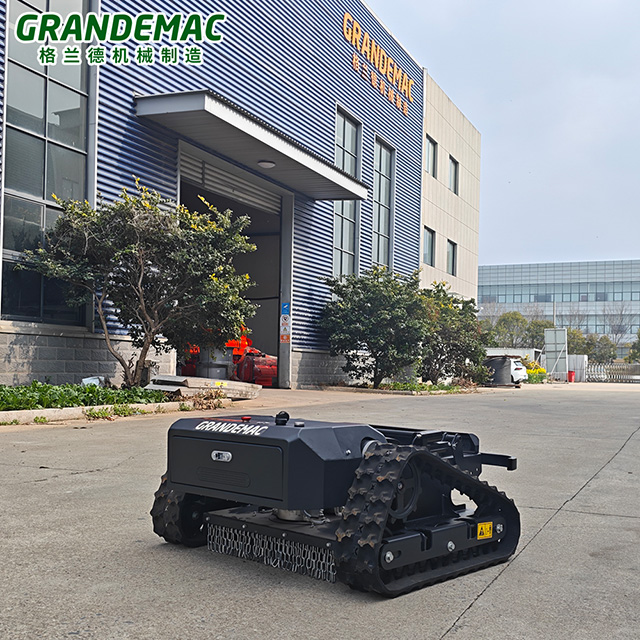
Remote control mowers have successfully transitioned from consumer novelties to essential commercial asset management tools. We see them fundamentally changing how landscaping businesses approach dangerous terrain. Traditional ride-on and zero-turn mowers routinely fail in high-risk, confined, or extreme-gradient environments. When crews force standard machines into these areas, they face inefficient labor allocation. They also encounter severe safety liabilities. Heavy equipment simply cannot safely navigate every steep ditch or dense solar array. You need a modern solution to protect your workers and maximize efficiency. This article evaluates specific commercial use cases for advanced robotic mowing equipment. We will map complex operational requirements directly to specific machine capabilities. You will receive a practical framework for justifying the capital expenditure for your operation.
Key Takeaways
Primary Value Driver: The core ROI of a commercial remote control lawn mower lies in mitigating worker safety risks (rollovers) and accessing un-mowable terrain.
Key Applications: Solar farms, highway embankments, municipal retention ponds, and dense orchards are the primary beneficiaries of this technology.
Evaluation Criteria: Buyers must prioritize verifiable slope ratings, track-driven traction, and power-plant reliability over superficial smart features.
Strategic Deployment: Integrating models like the RM20 Remote Control Lawn Mower requires assessing maintenance and operator training.
The Business Case for Removing the Operator from the Machine
You face a constant battle assigning labor efficiently across large properties. Specialized landscape crews often waste hours on slow, hazardous manual string-trimming tasks. You can reallocate these skilled workers to higher-value operations instead. Removing the operator from the cutting deck changes everything for your business. It addresses major OSHA and occupational safety concerns instantly. You eliminate ride-on mower rollover risks on steep gradients entirely.
Worker injuries lead to skyrocketing insurance premiums. An ankle sprain on a steep slope stops work immediately. It also triggers expensive medical claims. You avoid all these scenarios completely by upgrading your fleet. The operator stands safely on level ground nearby. They guide the machine through hazardous areas effortlessly. This shift completely redefines your safety protocols.
A successful deployment looks very specific for landscape managers. It reduces incident rates to zero in your known hazard zones. Simultaneously, it maintains or exceeds the square-footage-per-hour output of manual crews. Using a commercial Remote Control Lawn Mower achieves this critical balance perfectly. You protect your people and boost your daily productivity simultaneously. It delivers undeniable value across your entire organization.
High-Stakes Commercial and Industrial Applications
Solar Farms and Renewable Energy Sites
Solar farms present unique landscaping challenges for maintenance crews. Low clearance under panels causes major headaches during summer growth months. You also face the constant risk of projectile damage. Rocks thrown by standard mowers shatter expensive solar glass easily. Replacing these panels ruins your maintenance budget quickly. Low-profile track mowers solve this exact problem safely. They navigate tight clearances effortlessly beneath the sensitive arrays. They do not risk panel strikes or require extensive manual weed-whacking.
Highway Embankments and Overpasses
Highway maintenance involves extreme danger for public works employees. Embankments feature severe inclines dropping off into drainage ditches. These slopes often exceed 30 degrees near high-speed traffic. Standard mowers slip, slide, and roll over easily here. Remote operation keeps your personnel safely distanced from active traffic lanes. The track systems maintain perfect stability on these severe slopes. Operators control the machine safely from flat, stable ground nearby.
Municipal Retention Ponds and Wetland Edges
Retention ponds collect water and create terrible mowing conditions. You find soft, muddy, and unpredictable ground here constantly. Heavy traditional mowers sink and get stuck quickly in this muck. Pulling out a stuck zero-turn wastes hours of productive time. A remote track mower uses highly dispersed ground pressure. Continuous rubber tracks distribute the machine weight evenly across the mud. This design prevents deep rutting and keeps the unit moving.
Orchards and Dense Agricultural Plots
Orchards require careful navigation around valuable agricultural assets. Low-hanging branches strike human operators constantly during routine mowing passes. These physical barriers limit standard tractor access severely. You need unimpeded navigation beneath thick canopies to manage overgrowth. Remote units glide under branches easily and safely. They maintain essential ground cover and protect vital soil health. Your operators stay completely safe from falling debris and eye injuries.
Evaluation Framework: Specifying the Right Remote Control Lawn Mower
Traction and Drivetrain: Tracks vs. Wheels
You must choose the right drivetrain for commercial-grade slope management. Continuous tracks remain absolutely non-negotiable for these demanding environments. They handle 40-degree to 50-degree ratings effortlessly and safely. Wheeled consumer models fail and slide on these exact same inclines. Tracks grip uneven terrain securely. They prevent dangerous downward slips into ditches or waterways.
Power Plant Realities
You should assess the benefits of hybrid power systems carefully. Many commercial units use gas-powered cutting decks paired to electric drive motors. This hybrid approach delivers sustained cutting torque for thick brush. It also provides extended runtimes for all-day commercial shifts. Pure electric models often lack the stamina for heavy daily use. Gas engines ensure you finish large parcels without lengthy charging delays. You simply refill the fuel tank and keep mowing. This hybrid architecture maximizes both torque and overall efficiency. The engine focuses entirely on spinning the heavy cutting blades. The electric motors handle propulsion independently. This division of labor reduces stress on all mechanical components.
Cutting Width vs. Maneuverability
Bigger cutting decks are not always better for your fleet. You must balance the need for high-volume clearing against site restrictions. The machine must fit through standard residential or commercial gates easily. It also needs to weave between solar array pylons seamlessly. A massive deck width becomes useless if it cannot access the work zone. Measure your narrowest bottlenecks before purchasing any equipment.
Fail-Safes and Signal Integrity
Industrial environments demand rock-solid safety features to protect bystanders. You must evaluate emergency stop protocols closely before buying. Tip-over sensors kill the engine instantly during rare rollovers. Radio frequency reliability proves critical around high-voltage power lines. If the controller loses connection, the machine must brake automatically.
Follow these essential steps when evaluating technical specifications:
Verify the manufacturer slope rating matches your steepest property gradient.
Test the radio controller range in areas blocked by concrete structures.
Confirm the track width fits your narrowest access gate perfectly.
Check the availability of replacement parts before finalizing your purchase.
Mitigating Adoption Risks and Implementation Realities
The CapEx vs. OpEx Trade-off
Purchasing commercial robotic equipment requires upfront capital investment. You must transparently compare higher initial purchase costs against long-term savings. You will see massive reductions in manual labor hours immediately. Insurance premiums often drop when you remove workers from hazardous slopes. Fewer worker's compensation claims justify the initial expenditure quickly. Over time, your operating expenses decrease significantly. This shifts your budget from ongoing labor costs to owned assets.
You also reduce wear and tear on your larger transport vehicles. Remote units weigh significantly less than heavy ride-on mowers. You can tow them with smaller trucks easily. This saves fuel across your entire fleet daily. You stop relying on massive trailers for every single job site. Efficiency improvements stack up rapidly across your entire operation.
Maintenance Assumptions
Remote technology feels very advanced and futuristic. However, the mechanical cutting components still require standard heavy-duty maintenance. You must schedule regular blade sharpening sessions for clean cuts. Track tensioning keeps the rubber belts seated properly over idler wheels. You also need to clear debris from the engine bay daily. Neglecting basic mechanical care leads to premature component failure. Treat these units exactly like your primary riding mowers regarding upkeep.
Operator Training
Your crew will face a learning curve for joystick operation. The controls mimic standard video game controllers closely. However, spatial awareness and terrain reading remain critical operator skills. A worker must judge distances accurately from fifty feet away. They must anticipate hidden ruts and unseen obstacles continuously. Proper training prevents accidental property damage. It also extends machine life by reducing rough handling.
Avoid these common adoption mistakes during initial rollout:
Skipping daily tension checks on the continuous rubber tracks.
Assuming operators can run the machine blindly without walking the site first.
Ignoring dull blades, which overwork the engine and consume extra fuel.
Pushing the machine beyond its stated slope rating limits.
Shortlisting the RM20 Remote Control Lawn Mower for Complex Terrain
Target Alignment
You need equipment bridging the gap between toys and heavy-civil machinery. The RM20 Remote Control Lawn Mower specifically addresses this exact market gap. Underpowered consumer models fail on commercial job sites immediately. Conversely, large heavy-civil equipment costs too much for routine landscape maintenance. This specific unit provides industrial durability at a highly practical price point. You get commercial results without bankrupting your equipment budget.
Feature-to-Outcome Mapping
The machine design dictates your operational success directly on site. A low center of gravity ensures confirmed stability on targeted slope gradients. It hugs the ground closely. It resists tipping on severe inclines and steep ditch banks. An industrial track system guarantees zero ground damage in wet retention pond conditions. The wide footprint prevents ugly ruts in pristine turf. An intuitive controller reduces operator fatigue significantly during long shifts. It also enables faster training times for new landscape crews.
Next-Step Action
You should initiate a comprehensive site audit soon. Evaluate the specific topographical challenges of your worst properties today. Measure your steepest inclines carefully. Measure your tightest access gates accurately. Compare these numbers against the capabilities of your shortlisted equipment. This ensures the machine aligns perfectly with your specific operational needs.
Conclusion
Deploying a robotic mower represents a calculated operational upgrade for landscapers. This technology solves specific terrain and safety bottlenecks effectively. You must analyze your daily operational hurdles carefully. If your site involves steep slopes, low clearances, or unsafe ground conditions, the technology justifies its cost. Stop putting your human workers in dangerous, awkward mowing situations.
Take action today to modernize your landscaping fleet. Review the detailed spec sheet of the RM20 Remote Control Lawn Mower to understand its full capabilities. Contact a sales engineer for a personalized use-case consultation. They will help you select the exact configuration for your challenging terrain.
FAQ
Q: What is the maximum slope a commercial remote control lawn mower can safely handle?
A: Standard industry limits typically range between 40 and 50 degrees. This maximum angle depends heavily on internal oil-pump configurations. Four-stroke engines require constant lubrication. If you exceed manufacturer specifications, the engine starves for oil and seizes. Always verify the exact slope rating before tackling steep embankments.
Q: Are track-based remote mowers difficult to maintain compared to zero-turns?
A: Track maintenance requires specific attention, primarily checking belt tension and clearing mud. However, this balances out favorably against traditional ride-on mowers. You eliminate the complex hydraulic transaxles found in zero-turns. The hybrid systems use simple electric drive motors, significantly reducing your weekly mechanical maintenance burden.
Q: How does the RM20 Remote Control Lawn Mower perform in tall, thick brush?
A: You must distinguish between standard finish mowing and rough-cut brush clearing. The unit handles thick, tall grass and light brush easily. It utilizes a gas-powered cutting deck to maintain high blade torque. Set realistic expectations for woody saplings, as it is not a heavy forestry mulcher.
Q: Is signal loss a safety risk in commercial environments?
A: Signal loss does not pose a safety risk for commercial units. These machines feature strict fail-safe mechanisms. If the remote signal drops due to interference, the system reacts instantly. It automatically kills the engine and engages the electronic brakes, stopping the machine dead in its tracks.