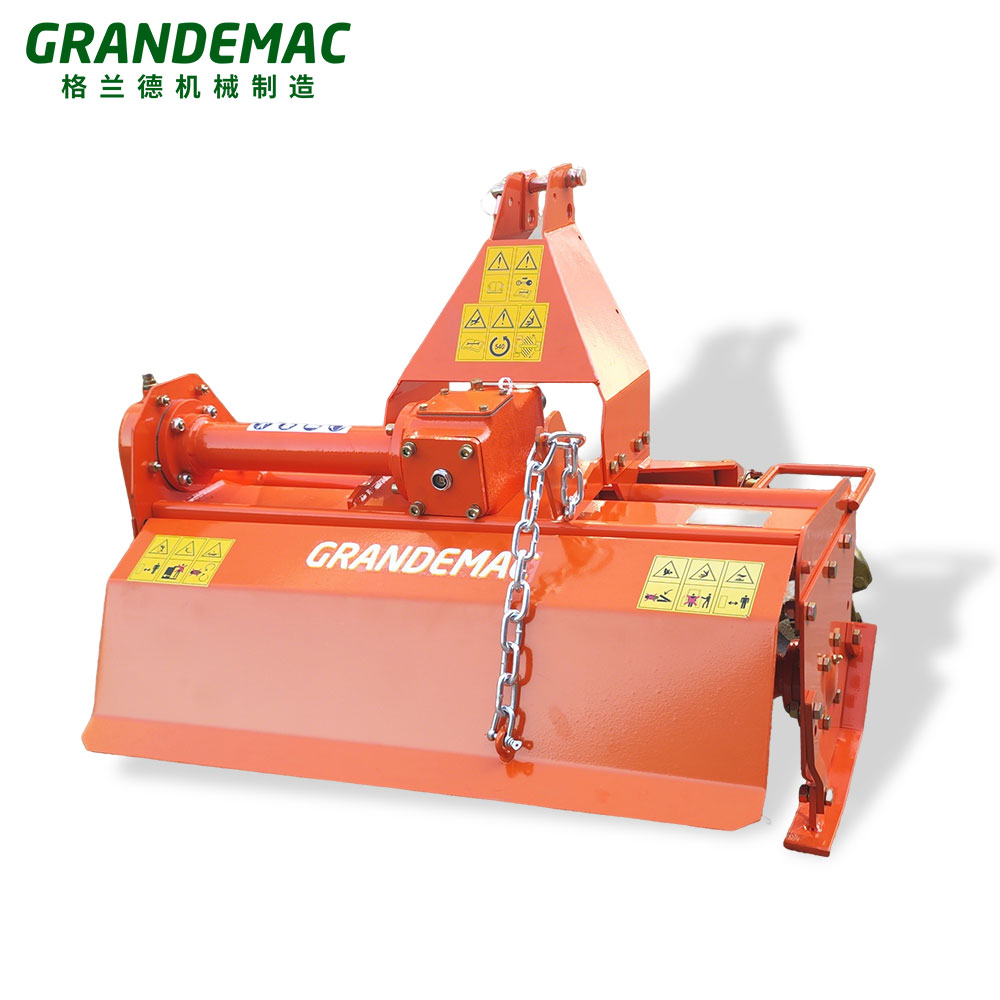
Managing orchard and vineyard soils presents a unique and frustrating challenge for modern agricultural operators. You must balance effective weed control and soil aeration to maintain healthy crop yields. At the same time, you need to protect delicate tree trunks, shallow root systems, and low-hanging canopies from mechanical damage. This delicate balancing act makes your choice of equipment absolutely critical. Choosing between a standard fixed unit and a side-shift model involves much more than basic upfront functionality. This decision dictates your daily tractor positioning, overall operational speed, and long-term crop health. We created this comprehensive guide to provide an objective, side-by-side evaluation of both systems. You will learn how fixed and side-shift configurations perform under real-world canopy conditions. We aim to help agricultural operators select the right implement confidently. By the end, you can perfectly match the tool to your specific row spacing and tractor capabilities.
Key Takeaways
Canopy Protection: Side-shift models allow the tractor to remain centered in the row while the tiller works directly under the drip line, drastically reducing the risk of canopy and trunk damage.
Mechanical Simplicity vs. Versatility: Fixed tillers offer superior durability with fewer moving parts, while side-shift units require higher maintenance but deliver unmatched precision.
Tractor Compatibility: Hydraulic side-shift models demand available rear hydraulic remotes; older or sub-compact tractors may be limited to manual shift or fixed mini rotary tiller options.
Cost-to-Benefit Ratio: The premium price of a side-shift unit is typically justified in high-density orchards where precision tilling prevents crop loss and manual labor costs.
The Orchard Row Dilemma: Framing the Operational Problem
Working in established orchards requires precise spatial awareness. Trees grow outward over time. Their branches eventually encroach on the drivable row space. This creates an immediate spatial conflict for machinery operators.
Tractor Clearance vs. Tilling Reach
You face a constant battle between keeping the tractor cab away from branches and getting the tilling tines close enough to the trunk. The tractor needs center-row clearance to protect the Roll-Over Protective Structure (ROPS) and the operator. However, weeds grow aggressively right at the base of the trees. If you keep the tractor safely in the middle of the row, a standard implement often fails to reach the critical weed zones. If you drive closer to the tree line to reach those weeds, you risk tearing off branches or damaging valuable fruit.
Soil Compaction Zones
Driving down the exact center of a row repeatedly causes severe agronomic issues. Heavy tractor tires create deep soil compaction zones over time. Water struggles to penetrate these compacted tracks. Meanwhile, the soil directly under the canopy remains loose but gets overrun by undisturbed weed banks. These weeds steal vital nutrients and moisture from the shallow root systems of your crops. You need a way to disrupt this uneven soil profile without crushing the fragile root zones near the tree base.
Success Criteria for Evaluation
To determine the best equipment for this environment, we must establish clear success metrics. A successful implement in an orchard context must deliver across several specific areas. We evaluate these machines based on the following criteria:
Pass Efficiency: The machine should clear weeds and aerate the soil in a single pass.
Safety Margins: The implement must keep the tractor away from low-hanging branches and delicate trunks.
Driveline Health: The design should minimize extreme angles on the Power Take-Off (PTO) shaft to prevent premature wear.
Operational Uptime: The tool needs to withstand field debris, rocks, and uneven terrain without constant breakdowns.
Fixed Rotary Tillers: Reliable Baseline but Limited Reach
A standard fixed cultivator serves as the backbone of many agricultural operations. These machines feature a straightforward, highly reliable design. Manufacturers build them to handle brutal soil conditions day after day.
Design Overview
Fixed units utilize a centered or permanently offset configuration. The PTO shaft and the main gearbox remain locked in a static alignment. The manufacturer welds or bolts the three-point hitch connection directly to the main deck. Because the frame does not shift, the implement follows directly behind the tractor at all times. When operating a standard rotary tiller, you will notice exceptional rigidity throughout the entire chassis.
Operational Advantages
Many operators prefer fixed models for their rugged simplicity. They provide several distinct advantages in the field:
Lower Initial Expenditure: They cost significantly less than complex sliding models.
Maximum Structural Rigidity: They have fewer points of mechanical failure. You do not have to worry about lubricating sliding rails or replacing leaky hydraulic cylinders.
Ideal for Wide Rows: They perform perfectly in wide-row orchards where tractor proximity to the tree line does not matter.
Operational Limitations
Despite their durability, fixed implements create major headaches in tight spaces. To till the edges of a high-density orchard row, operators must drive perilously close to the tree line. This puts the tractor cab directly in the path of heavy branches. Furthermore, this driving style increases operator fatigue significantly. You must constantly monitor your front tires, your cab clearance, and the implement behind you all at once. One slight steering error can easily strip bark off a valuable mature tree.
Side Shift Rotary Tillers: Precision Tilling Under the Canopy
Side-shift implements represent a massive leap forward for specialized farming. They solve the spatial conflict by separating the tractor's path from the tilling path.
Design Overview
These units feature an integrated sliding linkage system. The main tilling box mounts onto heavy-duty horizontal steel rails. This design allows the entire working deck to slide left or right, independent of the tractor's center line. The PTO shaft utilizes a specialized gearbox that tolerates lateral movement while maintaining power transfer to the tines.
Hydraulic vs. Mechanical Shift
Manufacturers offer two primary ways to move the sliding deck. Manual offset models use a heavy threaded crank. You set the offset distance before you start driving, and it stays in that position. This "set-and-forget" nature works well for uniform rows. Hydraulic models use a hydraulic cylinder connected to the tractor. You can adjust the offset on the fly using a lever in the cab. This allows you to weave the tiller in and out around tree trunks without ever stopping the tractor.
Operational Advantages
A sliding mechanism entirely changes how you manage an orchard. The benefits heavily favor precision agriculture:
Tractor Positioning: You keep the tractor safely in the exact center of the row at all times.
Aggressive Weed Control: You can reach right up to the trunk base, eliminating the need for manual weed whacking or heavy herbicide use.
Maneuverability: Hydraulic adjustments allow rapid adaptation for non-linear plantings or varying row widths.
The Compact Tractor Factor
Modern high-density orchards often utilize extremely narrow sub-compact tractors. A narrow tractor paired with a side-shift Mini Rotary Tiller creates the ultimate farming setup. The narrow tractor easily clears the tight canopy. Meanwhile, the offset implement extends far enough out to process the soil perfectly under the drip line. This combination maximizes land usage and allows for closer tree plantings.
Head-to-Head Evaluation: Decision Matrix for Orchard Managers
Choosing the right machine requires comparing distinct features against real-world outcomes. You must weigh safety, durability, speed, and future adaptability.
Feature-to-Outcome Comparison
Tree Safety: Side shift clearly wins this category. It completely prevents tractor-to-canopy impacts by keeping the heavy machinery away from the trees. You eliminate the risk of tearing off low branches.
Durability: Fixed units win the longevity battle. They lack sliding rails, grease points, and hydraulic lines. They do not have sensitive components exposed to flying dirt, rocks, and debris.
Speed of Operation: Hydraulic side shift allows significantly faster continuous operation. You never have to stop to reposition the tractor around obstacles. You simply pull a lever, slide the deck around a stray root or trunk, and keep driving forward.
Scalability
You must assess how well each implement adapts if your farming operation expands. If you plan to introduce higher-density planting blocks in the future, a fixed implement will quickly become obsolete. A side-shift model scales perfectly with high-density layouts. It gives you the flexibility to handle both old, wide rows and new, narrow rows with a single piece of equipment.
Side-Shift vs Fixed Cultivator Comparison
Comparison Factor
Fixed Configuration
Side-Shift Configuration
Canopy Clearance
Poor (Tractor must drive near trees)
Excellent (Tractor stays centered)
Mechanical Complexity
Low (No moving frame parts)
High (Rails, cylinders, PTO angles)
On-the-Fly Adjustment
None
Yes (Hydraulic models only)
Row Spacing Adaptability
Rigid (Best for uniform, wide rows)
Highly flexible (Adapts to mixed rows)
Implementation Risks and Buyer Pitfalls
Even the best equipment fails if applied incorrectly. Buyers frequently make critical errors when upgrading to offset machinery. You must understand the engineering limits of these tools.
PTO Driveline Stress
Side-shift models face a serious engineering limitation regarding their drivelines. Extreme offset angles cause immense stress on PTO cross joints. When you slide the deck entirely to one side, the universal joints operate at severe angles. This causes premature wear and aggressive vibration. If operated at maximum offset under heavy soil loads, the U-joints can bind and shatter. Always ensure the PTO shaft is correctly sized. Never exceed the manufacturer's recommended maximum operating angle.
Hydraulic Mismatches
Do not assume your current tractor can operate a hydraulic offset model out of the box. Many buyers purchase hydraulic implements only to discover their tractor lacks the necessary Selective Control Valve (SCV) ports. You must have an available double-acting rear hydraulic remote. Additionally, check your tractor's hydraulic flow rate (GPM). If your flow is too low, the sliding mechanism will respond sluggishly or stall completely when choked with dirt.
Over-Specifying Equipment
We often see operators buy complex hydraulic models for newly planted, widely spaced orchards. This is a common pitfall. A standard fixed tiller would easily suffice for the first five to ten years of a new wide-row orchard's life. Avoid paying a premium for sliding mechanics if your tree canopies will not intersect the tractor path for another decade. Keep your setup simple until your agronomic conditions demand precision tools.
Conclusion
Selecting the ideal soil management tool comes down to your specific canopy geometry and operational priorities. Choose a fixed unit for wide, mature orchards with high clearance. A fixed frame keeps your maintenance headaches low and provides decades of rigid reliability. Opt for a side-shift unit for high-density, high-value crops. In tight environments, precision and canopy protection become absolutely paramount.
Your immediate next step is clear. First, audit your current tractor's hydraulic capabilities and measure the exact distance from the center of your narrowest row to the tree canopy. Second, evaluate the horsepower rating of your PTO. Gather these specific metrics before requesting quotes from dealers. This preparation guarantees you will purchase an implement that perfectly matches both your tractor and your orchard's unique layout.
FAQ
Q: Can I convert a fixed rotary tiller into a side-shift model?
A: No, you generally cannot convert a fixed unit safely. Side-shift models require a specialized reinforced top deck, sliding steel rails, and a heavy-duty sliding gearbox. Modifying a fixed frame ruins its structural integrity and dangerous PTO geometry issues will quickly arise.
Q: How much PTO angle is safe when using a fully extended side-shift rotary tiller?
A: Most agricultural engineers recommend keeping PTO universal joint operating angles below 15 to 20 degrees during continuous heavy loads. Extreme angles beyond 25 degrees will cause severe vibration, rapid cross-joint wear, and catastrophic driveline failure.
Q: Is a manual side shift better than a fixed offset for a mini rotary tiller?
A: Yes. Even though manual shifts require you to stop and turn a crank, they still provide flexibility. You can adjust the offset for different fields or row widths. A permanently fixed offset locks you into one single working geometry forever.
Q: Do side-shift tillers require special maintenance on the sliding rails?
A: Yes. The horizontal sliding rails are constantly exposed to dust, mud, and debris. You must frequently clean the rails and apply the manufacturer-recommended dry lubricant or grease to prevent the hydraulic cylinder from binding during operation.
Q: What tractor horsepower is required for a 60-inch hydraulic side-shift rotary tiller?
A: A 60-inch implement typically requires between 35 and 50 PTO horsepower. However, side-shift operations often demand a heavier tractor chassis to prevent the offset weight from destabilizing the tractor on uneven orchard terrain.