Managing soil health and weed pressure in vineyards and orchards requires strict precision. Standard broad-acre equipment simply cannot deliver this necessary level of control. Operating between tight rows presents unique physical constraints for farm operators on a daily basis. You must navigate narrow corridors without damaging shallow root systems or scraping delicate vine trunks. Attempting this task using bulky, rigid machinery often leads to catastrophic crop damage and expensive replanting efforts.
This guide breaks down the specific mechanical features, compatibility requirements, and operational capabilities needed to succeed in these environments. We will explore how different implement designs directly impact your orchard floor. You will uncover the engineering differences between fixed and offset configurations. By the end of this article, you will know exactly how to evaluate and select the right machinery to protect, maintain, and enhance your high-value specialty crop operations safely.
Key Takeaways
Standard agricultural tillers often lack the maneuverability required for vineyard and orchard row spacing.
A Side Shift Rotary Tiller is critical for navigating around trunks and trellises without requiring dangerous tractor positioning.
Precise depth control prevents damage to shallow feeder roots while effectively managing cover crops and weeds.
Matching the tiller’s working width and PTO (Power Take-Off) requirements to your existing tractor fleet is the primary barrier to successful implementation.
Physical tillage offers a verifiable alternative to chemical herbicides, aligning with tightening agricultural compliance and organic certifications.
The Unique Challenges of Vineyard and Orchard Soil Management
Unlike open-field farming, specialty crop environments introduce rigid physical constraints. Open-field agriculture allows massive tractors to roam freely across flat ground. Vineyards and orchards operate under a completely different set of physical rules. You must frame the business problem correctly before selecting any equipment. Every equipment pass represents a calculated risk to the perennial crops surrounding the tractor.
Row Spacing Realities
Tillage equipment must pass through narrow corridors constantly. These pathways often measure just two to three meters across. Farm operators face multiple physical obstacles simultaneously. Trellises, drip irrigation lines, and low-hanging fruit branches restrict movement on all sides. Your implement cannot catch on any of these elements. A single snagged wire can pull down an entire row of mature grapevines. This physical reality demands compact, highly maneuverable machinery capable of hugging tight boundaries safely.
Root Zone Protection
Vineyards and fruit trees depend entirely on shallow feeder roots. These vital root networks sit just inches below the soil surface. They absorb essential water and nutrients required for fruit production. Equipment must operate at precise, shallow depths consistently. Typically, a working depth of two to four inches proves ideal. Digging any deeper causes catastrophic root pruning. Severing these feeder roots stunts plant growth, reduces fruit yields, and invites soil-borne diseases into the damaged root structures.
Compaction Mitigation
Confined rows mean tractor tires run over the exact same tracks repeatedly. This concentrated traffic heavily compresses the soil profile over time. Heavy sprayers and harvesting equipment worsen the situation throughout the growing season. The chosen implement must effectively aerate the topsoil to combat this dense compaction layer. However, it must accomplish this task without requiring excessive, disruptive passes. Over-tilling destroys soil aggregates, while under-tilling leaves the compacted ruts intact. Finding the perfect balance defines successful orchard soil management.
Core Evaluation Criteria: Features vs. Field Outcomes
Evaluating equipment requires looking past basic marketing claims. You must understand how specific mechanical features translate into tangible field outcomes. Farm managers should base their selection on working width, depth regulation, and blade geometry.
Working Width vs. Coverage
Selecting the best equipment means evaluating mathematical overlap carefully. You cannot simply guess the right working width for your operation. The implement must stretch wide enough to cover your tractor tire tracks completely. This overlap prevents deep wheel ruts from remaining in the orchard floor. It leaves a smooth, uniform surface behind the machine. However, the width must also leave a safe buffer zone near the trunks. You need enough clearance to prevent accidental bark damage during slight steering corrections.
Depth Control Mechanisms
Consistent tillage depth separates average implements from professional-grade tools. Manufacturers typically offer standard side skid shoes or heavy-duty rear roller systems. Implementation reality shows distinct differences between these two designs.
Depth Control System Comparison
Feature
Side Skid Shoes
Rear Roller Systems
Ground Contact
Rides on narrow metal runners on the outer edges.
Spans the entire width of the cultivated soil.
Uneven Terrain Performance
Tends to dip into existing ruts or soft spots.
Bridges gaps, providing a highly consistent depth.
Soil Finish
Leaves small ridges on the outer margins.
Presses and lightly seals the soil behind the blades.
Rear rollers provide vastly superior depth consistency over uneven orchard floors. Standard side skids tend to dig into soft soil or float over hardpan unpredictably. If your primary goal involves protecting shallow feeder roots, a rear roller system represents a non-negotiable requirement.
Rotor Speed and Blade Design
Blade shape directly impacts how the machine processes organic material. You will primarily encounter C-shaped and L-shaped blades. L-shaped blades cut aggressively and create a very flat bottom trench. However, they easily tangle in dense vegetation.
C-shaped blades are generally preferred in orchards and vineyards. They handle heavy cover crops beautifully. Their curved shape creates a slicing action rather than a flat chopping motion. This design reduces clogging significantly. Furthermore, C-blades draw less horsepower from your tractor, saving fuel and reducing mechanical strain on the gearbox during long operating days.
The Operational Advantage of a Side Shift Rotary Tiller
Standard center-mount equipment forces the tractor to drive perilously close to crop canopies. You must hug the tree line tightly to till the soil near the trunks. This geometry puts the tractor cab, mirrors, and exhaust stack in direct conflict with delicate branches.
Defining the Solution
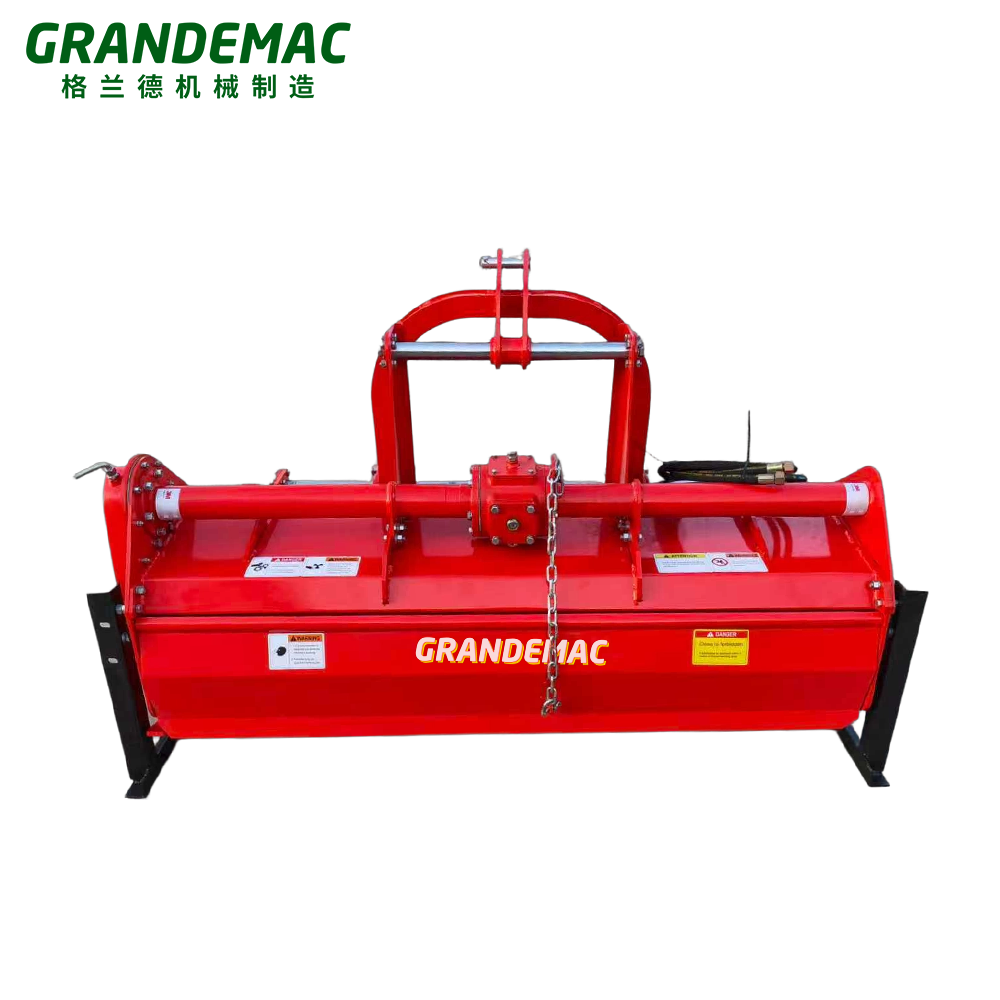
A Side Shift Rotary Tiller fundamentally solves this spatial problem. It differs from fixed-center models by allowing the main working box to slide outward horizontally. The PTO shaft remains connected, but the tilling unit extends sideways. This offset capability changes the entire dynamic of orchard floor management.
Mechanical vs. Hydraulic Shift
Manufacturers design these offset mechanisms in two primary configurations: mechanical and hydraulic.
Mechanical Shift: This option offers a lower-cost entry point. Operators manually unpin the frame, slide the implement to the desired offset, and re-pin it before driving. It represents a "set-and-forget" solution. Mechanical shifts work perfectly for perfectly uniform rows lacking major obstacles.
Hydraulic Shift: This design allows on-the-fly adjustments directly from the tractor cab. The operator actuates a hydraulic cylinder to slide the implement back and forth while driving. This dynamic control proves essential for orchards featuring irregular planting patterns, varying trunk girths, or leaning mature trees.
Risk Reduction
Side shifting drastically reduces physical risks across the farm. It allows the tractor to remain safely centered in the middle of the row. The driver maintains maximum clearance from expensive trellises and fragile vines. Meanwhile, the offset implement reaches deep under the canopy to terminate weeds. This specific geometry drastically reduces the risk of operator fatigue causing physical damage to the crops.
Non-Chemical Weed Management and Compliance
Agricultural producers face mounting regulatory pressures regarding chemical usage globally. Tightening environmental regulations restrict when and where you can spray herbicides. Additionally, the rising cost of chemical inputs significantly impacts farm profitability. Farm operators need dependable alternatives.
The Shift from Herbicides
Many high-value crop operations actively seek ways to eliminate glyphosate and similar chemicals. Consumer demand for clean, residue-free fruit drives this market shift. Traditional chemical burn-down methods also leave root systems intact below the surface. Resistant weed species multiply rapidly when chemical applications fail.
Physical Efficacy
Implementing a heavy-duty rotary tiller structurally destroys weed root systems. It actively chops weeds, vines, and cover crops. It then incorporates this green organic matter directly back into the soil profile. This process, known as green manuring, feeds the soil microbiome. It physically terminates the weed's life cycle rather than just burning the top foliage.
Authoritative Lens
Sustainable viticulture standards strongly encourage physical tillage practices. Achieving and maintaining organic certification requires strict avoidance of synthetic chemicals. Mechanical cultivation aligns perfectly with these stringent compliance frameworks. Regulatory bodies and organic certifiers widely accept precision tillage as a primary pillar of sustainable floor management.
Environmental Trade-offs
You must balance weed termination goals against environmental preservation. Aggressive cultivation can increase the risk of topsoil erosion. Bare, pulverized soil washes away easily during heavy spring rains. You must time your tillage passes carefully to align with local weather patterns. Common best practices involve alternating tilled rows with native cover crop rows. This strategy provides necessary weed control while keeping enough root structure intact to anchor the vineyard soil.
Tractor Compatibility and Implementation Risks
Purchasing the perfect implement means nothing if it does not integrate properly with your existing tractor fleet. Mismatched equipment guarantees poor field results and expensive mechanical failures.
PTO Horsepower Matching
Power Take-Off (PTO) horsepower matching stands as your primary technical concern. You face significant risk factors when misjudging power requirements.
Oversizing the Tiller: Connecting a massive implement to a small tractor leads to PTO clutch failure. The engine will stall continuously when the blades hit heavy clay or dense root mats.
Undersizing the Tiller: Pulling a tiny implement behind a massive tractor wastes fuel. It results in poor soil breakdown and requires multiple passes to finish the job.
Industry guidelines suggest defining the optimal HP-per-inch of tillage width based on soil density. As a general rule, expect to need roughly 1 to 1.5 horsepower for every inch of working width. Heavy, compacted soils demand the higher end of this power spectrum.
Three-Point Hitch Categories
Ensure your three-point hitch category matches the implement perfectly. Sub-compact tractors generally utilize Category 1 hitches. Larger utility models require Category 2 setups. Heavy hydraulic side-shift models add significant weight to the rear of the machine. You must verify your tractor's rear lift capacity limits beforehand. Failing to check lift capacity often results in front-wheel lift, creating severe steering hazards.
Hydraulic Flow Requirements
Hydraulic offset models demand active fluid power. You must verify the tractor possesses the necessary rear remote valves. Operating a hydraulic shift cylinder typically requires one set of double-acting rear remotes. Confirm your tractor's hydraulic pump generates sufficient GPM (Gallons Per Minute) flow to operate the offset mechanism smoothly while driving.
Shortlisting Logic and Final Decision Framework
Making the final purchasing decision requires strict logistical evaluation. You must look beyond basic dimensions and assess operational support structures.
Dealership and Parts Accessibility
Consider the operational cost of equipment downtime during peak season. If a main gearbox seal blows during spring weed termination, you cannot afford to wait weeks for parts. Prioritize manufacturers offering robust domestic parts distribution networks. Local dealership support proves invaluable when you need replacement blades, shear bolts, or hydraulic hoses immediately.
Next Steps for Buyers
Follow this exact framework to ensure a successful equipment integration:
Measure exact row minimums: Walk your fields and measure the absolute narrowest gap between mature vine trunks or trellis posts.
Measure maximum tractor widths: Measure the outer edges of your rear tractor tires. Your implement must clear this width to erase tracks.
Audit current tractor PTO output: Check your manual to confirm true PTO horsepower, not just engine horsepower.
Request an on-site demo: Test the hydraulic offset responsiveness in your specific soil type to gauge actual horsepower draw.
By executing these steps, you eliminate guesswork. You ensure the chosen equipment matches your exact agricultural environment seamlessly.
Conclusion
A rotary implement only proves suitable for vineyard and orchard use when it offers precise depth control, canopy-friendly offset capabilities, and exact integration with your existing tractor. Standard broad-acre equipment simply damages shallow root structures and struggles to navigate confined rows safely. You must prioritize features designed specifically for high-value specialty crops.
Do not compromise on side-shift functionality or depth-regulating rear rollers. These features remain non-negotiable if your primary goal involves safe, non-chemical weed management. Measure your rows today, audit your tractor's true PTO horsepower, and begin shortlisting models offering robust local parts support. Making the right equipment choice protects your perennial crops and streamlines your entire seasonal maintenance schedule.
FAQ
Q: What is the minimum horsepower required to run a Side Shift Rotary Tiller?
A: Minimum requirements depend heavily on the implement's working width. Sub-compact setups typically start around 25 to 30 PTO horsepower for narrow widths (roughly 40-48 inches). Larger, heavier models designed for commercial orchards require 50 to 70 horsepower to operate the offset mechanism and spin the heavy rotor smoothly through dense soil.
Q: Can a rotary tiller operate effectively in rocky orchard soil?
A: Yes, but it requires specific protective features. You must choose models equipped with robust slip clutches or shear bolts on the PTO driveline. These safety mechanisms instantly disengage power when blades strike large stones. Heavy-duty gearboxes and reinforced steel frames are also mandatory to prevent catastrophic structural failure in rocky conditions.
Q: How far can a hydraulic rotary tiller typically offset?
A: Standard industry offsets range from 12 inches to over 24 inches from the tractor's center line. Specialized extreme-offset models can reach even further. However, extreme offsets shift the center of gravity drastically. You need a heavier, wider tractor to prevent dangerous tipping hazards when extending the implement fully.
Q: Is physical tillage better than mowing between vineyard rows?
A: Tillage and mowing serve different purposes. Mowing merely cuts top-growth, leaving weed roots active to compete with vines for water. Physical tillage actively terminates weed root systems and aerates compacted topsoil. It incorporates organic matter directly into the soil profile. However, over-tilling risks erosion, so operators often use a combination of both methods.