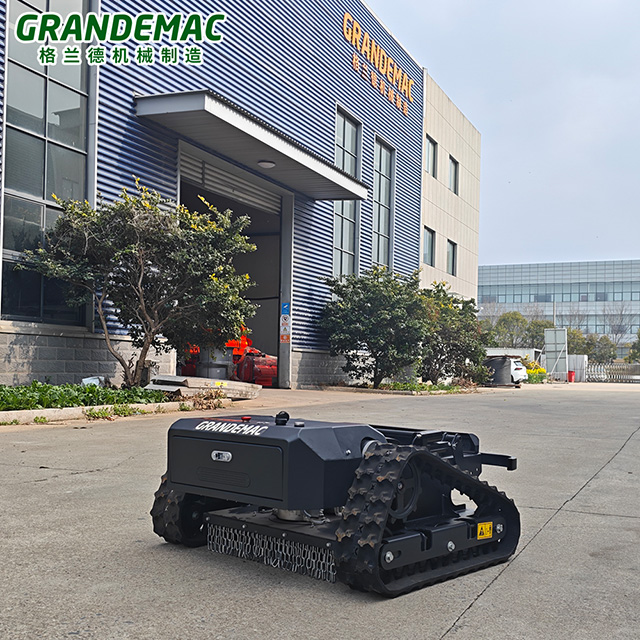
Deploying remote machinery fundamentally shifts your site maintenance dynamics. It actively removes operators from immediate rollover danger. However, it also introduces complex new variables. We now rely heavily on telemetry feedback, rigid site control, and mechanical fail-safes. For commercial landscaping and facility management, understanding these operational shifts is critical. Unchecked liability and compliance blind spots can quickly erode the inherent safety benefits of these advanced tools.
Proactive safety protocols protect site personnel. They also ensure your equipment performs at peak capacity. In this guide, you will discover the comprehensive pre-operation framework required for modern landscaping tasks. We will explore how to safely deploy remote systems without risking downtime or non-compliance. You will learn actionable steps to build a daily safety routine. This routine will safeguard both your crew and your capital assets before the blades ever start spinning.
Key Takeaways
Mechanical Integrity: Verifying track tension, blade clearance, and fluid/battery levels prevents catastrophic mid-operation failures on steep grades.
Telemetry & Control: Pre-testing signal connectivity, controller calibration, and emergency stop (E-stop) fail-safes is non-negotiable for remote machinery.
Site & Environmental Assessment: Establishing safe zones, clearing hidden debris, and verifying slope angles (degrees vs. percentages) ensures safe operation.
Compliance & Operator Readiness: Aligning daily checks with OSHA standards minimizes liability and standardizes operator training protocols.
The Business Case for Standardized Pre-Operation Protocols
Treating daily inspections as an optional task invites unnecessary risk. Standardized checks form the foundation of a safe, profitable landscaping operation. They protect businesses from severe financial and operational setbacks.
Liability and Risk Mitigation
Documenting your daily safety checks actively protects commercial operators. Routine documentation acts as a legal shield against liability. If an accident occurs, logs prove you followed standard safety protocols. They show you maintained the equipment properly. This rigorous documentation helps mitigate costly workers' compensation claims. It also demonstrates due diligence to insurance providers and site managers.
Equipment Longevity and ROI
You should frame pre-operation checks as preventative maintenance. Finding a loose belt before it snaps saves hours of unplanned downtime. Catching low oil levels prevents complete engine failure. These minor daily habits compound over time. They extend the operational life of your machinery. A well-maintained machine maximizes your return on investment. It keeps your crews working instead of waiting for field repairs.
Evaluating Procurement Standards
Rigorous daily check requirements help you evaluate new machinery. When you understand what daily maintenance requires, you make smarter purchasing decisions. You start looking for units with easily accessible maintenance panels. You value machines with built-in diagnostic displays. Evaluating these features ensures you procure equipment that crews can inspect quickly and accurately. Complicated inspection routines often lead to skipped steps. Smart procurement prevents this operational friction.
Phase 1: Mechanical and Power System Inspections
A rigorous mechanical inspection prevents catastrophic failures. Before dispatching any Remote Control Lawn Mower onto a job site, crews must verify its structural and mechanical integrity. Steep grades will instantly expose any mechanical weaknesses.
Track and Drive System Validation
Rubber tracks bear the entire weight and torque of the machine. Operators must inspect track tension daily. A track that is too loose will derail on steep slopes. A track that is too tight causes premature hydraulic wear. Check the rubber for deep tears or missing treads. You must also verify drive sprocket alignment. Misaligned sprockets grind against the track guides. This quickly degrades the rubber and compromises traction.
Cutting Deck and Blade Clearance
The cutting deck requires careful visual inspection. Check the blades for chips, dullness, or major structural imbalances. An imbalanced blade causes severe vibration. This vibration can loosen sensitive electronic connections over time. Ensure all deck guards and deflector shields remain securely fastened. Missing deflectors turn common lawn debris into high-speed projectiles. Never bypass these factory safety shields under any circumstances.
Power Source Verification
Different propulsion systems require tailored inspections. For hybrid or gas-powered units, check engine oil levels first. Inspect fuel lines for micro-leaks. Examine air filters for heavy dust buildup. Clogged filters suffocate engines during high-load slope work.
For battery-powered systems, confirm battery charge parity. Dual-battery systems must drain evenly to prevent voltage drops. Inspect all connection terminals for corrosion. Verify the operating temperature limits. High summer heat drastically alters battery discharge rates. Ensure cooling fans operate smoothly before starting the primary cutting motors.
Table: Daily Mechanical Inspection Points
Component Category
Inspection Target
Pass/Fail Criteria
Drive System
Track tension and sprockets
No excessive sag; sprockets aligned and free of debris.
Cutting Deck
Blades and deflectors
Blades balanced/sharp; all safety shields bolted tight.
Gas Engine
Oil, fuel lines, air filter
Fluid levels at max line; no leaks; filter clean.
Battery System
Terminals and charge levels
Zero corrosion; 100% charge parity across all packs.
Phase 2: Telemetry, Controller, and Fail-Safe Diagnostics
Remote machinery relies entirely on invisible radio frequencies. You cannot feel a slipping clutch through a remote control. You must rely on telemetry and strict fail-safes to maintain control.
Signal Strength and Range Testing
Test the transmitter and receiver pairing before starting the primary engine. Turn on the remote and the machine's receiver. Verify the connection light stabilizes. You must test signal stability at the maximum intended operational distance. Walk to the furthest edge of your job site. Verify the machine still receives clear commands. Local radio interference from cell towers or underground power lines can disrupt weaker signals. Always test range locally.
Emergency Stop (E-Stop) Redundancy
Fail-safe testing is absolute and non-negotiable. First, physically test the E-stop button on the remote control. The machine should instantly halt all movement. Next, verify the automatic signal loss fail-safe. Start the machine in a safe area. Then, intentionally turn off the remote control. The machine must instantly shut down the blades. It must also lock the drive tracks. If the machine coasts or the blades keep spinning, do not deploy it.
Joystick Calibration and Response
Operators must ensure linear, delay-free response from the tracks. Push the joystick slightly forward. The machine should inch forward smoothly. Jerky movements indicate calibration issues or hydraulic air pockets. Test the deck lift actuators as well. They should raise and lower without hesitation. Operators frequently evaluate models known for reliable telemetry feedback. For example, the RM20 Remote Control Lawn Mower serves as an excellent benchmark for controller responsiveness. It delivers precise, real-time command execution. This reduces operator fatigue and prevents accidental collisions.
Phase 3: Environmental and Site Hazard Assessment
A perfectly maintained machine will still fail if deployed in the wrong environment. Site assessment separates amateur users from professional operators. You must read the terrain accurately.
Slope and Terrain Verification
Never eyeball a steep slope. Measure gradients precisely. You must ensure slopes do not exceed the manufacturer’s specified maximum rollover threshold. Understand the vital difference between degrees and percentages. A 100% grade equals a 45-degree angle. Confusing these two metrics causes dangerous rollovers.
Always account for current soil conditions. The manufacturer's maximum slope rating assumes dry, firm ground. Wet grass reduces traction by over half. Loose dirt or sandy loam causes tracks to slide laterally. If the morning dew remains heavy, reduce your safe slope limits accordingly.
Debris and Obstacle Clearance
Do not skip the physical site walk. Walk the entire mowing area to identify hidden hazards. Look for partially buried rocks, thick wire, and hidden tree stumps. Tall brush easily hides old fencing wire. Wire wraps around cutting spindles and destroys bearing seals in seconds. Heavy rocks shatter fast-moving blades. This causes dangerous projectile ejections. Mark unavoidable obstacles with high-visibility flags before firing up the machine.
Establishing the Operator "Safe Zone"
Operators need a predefined safe zone. Define a clear line-of-sight standing position. The operator must always stand uphill from the machine. Alternatively, stand safely adjacent to its travel path. Never stand directly downhill from a working unit. If a track breaks or traction fails, gravity dictates the machine's path. A safe zone ensures the operator remains entirely out of this potential hazard vector.
Phase 4: Operator Readiness and PPE Compliance
Removing the operator from the machine seat does not remove them from the job site. Human error remains a significant risk factor. Proper compliance protocols manage this risk effectively.
Personal Protective Equipment (PPE)
Operators often misunderstand remote machinery PPE requirements. They assume standing fifty feet away eliminates personal risk. This assumption is dangerously false. Fast-spinning blades can launch debris over incredible distances. Operators still require ANSI-rated safety glasses. They must wear steel-toed boots to protect against accidental foot-strikes during transport. Hearing protection remains mandatory per standard OSHA riding mower guidelines. The ambient noise of gas-powered units still damages hearing over long shifts.
Situational Awareness Training
Piloting remote machinery requires immense concentration. Implement a "sterile cockpit" approach for your operators. This aviation concept bans all non-essential activities during operation. Operators must not use mobile phones while actively piloting the machine. They should not hold casual conversations. Total focus prevents the machine from drifting into ditches or striking hidden obstacles. Situational awareness includes watching out for pedestrians who might wander into the active cutting zone.
Standardized Checklists
Memory fails during busy mornings. Relying on memory leads to skipped safety steps. We recommend implementing a mandatory, signed daily log. Operators must complete this physical or digital checklist before firing up the engine. A signed document forces accountability. It transforms abstract safety concepts into tangible daily habits. Managers should audit these checklists weekly to ensure total compliance.
Conclusion
Remote capability drastically improves operator safety, but it does not eliminate job site risk. Instead, it shifts the responsibility toward diligent pre-operation protocols. Mechanical inspections keep the hardware intact. Telemetry checks ensure you maintain absolute control. Environmental assessments prevent environmental surprises.
Moving forward, evaluate your current daily routines. Encourage operators to factor in the ease of safety checks when procuring new equipment. Machines designed with accessible panels and clear diagnostics naturally promote better compliance. Do not wait for a malfunction to implement these standards.
Take action today. Download or create a printable daily safety checklist for your crews. Consult with an equipment specialist to see how commercial-grade units integrate safety fail-safes into their core design. Prioritizing these steps protects your bottom line and brings everyone home safely.
FAQ
Q: What happens if a remote control lawn mower loses its controller signal?
A: Industry standard units employ strict "fail-safe" protocols. If the receiver detects a dropped signal, the machine automatically acts to prevent a runaway scenario. It instantly kills the engine, stops the cutting blades, and locks the drive tracks. Operators must verify this fail-safe functions correctly during daily pre-operation checks.
Q: How steep of a slope can a remote control mower safely handle?
A: Most commercial track-driven units safely handle slopes between 40 and 50 degrees. However, this relies entirely on optimal ground conditions. Wet grass, loose gravel, or sandy soil severely reduces available traction. Operators must manually reduce their maximum safe operating limits when facing poor soil conditions.
Q: Does OSHA require specific training for remote-controlled landscaping equipment?
A: Specific "remote mower" regulations are still evolving. However, OSHA's General Duty Clause applies strictly to these machines. Existing heavy machinery and mowing safety guidelines enforce mandatory personal protective equipment, documented operator training, and routine hazard assessments. Employers remain legally responsible for ensuring safe deployment.