Introduction
Ever wondered why some tillers perform better than others? The secret isn’t size or brand—it’s type. Each rotary tiller is designed for specific soil and power needs. Choosing the wrong one wastes time and fuel. In this guide, you’ll learn every major type, from garden models to Heavy Duty Rotary Tiller options built for tough farmland.
The Core Types of Rotary Tillers
Front-Tine (Walk-Behind)
Front-tine tillers have tines located in front of the wheels, making them lightweight and easy to maneuver. They’re ideal for small gardens and previously worked soils. These tillers typically dig 6–8 inches deep and are best suited for homeowners or hobby farmers who need to maintain flower beds or vegetable plots. Their compact design allows access to tight spaces but requires more operator strength to control.
Mid-Tine (Walk-Behind)
Mid-tine tillers place the engine directly above the tines, improving balance and making them easier to handle. They offer greater stability and digging efficiency than front-tine models. Although they are slightly heavier, they deliver better traction and require less effort to push. However, mid-tine tillers may still struggle in hard or rocky soils where a rear-tine or Heavy Duty Rotary Tiller would perform better.
Rear-Tine, Forward-Rotation
These tillers rotate their blades in the same direction as the wheels, churning soil effectively while maintaining good traction. Forward-rotation tillers are best for loamy or previously cultivated soils, creating a fine and well-mixed seedbed. They require multiple passes to reach the desired depth but excel at aeration and soil blending.
Rear-Tine, Reverse-Rotation
Reverse-rotation tillers spin their tines in the opposite direction of travel, allowing them to dig deeper and handle compacted or virgin soils more efficiently. They are heavier and slower but highly effective at breaking sod, clay, or rocky terrain. A Heavy Duty Rotary Tiller often uses this configuration, maximizing torque transfer and minimizing passes needed for deep soil preparation.
Tractor-Mounted, Chain-Drive
Chain-driven rotary tillers connect to a tractor’s PTO shaft and are an affordable choice for small or mid-sized farms. They use a simple mechanism that’s easy to maintain but may wear faster under heavy loads. Chain-drive models are ideal for sandy or loamy soils and medium workloads.
Tractor-Mounted, Gear-Drive (Including Heavy Duty Rotary Tiller)
Gear-driven tillers use a gearbox to transfer power from the tractor’s PTO to the blades. This system delivers consistent torque and superior strength, ideal for clay-heavy or rocky soils. Gear-driven Heavy Duty Rotary Tillers are the top choice for professional farmers who work large tracts of land and need long-lasting equipment.
Hydraulic-Drive Tillers
Hydraulic-driven tillers are often used in specialized or industrial applications. Their power comes from hydraulic fluid, allowing smooth bidirectional control and precise speed adjustment. These models excel in commercial landscaping or large-scale operations where flexibility and maneuverability matter most.
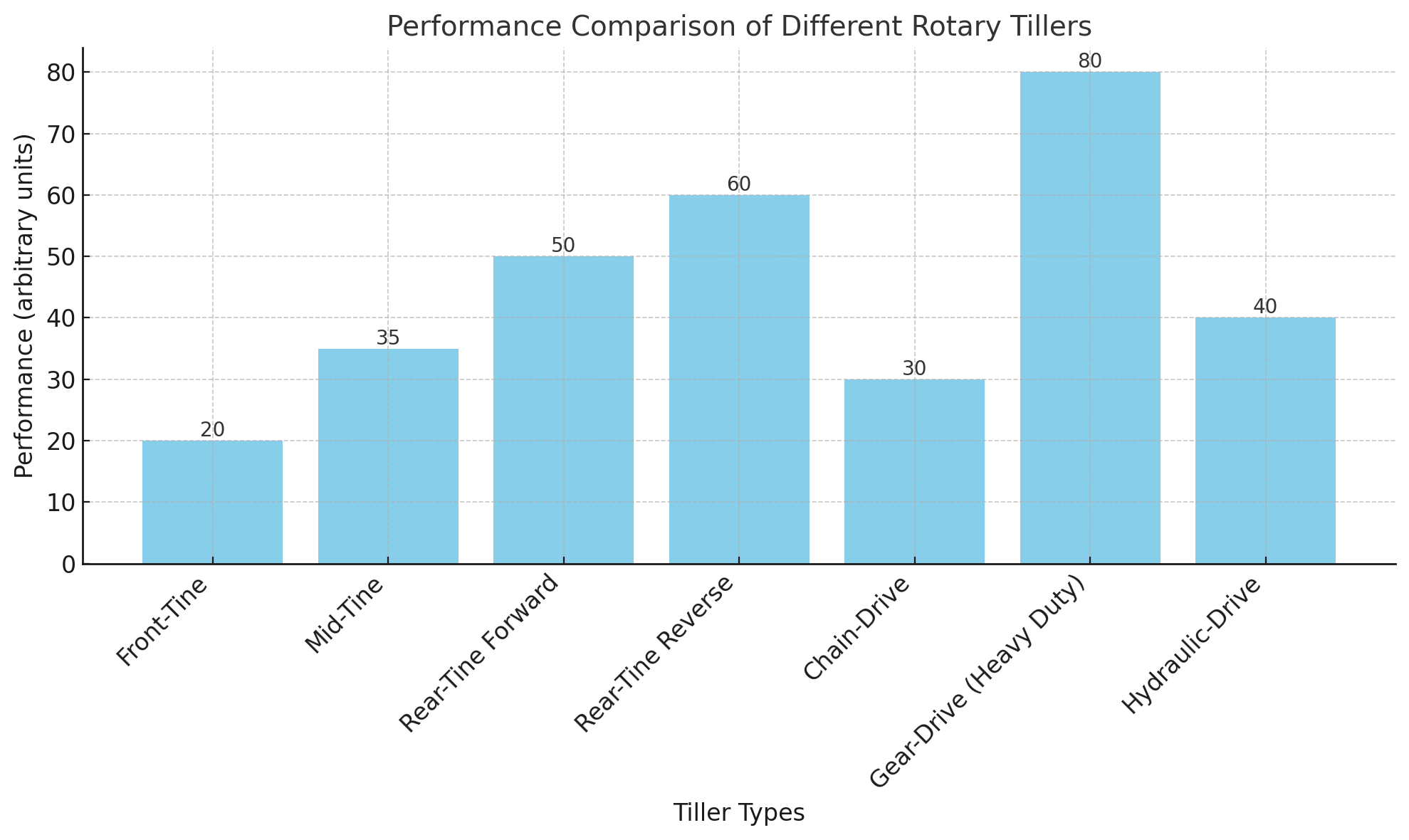
Duty Ratings & Tractor Matching: Light, Standard, or Heavy Duty Rotary Tiller?
Matching the correct duty rating ensures efficient tilling without overloading your tractor. Light-duty tillers work well for garden soil and small acreage. Standard-duty models are for medium fields and moderate soil conditions. In contrast, Heavy Duty Rotary Tillers handle compact clay, virgin land, and professional-scale projects.
The power of your tractor’s PTO (Power Take-Off) must align with the tiller width. As a rule, you need 5–7 horsepower per foot of tiller width. For instance, a 6-foot heavy-duty tiller may require a tractor with at least 35 PTO HP.
Tilling depth and tine count also impact energy demand. Six tines per flange cut deeper but require more horsepower than four. In dense or rocky soil, higher tine counts paired with reduced rotor speed optimize both penetration and durability.
Drive Systems Compared: Chain vs. Gear vs. Hydraulic
Chain-drive systems are lightweight and cost-effective, suitable for general farm use. However, they require periodic chain tightening and lubrication. Gear-drive systems, used in most Heavy Duty Rotary Tillers, transfer power more efficiently, offering higher torque and lower maintenance frequency.
Hydraulic systems provide maximum flexibility, allowing for adjustable speed and direction—perfect for uneven or constrained fields. While more expensive, they deliver superior precision for professional users.
Tine Technology & Rotation: Getting the Seedbed You Want
Tine design affects soil texture and fuel efficiency. Bolo tines are curved for deep, clean cuts and general use. Pick-and-chisel tines are sharper, breaking through compact or rocky soils. Slasher tines chop weeds and residues effectively, making them ideal for cover-crop management.
Forward-rotation systems mix soil well but need more passes, while reverse-rotation tillers cut deeper and leave finer soil with fewer passes. Heavy-duty gear-drive models often feature reverse rotation for better performance in virgin ground.
Tine density also matters—six tines per flange ensure finer soil but require more engine power. For light soil, four-tine configurations are sufficient.
Mounting & Frame Styles for Tractors: What Changes in the Field
Tractor-mounted tillers connect via a three-point hitch system. Most modern Heavy Duty Rotary Tillers support Category I and II hitches. Side-shift or offset frames let operators till along fences or crop rows without overlapping tire tracks.
Durability depends on the tiller’s frame design. Models with reinforced side-drive housings and heavy-gauge steel frames resist twisting and vibration. Skids and adjustable rear flaps control depth and help create a level, uniform finish.
Use-Case Playbook: Choose the Right Type in 60 Seconds
For small gardens, a front- or mid-tine tiller with bolo tines is sufficient. When breaking new ground, use a rear-tine reverse-rotation model or a Heavy Duty Rotary Tiller for deeper penetration. In rocky or clay-heavy soils, a gear-drive PTO tiller with pick-and-chisel tines performs best.
If your goal is to incorporate crop residue or compost, reverse-rotation PTO tillers with slasher tines ensure thorough mixing. For large-acreage fields, wide gear-drive or hydraulic models maximize productivity and minimize time per pass.
Cost & Maintenance Factors that Differ by Type
Initial purchase price varies by size and drive type. Front-tine and chain-drive models are more affordable, while Heavy Duty Rotary Tillers demand a higher investment but offer better durability and fuel efficiency. Over time, gear-driven tillers require fewer repairs, saving labor and downtime costs.
Key wear components include tines, seals, skids, and chains. Regular inspection and lubrication can double the life of these parts. Gear-driven systems, though more expensive to repair, break down less frequently.
Safety & Setup Essentials (Because Type Affects Risk)
Proper setup is vital for both performance and safety. Ensure correct hitch alignment and PTO driveline angle to prevent vibration and joint failure. Adjust tilling depth gradually to avoid overloading the tractor.
Use rear doors or flaps to control soil discharge and achieve consistent depth. On sloped or uneven terrain, operate at reduced speed to prevent rollovers or driveline stress.
Conclusion
The right rotary tiller depends on your soil, acreage, and tractor power. Matching tiller type and PTO ensures lasting performance and efficiency. For tough soils and large-scale work, a Heavy Duty Rotary Tiller offers durability and deep cultivation. Smaller models suit gardens and light farming. GRANDEMAC provides reliable, high-quality tillers engineered for strength and precision, helping farmers achieve consistent soil preparation and improved productivity year after year.
FAQ
Q: What is a Heavy Duty Rotary Tiller used for?
A: A Heavy Duty Rotary Tiller is designed for tough soils like clay, rocky fields, and hard ground. It provides maximum durability and torque, ideal for large-scale farming operations and deep soil cultivation.
Q: How do I choose the right type of rotary tiller?
A: Choose based on your soil and acreage. For light jobs, a front- or mid-tine tiller works well. For larger, more challenging tasks, a Heavy Duty Rotary Tiller with gear-drive or hydraulic systems will provide superior performance.
Q: Can a Heavy Duty Rotary Tiller be used in rocky soils?
A: Yes, a Heavy Duty Rotary Tiller excels in rocky soils. Its robust construction and gear-driven power make it perfect for breaking through compacted or rocky terrain.
Q: What are the advantages of a rear-tine rotary tiller?
A: Rear-tine tillers, especially Heavy Duty Rotary Tillers, rotate in reverse, allowing deeper soil penetration and better handling of tough, compacted soil. They are ideal for breaking new ground or sod.
Q: Is a Heavy Duty Rotary Tiller worth the investment?
A: If you manage large farms or deal with tough soils, a Heavy Duty Rotary Tiller is a smart investment. Its efficiency, durability, and ability to handle challenging terrains reduce maintenance and ensure high productivity.
Q: How do I maintain a rotary tiller?
A: Regular maintenance includes checking the tines, chains, and gears. For Heavy Duty Rotary Tillers, inspect the gearbox and hydraulic systems regularly to ensure optimal performance.
Q: What is the difference between gear-drive and chain-drive rotary tillers?
A: Gear-drive tillers, including Heavy Duty Rotary Tillers, provide more torque and durability, ideal for heavy-duty tasks. Chain-drive tillers are more affordable but better suited for lighter work.


