Tillers and rotary cultivators are both essential tools in modern agriculture, used for soil preparation to create ideal conditions for planting. While they serve similar purposes, their design, functionality, and applications vary. A tiller is typically a smaller, lighter tool used for shallow soil cultivation, ideal for smaller gardens or light soil work. It uses rotating blades or tines to break up the top layer of soil, improving aeration and nutrient distribution. On the other hand, a rotary cultivator is a more robust and powerful machine designed for deeper soil tilling. It uses high-speed rotating blades to break up compacted soil and mix in organic matter, making it ideal for large-scale farming or tougher soil conditions. Both tools play a critical role in preparing the soil by loosening it, enhancing water infiltration, and ensuring healthy root development for crops.
1.What is a Tiller?
Definition and Working Principle
A tiller is an agricultural tool used to cultivate soil by breaking it up and loosening it to prepare for planting. It uses rotating blades or tines that cut into the soil, turning it over and aerating it. This process improves soil structure, allowing for better water infiltration and root growth. Tillers typically work by being pushed or pulled across the ground, either manually or by a power source, to till the soil at a relatively shallow depth.
Types of Tillers
Hand Tillers
Hand tillers are small, manual tools designed for small-scale gardening and light soil work. They are often equipped with a set of rotating tines that the user operates by pushing or pulling. Hand tillers are perfect for gardeners working in raised beds, flower gardens, or small vegetable plots where compactness and ease of use are essential.
Powered Tillers
Powered tillers, also known as motorized or gas-powered tillers, are larger and more powerful than hand tillers. These machines are typically equipped with an engine and are designed for medium to large-sized gardens or small farming operations. Powered tillers have a rotating set of blades that dig deeper into the soil with less effort, making them ideal for more extensive cultivation.
Rear-Tine Tillers
Rear-tine tillers feature a set of rotating tines at the back, offering better control and deeper tilling. These tillers are generally used for tougher, more compact soil and are suitable for larger gardens or farms. They are more effective in turning over larger soil areas and provide greater maneuverability.
Common Uses and Applications
Small-Scale Gardening
Tillers are primarily used in small gardens, flower beds, or vegetable plots, where shallow soil cultivation is required. Hand tillers or smaller powered tillers work well in these environments.
Soil Aeration
By breaking up compacted soil, tillers improve soil aeration, allowing water and nutrients to reach plant roots more efficiently.
Weed Control
Tillers are also used for light weed control by breaking up the top layer of soil and uprooting shallow weeds.
Preparation for Planting
Tillers are ideal for preparing seedbeds and soil before planting by breaking up clumps and creating a smooth, even surface for sowing seeds.
2.What is a Rotary Cultivator?
Definition and Working Principle
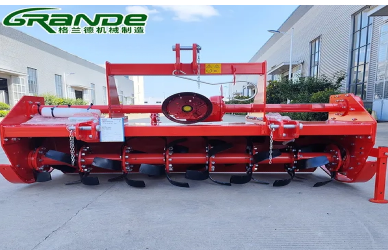
A rotary cultivator is a powerful tool used for soil preparation, utilizing rotating blades or tines to break up and loosen soil. Powered by a tractor’s power take-off (PTO) system, the cultivator tills soil deeply and efficiently, creating a fine seedbed for planting. It enhances soil aeration and promotes healthy root growth by improving soil structure.
Differences in Blade Design and Soil Impact
Blade Design: Rotary cultivators feature hardened steel blades that rotate at high speeds to cut through soil, providing deeper penetration compared to tillers. These blades can be adjusted for various soil conditions, allowing for both shallow and deep tilling.
Soil Impact: The rotary action of the blades loosens compacted soil, improving water infiltration, soil aeration, and nutrient distribution. It also helps incorporate organic matter into the soil, enriching its structure.
Key Uses in Modern Farming
Rotary cultivators are essential for:
Soil Preparation: Preparing fields by breaking clumps and creating an even seedbed.
Weed Control: Uprooting shallow-rooted weeds.
Orchard and Vineyard Maintenance: Tilling soil around trees and vines without damaging them.
Improving Soil Health: Aerating soil and mixing organic material to support sustainable farming.
3.Key Differences Between Tillers and Rotary Cultivators
Comparison of Design, Functionality, and Applications
Tillers: Tillers are smaller, lighter tools designed for shallow soil cultivation. They are typically powered by smaller engines and are ideal for small to medium-sized gardens. Tillers are used for breaking up the topsoil, improving aeration, and controlling weeds in garden plots, flower beds, or vegetable gardens.
Rotary Cultivators: Rotary cultivators are larger, more powerful machines designed for deep soil tilling. They use rotating blades or tines to break up compacted soil, mix organic matter, and prepare the land for planting. Rotary cultivators are suited for large-scale farming and are used in fields, orchards, vineyards, and larger commercial operations.
Impact on Soil Preparation (Shallow vs. Deep Tilling)
Tillers: Tillers are mainly used for shallow tilling, typically working 3 to 6 inches deep into the soil. They are effective for light soil work, aerating the topsoil, and preparing seedbeds in less compacted areas.
Rotary Cultivators: Rotary cultivators are designed for deep tilling, reaching depths of 6 to 12 inches or more. They are ideal for breaking up compacted soil, incorporating organic material, and creating a loose, even seedbed for large-scale planting.
Suitable Farm Sizes for Each
Tillers: Best suited for small to medium-sized farms or garden plots where shallow tilling is needed. Tillers are perfect for hobby gardeners, small vegetable farms, or flower beds that require minimal soil disruption.
Rotary Cultivators: Ideal for large-scale farms or commercial operations where deep soil preparation is necessary. Rotary cultivators are designed for extensive fields, orchards, or vineyards, where efficient and deep tilling is required to improve soil structure and support large-scale planting.
4.Advantages and Limitations of Each Tool
Benefits of Tillers for Small-Scale Gardening
Advantages:
Lightweight and Maneuverable: Ideal for small gardens, raised beds, and flower beds.
Shallow Tilling: Great for aerating topsoil and preparing seedbeds.
Cost-Effective: Affordable for hobby gardeners and small farms.
Easy to Use: Simple operation for both beginners and experienced gardeners.
Limitations:
Limited Depth: Not suitable for deep tilling or compacted soil.
Small Scale: Inefficient for large farming operations.
Benefits of Rotary Cultivators for Large-Scale or Deep Tilling
Advantages:
Deep Tilling: Works at depths of 6-12 inches, ideal for compacted soil and large fields.
Heavy-Duty: Perfect for large-scale farming and continuous use.
Efficient Aeration: Improves soil structure and water infiltration.
Versatile: Suitable for orchards, vineyards, and large crop fields.
Limitations:
High Cost: Expensive, not ideal for small-scale gardening.
Less Maneuverable: Larger size makes it harder to use in small or tight spaces.
5.When to Use a Tiller vs. a Rotary Cultivator
Based on Land Size
Tiller: Ideal for small to medium-sized gardens or vegetable plots. It’s best for areas that require shallow tilling and precise control. A tiller is perfect for hobby gardeners or small-scale farms where space is limited.
Rotary Cultivator: Best suited for large-scale farms, fields, or commercial operations. It is designed for extensive land areas where deep tilling is needed. A rotary cultivator is perfect for large plots, orchards, or vineyards that require efficient, heavy-duty soil preparation.
Based on Soil Type
Tiller: Works well with light, loose soils or garden beds where only the top few inches of soil need to be tilled. It’s not effective for compacted or heavy soils.
Rotary Cultivator: Ideal for compacted, heavy, or clay-like soils. Rotary cultivators can break through tough, compacted layers and till deeper, making them suitable for a variety of soil types and challenging conditions.
When to Choose Each
Tiller: Use a tiller when you need to prepare small to medium areas with light soil work, or for tasks like weeding and aerating garden beds.
Rotary Cultivator: Use a rotary cultivator when you need to till large fields or compacted soil at deeper depths for crops that require stronger root growth.
Frequently Asked Questions (FAQ)
Can a tiller be used for deep soil preparation?
No, tillers are generally designed for shallow tilling, making them unsuitable for deep soil work, unlike rotary cultivators.
Which is better for small gardens: a tiller or a rotary cultivator?
A tiller is ideal for small gardens due to its compact size and shallow tilling capabilities, making it easy to maneuver in tight spaces.
Are rotary cultivators more powerful than tillers?
Yes, rotary cultivators are typically more powerful, designed for heavy-duty, deep soil tilling, while tillers are lighter and suited for smaller tasks.
Which tool is more versatile?
A rotary cultivator is more versatile for large-scale farming and various soil conditions, while a tiller is best for specific, shallow tilling in small areas.
Conclusion
In conclusion, while both tillers and rotary cultivators serve the common purpose of soil preparation, they differ significantly in their design, functionality, and suitable applications. Tillers are best suited for small to medium-sized gardens, light soil work, and shallow tilling, making them ideal for hobby gardeners or small farms. They are compact, cost-effective, and easy to use, but they may not be effective in deep or compacted soil. On the other hand, rotary cultivators are designed for large-scale farming, deep tilling, and more challenging soil conditions. They offer greater power and efficiency, making them perfect for commercial operations, larger fields, and compacted or heavy soils. For optimal results, choose a tiller for smaller, lighter tasks and a rotary cultivator for larger areas or tougher soil.


