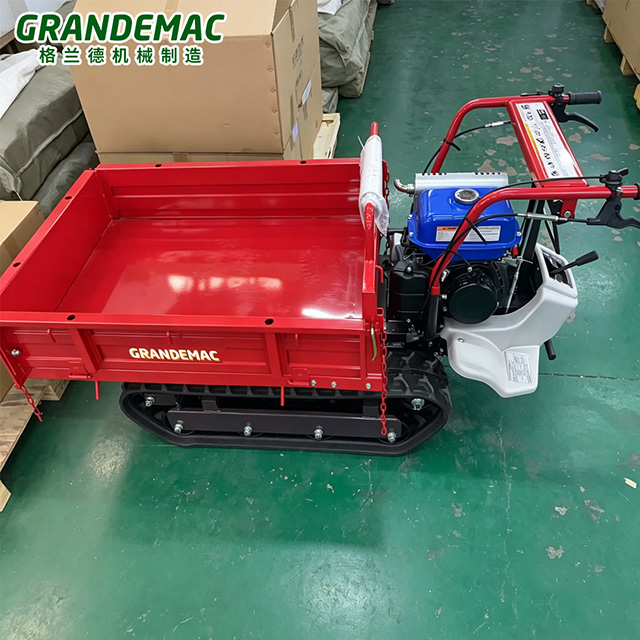
Undercarriage failure in harsh environments brings operations to a halt. A Tracked transport vehicle is only as reliable as its foundation. When you operate in deep mud, abrasive rock, or steep gradients, the wrong chassis or track material guarantees frequent breakdowns and massive repair bills. Matching specific track materials, chassis architectures, and tensioning systems to distinct terrain types and payload requirements remains a major challenge. Procurement and engineering teams often struggle to specify the right equipment without over-spending or under-equipping their fleet.
This technical evaluation framework helps you assess continuous track systems, chassis configurations, and undercarriage components. You will learn how to evaluate ground bearing pressure, compare track materials, and select the right chassis architecture for your specific job site. By understanding these mechanical features, you can maximize uptime, improve safety, and ensure your equipment handles the required payload efficiently.
Terrain Dictates Track Material: Steel tracks are mandatory for high-abrasion, sharp-debris environments, while rubber tracks are required for sensitive surfaces, lower ground bearing pressure (GBP), and vibration reduction.
Chassis Flexibility Impacts Traction: Oscillating chassis designs maintain superior ground contact and stability on uneven terrain compared to rigid chassis configurations, directly impacting safety and payload retention.
Tensioning Systems Drive Maintenance Costs: Hydraulic track tensioning significantly reduces the risk of de-tracking and minimizes manual maintenance hours compared to traditional mechanical tensioning.
Automation Requires Specific Architecture: Specifying a remote-controlled crawler dumper requires a chassis designed with a lower center of gravity, integrated sensor protection, and advanced telematics tracking to accommodate unmanned operation on hazardous slopes.
Success Criteria: Defining the Operational Demands of Your Tracked Transport Vehicle
You must establish baseline metrics for undercarriage performance before comparing specific features. Evaluating terrain and payload demands ensures you select a machine capable of surviving your specific site conditions. Failing to accurately assess the ground conditions leads to equipment sinking, excessive track wear, or catastrophic chassis failure under load.
Terrain Assessment and Ground Bearing Pressure (GBP)
Ground bearing pressure dictates whether your machine floats or sinks. You calculate acceptable GBP by analyzing soil composition. Mud, peat, and snow require extremely low GBP, often under 4.0 PSI. Sand and loose gravel tolerate slightly higher pressures, while solid rock supports heavy point loads. Track width and vehicle weight directly control flotation capabilities. Wider tracks distribute the machine's weight over a larger surface area, preventing the vehicle from bogging down in saturated soils.
Tractive efficiency varies wildly across different systems. Continuous tracks offer a high tractive coefficient on low-bearing capacity soils. They grip soft ground effectively. In contrast, wheeled chassis alternatives suffer from high slippage rates in mud. Wheels dig ruts and lose forward momentum, whereas tracks bridge soft spots and maintain traction. When evaluating a site, engineers must take core samples to determine the shear strength of the topsoil, which directly informs the required track width.
Consider the following steps when assessing site terrain:
Identify the primary soil type across the entire haul route.
Measure the moisture content during the wettest expected operating season.
Calculate the fully loaded weight of the transport vehicle.
Divide the total weight by the total ground contact area of the tracks to find the GBP.
Compare the calculated GBP against the soil's maximum bearing capacity.
Payload Requirements vs. Chassis Weight Limits
Static and dynamic loads place immense stress on chassis points during transit. A static load applies constant downward force when the machine is parked or moving on perfectly flat ground. Dynamic loads multiply that force when the machine hits bumps, drops off ledges, or brakes suddenly. You must account for these forces when evaluating frame strength. A chassis rated for a 5-ton static load might experience 10 tons of force when dropping off a small embankment.
There are clear trade-offs when selecting a heavier, reinforced chassis. A heavy frame maximizes payload capacity and resists twisting under load. However, the added weight increases fuel consumption. It also causes higher soil compaction, which can ruin sensitive landscapes or agricultural fields. You must balance structural strength with the need for mobility and environmental protection. High-tensile steel alloys are often used to reduce chassis weight while maintaining structural integrity, though this requires specialized welding techniques during repairs.
Continuous Track Materials: Steel vs. Rubber Systems
Modern machines utilize two primary track materials. Selecting the right material prevents premature wear and ensures adequate traction for your specific application. The choice between steel and rubber fundamentally alters how the machine interacts with the ground and how operators must maintain the undercarriage.
Steel Tracks: High-Abrasion and Heavy-Duty Applications
Steel track plates dominate demolition, forestry, and jagged rock environments. They withstand impacts that would shred softer materials. Steel resists cutting and tearing from sharp debris like rebar, shattered concrete, and granite shards. The longevity of steel components makes them ideal for harsh sites where rubber would fail within weeks.
Maintenance offers a distinct advantage. You can replace individual track shoes on a steel system. If one plate bends or breaks, you swap it out. You do not have to replace the entire continuous band, which saves significant repair expenses over the machine's life. Steel tracks also provide superior traction on ice and hard-packed snow when equipped with ice lugs or aggressive grousers.
Rubber Tracks: Surface Protection and High-Speed Transit
Continuous rubber tracks excel in landscaping, urban construction, and soft-soil applications. They protect asphalt, concrete, and turf from gouging. Rubber distributes weight evenly without scarring the surface below, making them mandatory for projects requiring minimal environmental disturbance.
These tracks also improve the operator experience. Rubber reduces vibration significantly. Lower vibration means less operator fatigue during long shifts and less wear on sensitive electronic components mounted to the chassis. Furthermore, rubber tracks allow for higher permissible transit speeds across flat ground compared to steel alternatives, improving cycle times on large job sites.
Hybrid Solutions and Track Plate Configurations
Mixed-surface operations benefit from hybrid solutions. Steel tracks with bolt-on rubber pads offer a practical compromise. You get the structural strength of steel with the surface protection of rubber. If the rubber pads wear out, you simply unbolt and replace them without breaking the track chain.
Tread patterns heavily influence traction characteristics. Block patterns provide excellent flotation and minimal ground disturbance, ideal for turf. Zig-zag or aggressive bar patterns dig deep into mud and snow for maximum forward pull. Choose the pattern that matches your primary terrain to optimize fuel efficiency and pulling power.
Track Material
Best Terrain
Key Advantage
Primary Drawback
Steel Tracks
Jagged rock, demolition debris, forestry
Extreme durability, replaceable individual shoes
Damages paved surfaces, high vibration
Rubber Tracks
Turf, asphalt, mud, sand
Surface protection, low vibration, higher speeds
Susceptible to chunking on sharp rocks
Hybrid (Steel + Rubber Pads)
Mixed urban and off-road sites
Versatility, protects roads while maintaining strength
Chassis Architecture: Evaluating Structural Integrity and Mobility
The structural frame dictates maneuverability and stability. Evaluating features-to-outcomes helps you understand how chassis design impacts daily operations. A poorly designed chassis will limit the machine's ability to navigate obstacles, regardless of how much horsepower the engine produces.
Rigid vs. Oscillating Chassis Designs
Rigid frames feature a simpler design and lower initial cost. They bolt the track frame directly to the main chassis. This setup suits relatively flat terrain where extreme articulation is unnecessary. However, rigid frames transfer all ground shocks directly into the machine, which can damage payloads and fatigue the operator over time.
Oscillating or articulated chassis systems provide superior performance on rough ground. Oscillating rollers allow the track to contour to uneven terrain. This maximizes traction by keeping more track on the ground. It also reduces shock loads on the main frame, protecting internal components from impact damage. When crossing a ditch, an oscillating chassis keeps the load level while the tracks pivot to match the slope.
Ground Clearance and Center of Gravity Trade-offs
You must balance ground clearance with the center of gravity. High ground clearance prevents the machine from high-centering on stumps or rocks. It allows you to navigate deep ruts safely without dragging the belly pan. However, raising the machine elevates its center of gravity, making it more prone to tipping.
A low center of gravity prevents rollovers on steep gradients. If you operate on side-slopes, a lower stance is critical for safety. Chassis width also affects stability. A wider footprint improves side-slope performance but may hinder transportability on standard flatbed trailers. You must measure your transport trailers before committing to a wide-gauge chassis to ensure legal highway transport without specialized permits.
Critical Undercarriage Components and Tensioning Systems
Mechanical components dictate lifetime maintenance expenses and service intervals. Focusing on these parts ensures you select a durable machine. The undercarriage often represents a massive portion of the machine's total maintenance budget, so component selection is critical.
Idler Wheels, Rollers, and Sprocket Durability
The idler wheel guides the track and absorbs frontal impacts. It connects to the chassis through translational joints and linear shock absorbers. This mechanical design isolates the main frame from harsh blows when ramming into obstacles. Strong idler recoil springs are essential to prevent track damage when debris gets caught between the track and the sprocket.
Rollers carry the machine's weight. Sealed, lifetime-lubricated bottom and top rollers prevent abrasive wear. Mud and sand easily destroy unsealed bearings. High-quality seals keep contaminants out and oil in, ensuring the rollers spin freely under heavy loads. If a roller seizes, it will quickly wear a flat spot into the track, leading to premature failure.
Hydraulic vs. Mechanical Track Tensioning
Manual grease or mechanical tensioning systems require physical effort to adjust. Operators must pump grease into a cylinder to push the idler forward. This process takes time and is often neglected in the field, leading to loose tracks that derail easily.
Automatic hydraulic tensioners offer a superior solution. They maintain constant, correct pressure on the track using the machine's onboard hydraulic system. Proper tension prevents accelerated wear on the sprocket teeth and track links. It also drastically reduces the chances of throwing a track in deep mud, keeping the machine operational in the worst conditions.
Advanced Configurations: The Remote-Controlled Crawler Dumper
Automated and remote operations require specific chassis and track features. You must assess scalability and compliance when specifying these advanced machines. Removing the operator from the cab changes the entire engineering dynamic of the vehicle.
Chassis Modifications for Unmanned Operation
A Remote-Controlled Crawler Dumper demands structural adaptations. Manufacturers must include reinforced equipment bays to house telematics, hydraulic actuators, and remote receivers. These sensitive electronics require heavy-duty shielding from impacts, moisture, and extreme temperatures found on construction sites.
Removing the operator cabin alters weight distribution. The chassis must be redesigned to maintain a balanced center of gravity. Without a cab, the machine often features a lower profile, making it highly stable on extreme slopes where manned operation is too dangerous. This low profile allows the machine to operate under low-hanging obstacles like conveyor belts or solar panels.
Telematics, GPS Tracking, and Smart Diagnostics Integration
Modern chassis tracking systems monitor real-time vehicle location and mechanical health. They transmit diagnostic trouble codes directly to fleet managers. This data allows you to schedule maintenance before catastrophic failures occur, such as replacing a failing hydraulic pump before it contaminates the entire system.
Geofencing and remote diagnostics track fleet utilization accurately. You can restrict the machine from entering hazardous off-road corridors. Monitoring these metrics prevents undercarriage over-stress and ensures the equipment operates within its designed parameters. If a machine exceeds a safe tilt angle, the system can automatically cut power to prevent a rollover.
Safety and Compliance in Hazardous Environments
Extreme environments demand strict compliance features. Mining, steep-slope construction, and toxic material handling require specialized track and chassis setups. Fire-resistant hydraulic fluids and spark-arresting exhausts are often mandatory to prevent explosions in volatile atmospheres.
Fail-safe braking systems must integrate directly into the track motors. If the remote signal drops or hydraulic pressure fails, the brakes must engage instantly. This mechanical redundancy prevents runaway machines on steep gradients, protecting personnel and surrounding infrastructure from catastrophic collisions.
Implementation Risks: Common Points of Failure and Mitigation
Operating tracked equipment involves inherent risks. Understanding these failure points helps you prevent catastrophic downtime. Proactive maintenance and operator training are the best defenses against undercarriage destruction.
De-tracking Risks on Slopes and Uneven Terrain
De-tracking occurs when the track slips off the idler or sprocket. Operating across steep side-slopes pushes the track sideways, increasing this risk. Deep mud can also pack into the undercarriage, forcing the track off its guides as it rotates.
You can mitigate these risks through specific hardware choices. Specify deep-profile idlers and heavy-duty track guides to keep the rubber or steel aligned. Maintaining strict tensioning protocols is equally important. A loose track will derail easily on uneven ground. Operators must check track sag daily using a straight edge and measuring tape.
Accelerated Undercarriage Wear
Operational errors destroy tracks and chassis components quickly. Constant counter-rotation (spinning in place) grinds the tracks against abrasive surfaces. Operating in reverse unnecessarily accelerates wear on the sprocket teeth and bushings. Abrasive material buildup acts like sandpaper on moving parts, grinding away metal hour by hour.
Implement a daily preventative maintenance framework. Focus on undercarriage clean-out at the end of every shift. Use a shovel or pressure washer to remove packed mud and rocks. Conduct visual inspections of track plates, rollers, and idlers to catch damage early. Look for leaking oil from rollers, missing track pad bolts, and cracked idler mounts.
Conclusion
The optimal Crawler Transport Dumper configuration requires precise alignment between track material, chassis flexibility, and your specific terrain profile. Choose rigid chassis and rubber tracks for flat, sensitive sites. Select oscillating chassis and steel tracks for heavy payloads in rugged, uneven environments.
Audit your primary job site conditions to identify the dominant terrain type and moisture levels.
Calculate your required ground bearing pressure based on maximum payload and soil composition.
Request detailed undercarriage and telematics spec sheets from manufacturers to compare tensioning systems.
Establish a mandatory daily undercarriage clean-out protocol for your operators to prevent abrasive wear.
FAQ
Q: What is the ideal ground bearing pressure for a tracked transport vehicle in soft soil?
A: Pressures between 2.0 and 4.5 PSI are generally required for mud, peat, or snow. You typically achieve this low pressure by equipping the machine with wide continuous rubber tracks that distribute the weight effectively.
Q: How often should track tension be adjusted on a crawler transport dumper?
A: Tension should be checked daily or every 10-15 operating hours. Sagging tracks lead to de-tracking on uneven ground, while over-tightened tracks destroy bearings, sprockets, and idler wheels prematurely.
Q: What are the advantages of an oscillating chassis over a rigid chassis?
A: Oscillating chassis allow the undercarriage to pivot independently of the main frame. This keeps more track on the ground for better traction and provides a smoother ride over obstacles, reducing shock loads on the machine.
Q: Can rubber tracks handle sharp rock and demolition debris?
A: While heavy-duty rubber tracks exist, continuous exposure to jagged rock will cause chunking and premature failure. Steel tracks or steel tracks with bolt-on rubber pads are highly recommended for demolition environments.
Q: What specific undercarriage maintenance is required for a remote-controlled crawler dumper?
A: Rigorous daily cleaning of the track frame and sensors is critical. Remote operators cannot physically feel the vibration of packed mud or failing rollers, making visual inspections and debris removal essential.
Q: How do hybrid track systems improve fleet versatility?
A: Hybrid systems use steel tracks equipped with bolt-on rubber pads. They provide the structural durability needed for off-road work while allowing the machine to cross paved roads without causing damage, maximizing site versatility.