Deploying underpowered or improperly configured turf management equipment on demanding terrain creates massive operational friction and financial drain. Purchasing decisions based solely on brand recognition or superficial metrics like peak horsepower often result in stalled engines, torn turf, inefficient fuel consumption, and premature equipment failure. When a machine bogs down in thick grass, the operator loses time, and the equipment sustains unnecessary mechanical stress.
Optimizing a machine requires a technical understanding of internal combustion mechanics and deck dynamics. You must grasp how engine displacement, torque, governor response, and blade aerodynamics interact under load. These components must work together in sequence to handle specific grass densities and unpredictable topographies. A standard rotary setup might excel on flat, manicured turf, but applying that same configuration to overgrown brush or steep inclines guarantees mechanical failure. True performance optimization requires matching the engine's power delivery curve to the aerodynamic drag of the chosen blade.
Key Takeaways
Torque Over Horsepower: Sustained cutting performance in dense conditions relies heavily on engine torque to maintain blade tip speed, not just peak horsepower.
Blade Tip Speed (FPM) is King: Clean cutting requires maintaining high Blade Tip Speed (typically close to the 19,000 FPM regulatory limit) under varying loads.
Aerodynamic Drag Dictates Power Needs: High-lift and mulching blades create significant aerodynamic drag, requiring higher engine displacement and advanced governor systems to prevent RPM drops during operation.
Application-Specific Configurations: Standard rotary setups suit manicured turf, while specialized systems like a Tractor Verge Flail Mower or a Gasoline RC Brush Cutter are mandatory for overgrown, unpredictable, or sloped environments.
Maintenance Multiplies Performance: Even the highest-cc engine will underperform if paired with unbalanced or dull blades, emphasizing the need for strict maintenance schedules.
The Mechanics of a Gasoline Lawn Mower: Why Power, Blades, and Deck Dynamics Must Align
A successful cut requires the clean shearing of grass blades, optimal clipping dispersion, and zero engine bogging during operation. Engine power transfers directly through the spindle to the cutting blade. Blade mass, pitch angle, and aerodynamic drag create continuous rotational resistance. The engine must overcome this resistance constantly, adjusting to the varying density of the vegetation passing under the deck.
Clean shearing demands maximum legal blade tip speed. This speed typically hovers near the 19,000 Feet Per Minute (FPM) regulatory limit. Maintaining this kinetic energy prevents tearing the grass. Torn grass invites fungal disease, increases water loss, and leaves an uneven, brown appearance across the property. When the engine bogs down, tip speed drops, and cut quality degrades instantly. The physics of the cut rely entirely on the blade striking the grass fast enough to sever it before the grass bends away.
Deck depth and internal baffling influence blade efficiency heavily. The discharge throat volume dictates vacuum generation and overall airflow (measured in CFM). High airflow lifts the grass for a uniform cut and throws clippings clear of the cutting path. However, this airflow requires significant engine power to maintain. Poor deck design leads to clipping buildup, disrupting the airflow and increasing the clogging risk in wet conditions.
Pairing an aggressive high-lift blade with a low-torque engine causes severe mechanical issues. The engine struggles to spin the high-resistance blade even before engaging the grass. Once under load, you will experience rapid overheating and drive belt slipping. Premature spindle wear occurs as the system fights the aerodynamic drag. The resulting cut quality will remain consistently poor, requiring double-cutting and wasting labor hours.
Verify the engine reaches maximum governed RPM before engaging the blades.
Listen for RPM drops when the blades engage; a significant drop indicates excessive aerodynamic drag for the engine size.
Inspect the cut quality; torn tips indicate the blade tip speed is falling below the shearing threshold.
Check the deck underside for clipping buildup, which indicates poor airflow or insufficient vacuum generation.
Evaluating Engine Power in Turf Management Equipment
Torque remains the critical metric for maintaining blade momentum through thick patches. Displacement (cc) simply indicates the engine's overall physical capacity to generate that torque. High displacement engines push through dense, wet grass without stalling because they have the rotational force to keep the spindle turning. Peak horsepower numbers matter less than the engine's ability to sustain torque under sudden, heavy loads.
Engine governors detect load increases mechanically or electronically. They adjust the throttle plate to maintain target RPMs when you hit thick grass. Mechanical governors use a system of springs and flyweights spinning inside the crankcase. As RPMs drop, the flyweights retract, pulling a linkage that opens the throttle. Electronic governors respond faster, using magnetic sensors to read flywheel RPM and a stepper motor to adjust the throttle, providing tighter RPM control under heavy, variable loads.
Electronic Fuel Injection (EFI) systems provide consistent power delivery on slopes. They adjust fuel delivery based on real-time engine data, including temperature and air pressure. Carbureted engines often struggle with fuel starvation or flooding at extreme operating angles because the float bowl cannot maintain the correct fuel level. EFI systems also improve cold-start reliability and optimize overall fuel consumption during long shifts, eliminating the need for manual choking.
Commercial-grade engines feature cast-iron cylinder sleeves and full-pressure lubrication. They handle sustained loads far better than standard consumer engines. Multi-stage air filtration protects internal components from heavy dust generated during dry conditions. Standard consumer engines often use splash lubrication, which fails on steep inclines. When the oil pools on one side of the crankcase, the internal components suffer oil starvation, leading to catastrophic rod failure.
Environmental factors degrade engine output significantly. High altitude reduces air density, lowering available combustion power. High ambient temperatures cause engines to run hotter, reducing air density further and losing efficiency. Stale fuel clogs carburetor jets, restricts fuel flow, and reduces combustion quality. Clogged air filters choke the engine, forcing it to run rich, foul spark plugs, and lose torque.
Blade Types and Aerodynamics: Translating Power into Cut Quality
Standard lift blades require less engine power to spin. They generate minimal vacuum and work well for side-discharge applications on dry, frequently cut grass. High-lift blades feature aggressive upward angles at the trailing edges. They generate massive vacuum force to pull grass upright for a clean, uniform cut and propel clippings up the chute into a bagging system.
This increased airflow requires a higher baseline of engine torque. The aerodynamic drag of a high-lift blade acts like a parachute inside the deck. Mulching blades execute a continuous cutting and recirculating action. They feature multiple cutting edges and complex curves to chop clippings into fine dust, driving them down into the soil canopy.
This recirculating process demands a significant horsepower tax. The engine must suspend and recut clippings repeatedly without stalling. Standard rotary blades fail completely against saplings, dense brush, and hidden debris. Extreme inclines require specialized heavy-duty alternatives to maintain operator safety and equipment integrity.
A Tractor Verge Flail Mower utilizes independent Y-shaped or T-shaped flails. These flails mount on a horizontal rotor rather than a vertical spindle. They absorb heavy impacts by swinging back when striking rocks or stumps. This design requires specific Power Take-Off (PTO) delivery to maintain drum RPMs. The horizontal rotation shreds vegetation thoroughly and directs debris straight down, minimizing the risk of thrown objects.
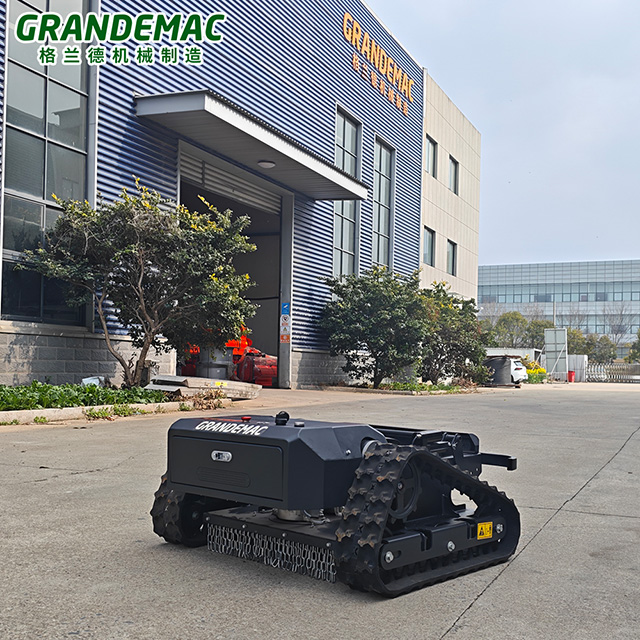
Extreme slopes up to 50 degrees demand a Gasoline RC Brush Cutter. These specialized units feature high-mass swing blades designed to shatter woody brush. They utilize track systems for maximum traction and low-center-of-gravity engine designs. Pressurized lubrication systems prevent oil starvation when operating continuously on severe grades. The remote operation removes the operator from rollover hazards entirely.
Blade Type
Aerodynamic Drag
Engine Torque Requirement
Primary Application
Standard Lift
Low
Moderate
Dry, manicured turf; side discharge
High-Lift
High
High
Dense turf; bagging systems
Mulching
Very High
Very High
Nutrient recycling; frequent mowing
Flail / Swing
Variable (Mass-based)
Extreme
Overgrown brush; saplings; debris
Matching Engine and Blade Configurations to Terrain
Flat residential lawns require moderate displacement engines and standard blades. The focus remains on fuel efficiency, low noise output, and maneuverability. Overgrown terrain demands pressurized lubrication and heavy-duty cutting systems. You must match the equipment to the specific environmental hazards present on the site to avoid downtime.
Wet grass acts as the ultimate stress test for any cutting deck. Moisture increases clipping mass dramatically, causing them to stick to the deck walls. You need maximum torque and open-deck discharge to prevent clogging. High-lift blades help evacuate heavy, wet clippings before they build up, but the operator must slow their ground speed to allow the engine to process the heavy material.
Industrial clearing tasks require robust, specialized machinery. A standard Gasoline lawn mower will fail quickly under these harsh conditions, bending crankshafts or burning out clutches. You must deploy heavy-duty equipment for roadside maintenance or steep retention basins. Matching the machine's capabilities to the terrain prevents catastrophic equipment failure and keeps operators safe.
Assess the maximum slope grade of the property before selecting equipment.
Identify the primary vegetation type (turfgrass, woody brush, or mixed weeds).
Determine the frequency of cuts to estimate the volume of material processed per pass.
Evaluate the presence of hidden debris like rocks, trash, or stumps.
Operational Trade-Offs and Fleet Scalability
High-displacement engines running aggressive blades consume more fuel. You face a direct inverse relationship between cutting power and fuel economy. Pushing heavy blades through dense brush requires open throttles and high fuel flow. Operators must balance the need for raw power against fuel tank capacity and refueling logistics on large sites.
Standardizing blade types across a landscaping fleet reduces parts inventory. It streamlines daily maintenance and simplifies operator training. Mechanics spend less time swapping incompatible parts and tracking down specific belts. Consistent equipment configurations ensure predictable performance across different job sites and varying weather conditions, allowing for accurate job costing and scheduling.
Small off-road engine emissions standards impact modern carburetor design heavily. Sealed fuel lines and restricted power outputs require careful equipment selection. Manufacturers tune engines leaner to meet compliance standards, which can cause them to run hotter. This leaner tuning makes matching the right blade to the available torque even more critical, as the engine has less margin for error when overloaded.
Implementation Risks and Mitigation Strategies
Match ground speed to engine load constantly to prevent lugging. Pushing the machine too fast overloads the governor and overheats the engine block. Listen to the engine RPMs and slow down when entering dense patches. This practice extends engine life, prevents belt slippage, and maintains a clean cut.
Striking fixed objects with high-mass blades destroys spindles and bends crankshafts. Heavy-duty applications require slip clutches, shear pins, or swing-blade designs. These mechanisms absorb the kinetic shock before it travels up the driveline. Inspect the clearing area for hidden debris before engaging the blades, and set the cutting height appropriately for unknown terrain.
Strict maintenance acts as a direct performance multiplier. Balance blades regularly to prevent high-frequency vibrations from destroying spindle bearings and fatiguing the deck shell. Maintain a precise 30-degree sharpening angle for optimal shearing force without weakening the blade edge. Monitor oil viscosity daily and service air filters to maintain day-one performance metrics.
Clean the underside of the deck daily to maintain optimal airflow and vacuum generation.
Check blade balance using a magnetic wall balancer after every sharpening session.
Inspect drive belts for glazing or cracking, which indicates slipping under heavy loads.
Blow out engine cooling fins with compressed air to prevent overheating.
Grease all spindle and caster zerks according to the manufacturer's hour intervals.
Conclusion
Conduct a thorough site audit to measure slope grades and assess brush density before purchasing equipment.
Select the blade type based on the vegetation density and desired finish, prioritizing swing blades or flails for unknown terrain.
Specify engine torque and fuel delivery systems that can handle the aerodynamic drag of your chosen blades.
Implement a strict daily maintenance protocol focusing on blade sharpness, deck cleanliness, and air filter integrity.
Consult with commercial dealers to demo specific engine and deck configurations on your actual job sites.
FAQ
Q: What is a good engine size for a gasoline lawn mower?
A: Engine size depends on deck width and blade type. Small 21-inch walk-behinds require 140cc to 160cc engines for standard cutting. Commercial zero-turn mowers with 60-inch decks and high-lift blades require 700cc or larger engines to maintain the necessary torque under heavy loads.
Q: Do mulching blades require a more powerful engine?
A: Yes. Mulching blades feature complex curves that create significant aerodynamic drag. They also recut clippings multiple times while suspending them in the deck. This continuous process requires higher engine torque to prevent RPM drops and stalling in thick grass.
Q: How does a Tractor Verge Flail Mower differ from a standard rotary mower?
A: A flail mower uses a horizontal rotating drum equipped with independent, pivoting flails. A rotary mower uses a vertical spindle with a solid blade. Flail mowers contain debris better and handle heavy brush safely because the flails bounce back upon striking solid objects.
Q: Can I put high-lift blades on any gasoline lawn mower?
A: No. High-lift blades create massive air resistance. Installing them on a low-torque engine causes engine lugging, severe overheating, and accelerated belt wear. The engine will fail to maintain the required RPMs, resulting in a poor, torn cut.
Q: When should I upgrade to a Gasoline RC Brush Cutter?
A: Upgrade when clearing slopes exceeding 15 to 20 degrees to ensure operator safety. They are also necessary when clearing dense, woody brush up to 2 inches in diameter. The track system and low center of gravity prevent rollovers on hazardous terrain.
Q: Why does my gasoline lawn mower stall in thick grass?
A: Stalling occurs when blade tip speed drops below the threshold required to shear grass. This mechanical failure usually results from insufficient engine torque, a failing governor system, a clogged discharge chute, or severely dull blades increasing rotational resistance.