In modern agriculture, the rotary cultivator plays a crucial role in enhancing farming efficiency and soil health. It is a versatile piece of machinery designed to prepare the soil for planting by breaking, loosening, and aerating the ground. By using high-speed rotating blades, a rotary cultivator efficiently breaks down soil clumps, mixes organic matter, and improves soil structure. This process not only makes it easier to plant seeds but also helps improve water absorption, root growth, and nutrient distribution. As the demand for higher productivity and sustainable farming practices increases, the rotary cultivator has become an essential tool for both large and small-scale farming operations, saving time, reducing manual labor, and promoting healthier crop yields.
What is a Rotary Cultivator?
A rotary cultivator is a powerful agricultural tool used for soil preparation, primarily to break, loosen, and aerate the soil before planting. It consists of rotating blades or tines that dig into the soil and turn it over, helping to create a fine, well-tilled seedbed. This type of cultivator is essential for improving soil structure, increasing water infiltration, and enhancing root growth by allowing the soil to breathe and better absorb nutrients.
1.Working Principle
The rotary cultivator operates by using a power take-off (PTO) from a tractor, which drives the rotating blades or tines. As the cultivator moves across the field, these blades spin rapidly, cutting into the soil, breaking up clumps, and mixing in organic material. This process helps to aerate the soil, improve its texture, and prepare it for planting by creating an even and loose soil surface.
2.Key Components and Functionality
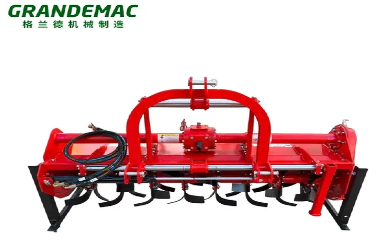
Blades or Tines: The main components that rotate to break and loosen the soil. They come in different shapes and sizes to suit various soil conditions and farming needs.
Power Take-Off (PTO): A mechanical connection between the tractor and the rotary cultivator that transfers the tractor's engine power to drive the rotating blades.
Transmission System: This system helps transmit the rotational force from the tractor's PTO to the blades.
Depth Adjustment Mechanism: Allows the user to control the depth of the blades' penetration into the soil, ensuring the right amount of soil disruption for different crops and soil types.
Frame: The structure that houses the blades and other components, designed for easy attachment to a tractor and ensuring the cultivator stays stable during operation.
Main Uses of a Rotary Cultivator
1. Breaking and Loosening Soil
One of the primary functions of a rotary cultivator is to break up compacted soil, making it easier for seeds to take root. The rotating blades or tines penetrate the soil, cutting through hardened clumps and loosening the soil to create a more aerated environment. This is essential for maintaining optimal soil health, especially in areas where soil becomes compacted due to repeated farming or heavy machinery.
2. Improving Soil Structure and Enhancing Water Permeability
By breaking up large soil clumps and redistributing organic matter, a rotary cultivator improves the overall structure of the soil. It helps in creating fine, loose soil that promotes better water infiltration. This process enhances the soil’s ability to absorb and retain moisture, which is crucial for plant growth. The loosened soil structure also facilitates better air circulation to plant roots, promoting healthier root development and reducing waterlogging or drought stress.
3. Preparing Soil for Planting and Sowing
Before sowing seeds or planting crops, the soil needs to be in its optimal state. A rotary cultivator helps in preparing a smooth, even, and finely tilled seedbed by breaking down clumps and mixing the soil. This not only creates the perfect environment for seeds to germinate but also ensures that soil nutrients are evenly distributed. The result is a consistent, uniform surface that supports healthy plant growth, leading to better crop yields.
Applications of Rotary Cultivators
1. Usage on Large-Scale Farms vs Small Farms
Rotary cultivators are versatile tools suitable for both large-scale and small-scale farming, although their application may vary depending on the size and type of operation.
Large-Scale Farms: On large farms, rotary cultivators are used extensively to prepare large fields for planting, improving soil structure over vast areas. These machines are often attached to powerful tractors, allowing for high-speed operations, which significantly reduces labor costs and time. They are ideal for preparing large sections of land for crops like wheat, corn, and vegetables. The efficiency and speed at which these cultivators can operate make them essential for modern, large-scale farming.
Small Farms: On smaller farms, rotary cultivators are used to work more compact or irregular plots of land. Smaller, lighter versions are available, which are more manageable for farmers with less powerful equipment. These cultivators help small-scale farmers prepare their soil efficiently without the need for extensive manual labor. They can also be used in smaller garden plots and for crop rotation on diverse land areas. While the cultivator may not work as quickly on a small farm, it still offers high precision and ease of use, essential for maintaining smaller fields.
2. Applications in Orchards, Vineyards, and Specialized Environments
Rotary cultivators are also beneficial in specialized farming environments such as orchards and vineyards, where the needs for soil preparation are unique.
Orchards: In orchards, where trees are spaced apart, rotary cultivators with adjustable working widths are used to loosen the soil between tree rows. The cultivator helps aerate the soil, improve root development, and control weeds without damaging the trees or interfering with the delicate root systems. It is essential in ensuring that fruit-bearing trees have access to the nutrients and water they need for optimal growth.
Vineyards: Similar to orchards, vineyards benefit from rotary cultivators, especially in narrow row spacing and uneven terrain. These machines are often used to prepare the soil before planting grapevines and to maintain the health of the soil during the growing season. Cultivating the soil around grapevines ensures better water retention, root health, and even distribution of nutrients.
Specialized Environments: Rotary cultivators are also effective in environments with specialized requirements, such as greenhouses, nurseries, and garden centers. In these environments, the cultivator can be used to prepare soil for seed beds, create precise furrows for planting, and maintain optimal soil conditions for a variety of crops. The ability to adjust the depth and intensity of soil tilling makes it adaptable for different crops and conditions.
Advantages of a Rotary Cultivator
1. Boosting Cultivation Efficiency
A rotary cultivator increases efficiency by quickly and uniformly loosening soil across large areas. Its high-speed rotating blades allow for faster preparation of land, reducing the time spent on tilling and ensuring even soil aeration. This is crucial for time-sensitive planting, allowing farmers to prepare more land in less time, ultimately enhancing productivity.
2. Saving Labor and Time
Rotary cultivators significantly reduce labor and time compared to manual methods. They can complete soil preparation tasks quickly, requiring minimal physical labor. This is beneficial for both small and large-scale farms, saving workers’ time and reducing the need for large labor teams while making the process much less physically demanding.
3. Enhancing Soil Quality and Promoting Healthier Crop Growth
By loosening compacted soil, rotary cultivators improve soil structure, water infiltration, and root development. They also help incorporate organic matter, enriching the soil with nutrients. The result is healthier crops with stronger root systems, better nutrient access, and higher yields.
How to Choose the Right Rotary Cultivator
1. Selecting Based on Land Size
The size of the land determines the type of cultivator needed. Large farms require a wide working width and powerful cultivator, while smaller plots need a more compact and maneuverable model for tighter spaces. Choose a size that suits the area to ensure efficient use.
2. Matching Tractor Horsepower
Ensure the cultivator matches the tractor's horsepower for optimal performance. A powerful tractor needs a cultivator that can handle tough soil, while a lower horsepower tractor requires a smaller, less demanding model. This ensures smooth operation and prevents damage.
3. Considering Specific Cultivation Needs
Choose a cultivator based on the crops and soil conditions. Heavy-duty models are ideal for deep tilling in compacted soil, while lighter models suit shallow tilling or delicate soils. For orchards or vineyards, look for models with adjustable widths for narrow spaces.
Frequently Asked Questions (FAQ)
How does a rotary cultivator work?
A rotary cultivator works by using high-speed rotating blades to cut and flip the soil, loosening it and improving water penetration.
What types of land are rotary cultivators suitable for?
Rotary cultivators are suitable for various types of land, including dry fields, garden plots, and orchards.
What are the main advantages of a rotary cultivator?
It increases efficiency, reduces manual labor, improves soil structure, and boosts crop yield.
How do I choose the right rotary cultivator?
Choose based on land size, tractor compatibility, and the required depth of soil cultivation.
Conclusion
In conclusion, rotary cultivators are essential tools in modern farming, offering significant advantages in soil preparation, efficiency, and crop growth. By breaking, loosening, and aerating the soil, these machines enhance soil structure, promote better water infiltration, and create ideal conditions for planting. Their ability to save time and labor while improving the quality of the soil makes them invaluable on both large and small farms. Whether for large-scale crop production or specialized environments like orchards and vineyards, rotary cultivators play a key role in boosting productivity and ensuring healthier, more abundant crops. As farming practices continue to evolve, the rotary cultivator remains a cornerstone of effective and sustainable agriculture.


